

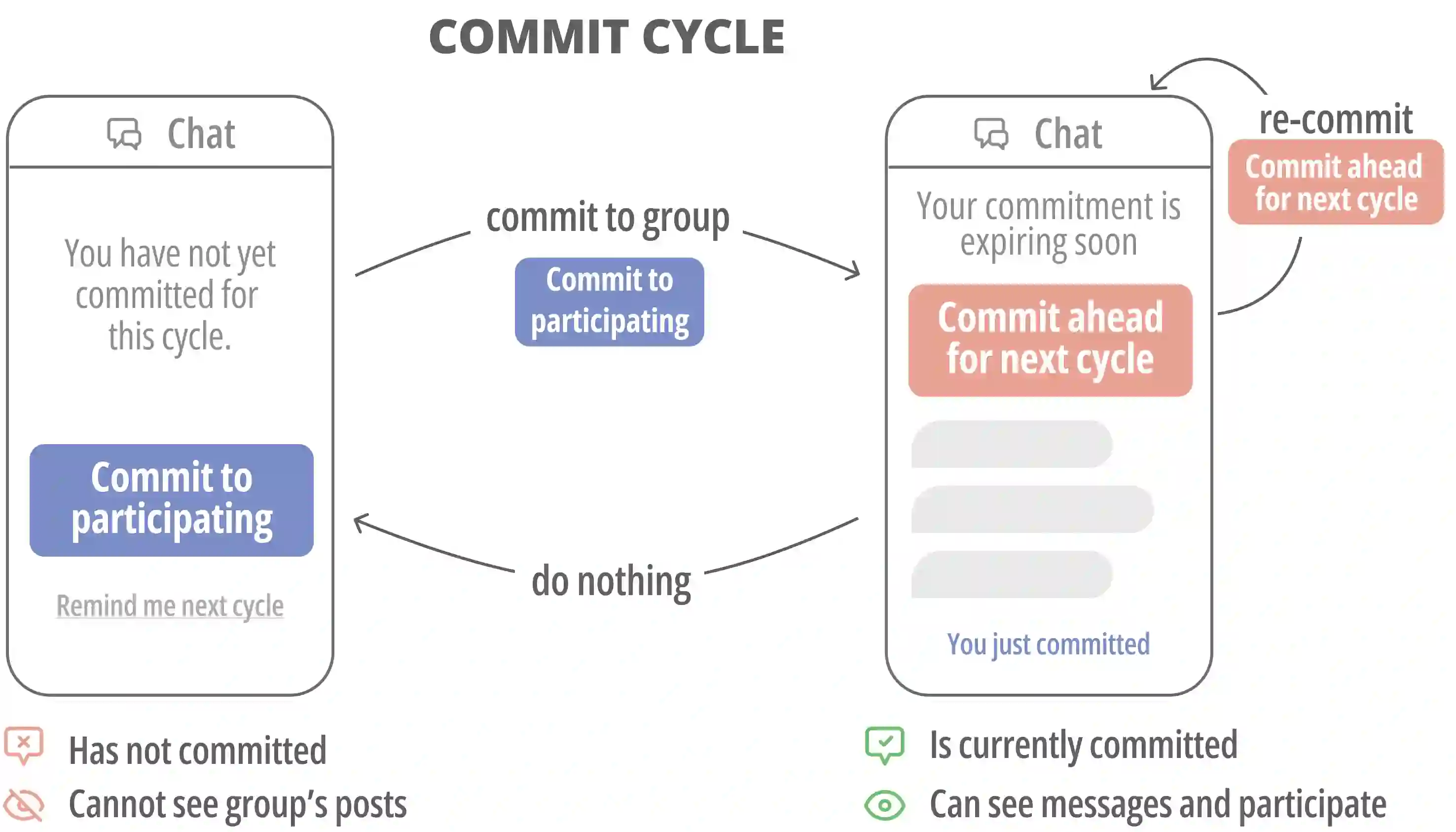
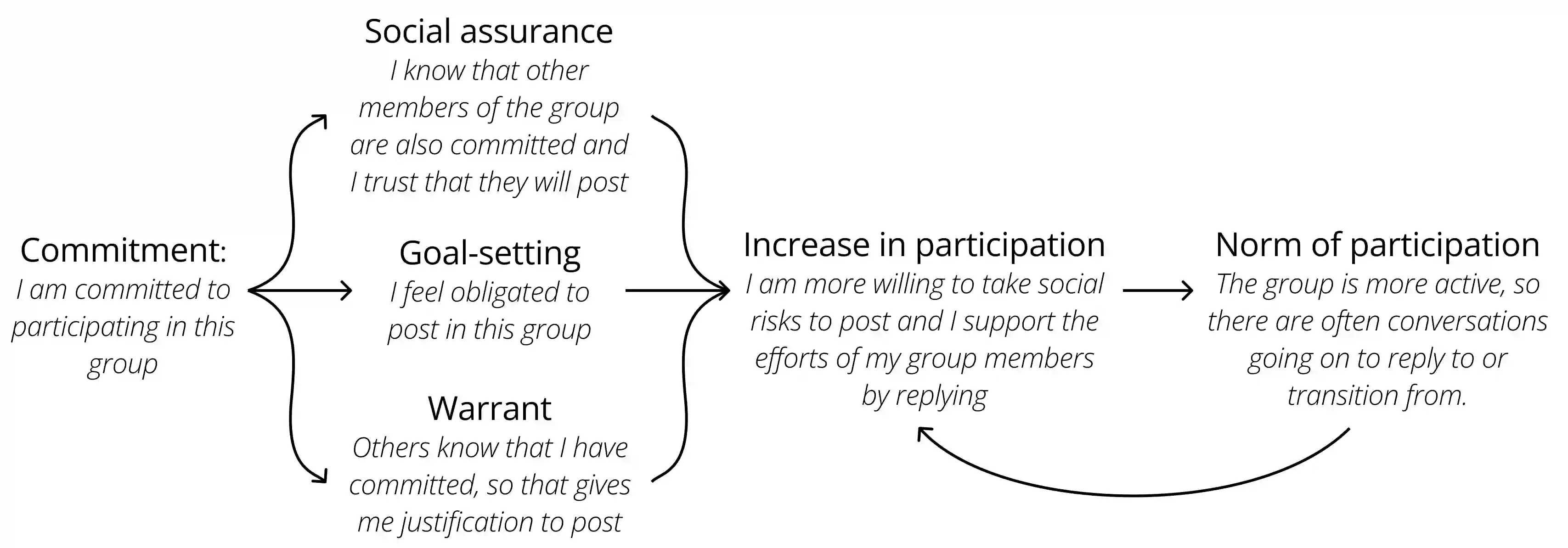
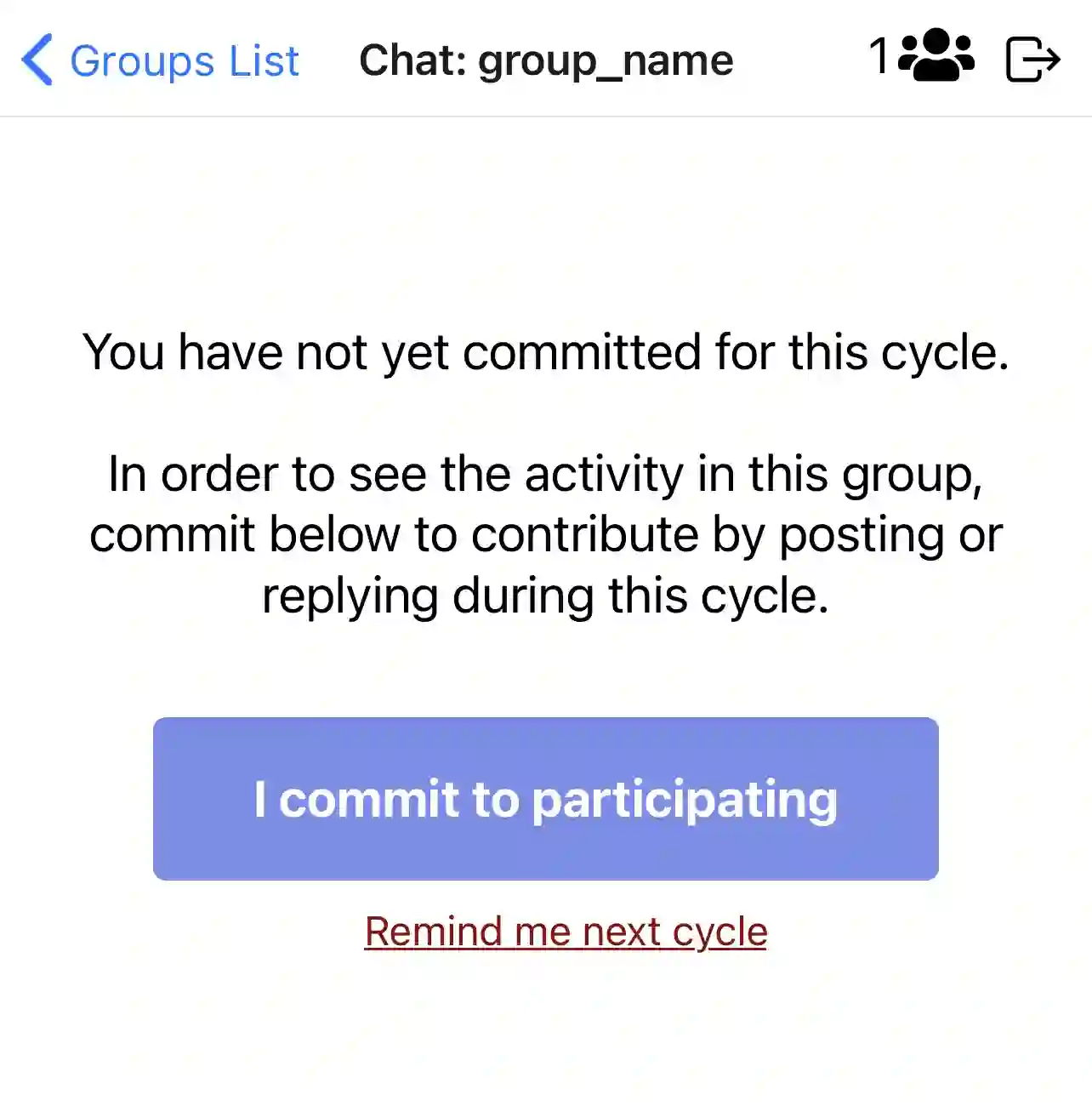
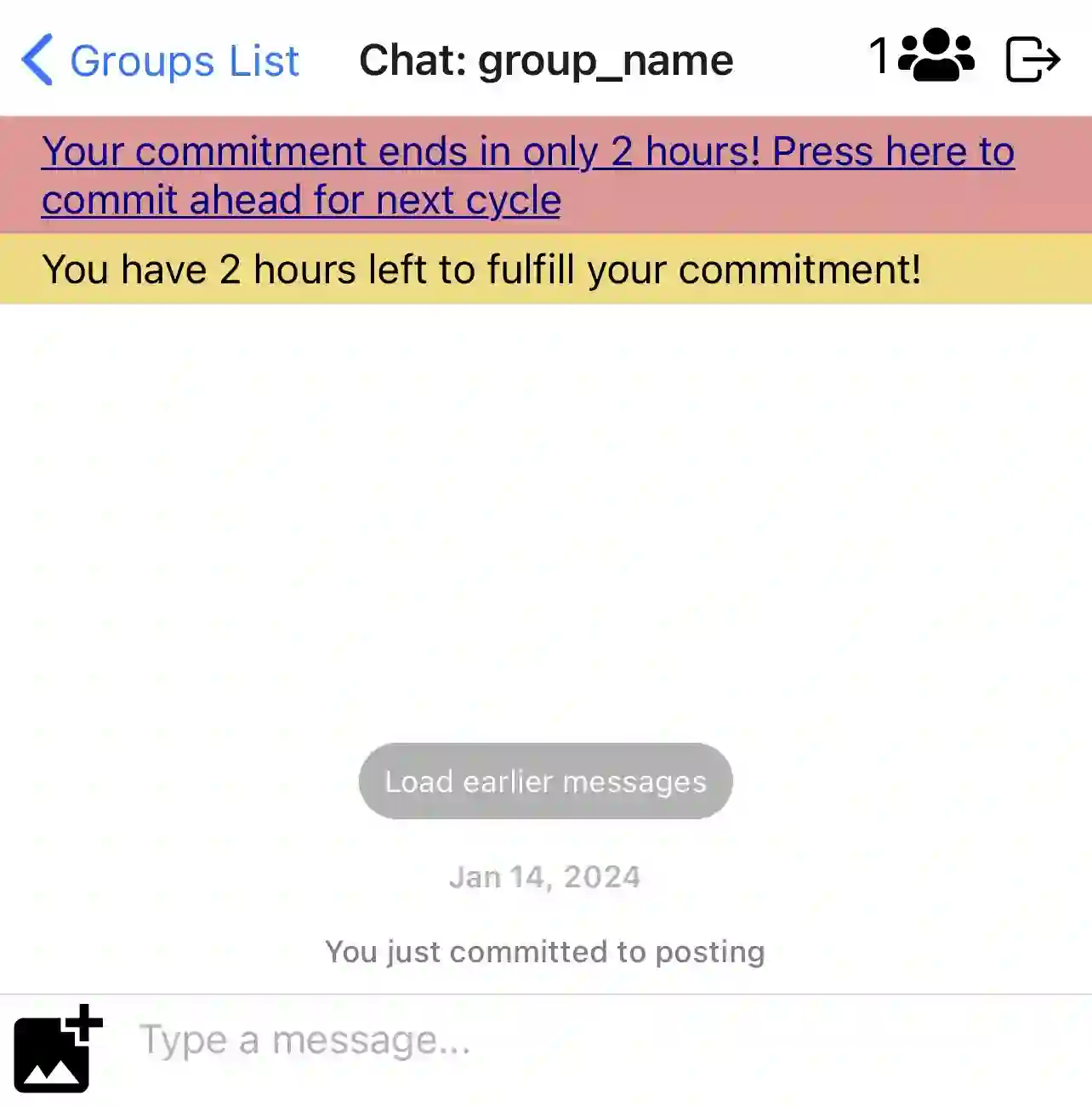
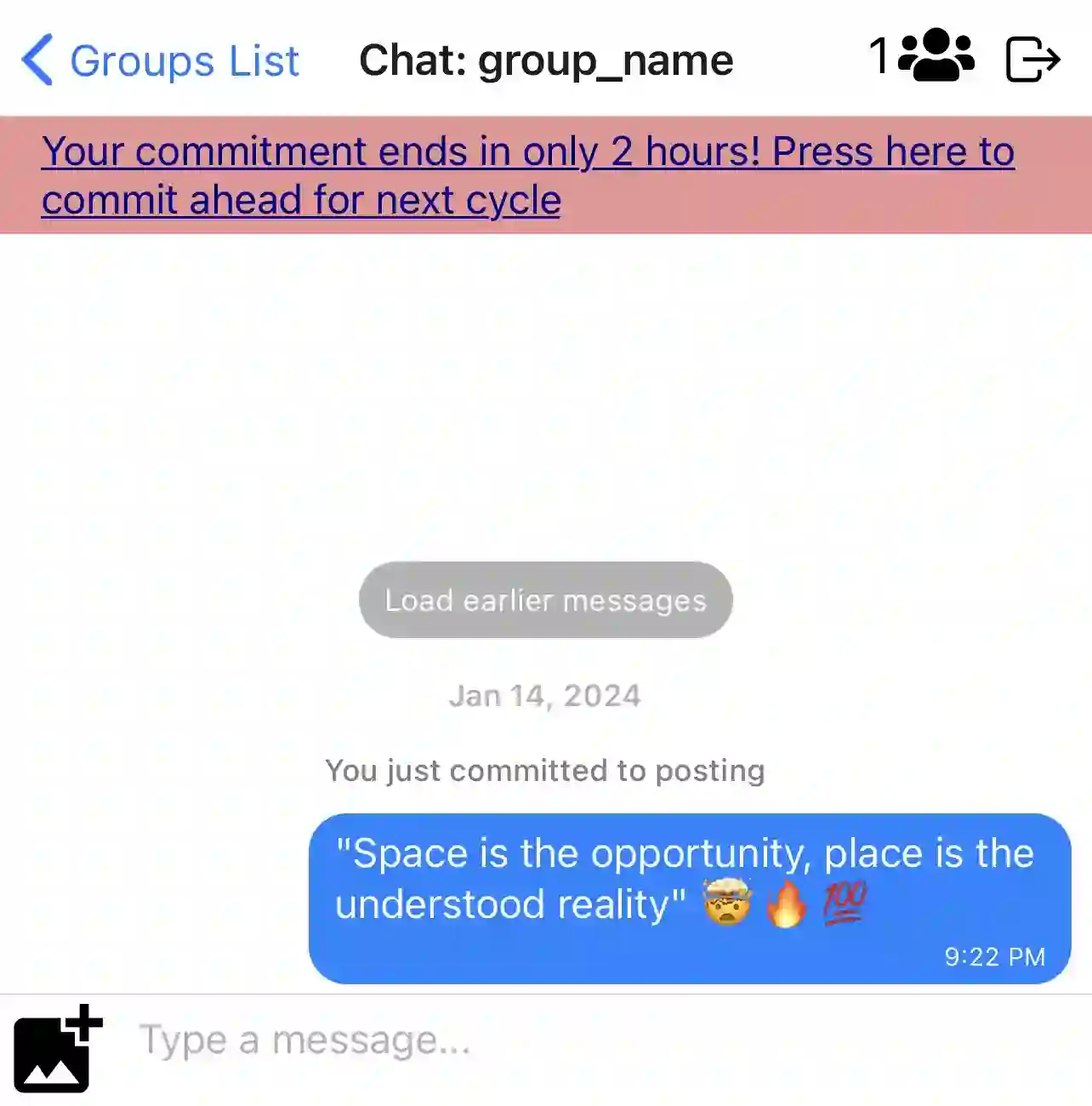
In spite of efforts to increase participation, many online groups struggle to survive past the initial days, as members leave and activity atrophies. We argue that a main assumption of online group design -- that groups ask nothing of their members beyond lurking -- may be preventing many of these groups from sustaining a critical mass of participation. In this paper, we explore an alternative commitment design for online groups, which requires that all members commit at regular intervals to participating, as a condition of remaining in the group. We instantiate this approach in a mobile group chat platform called Commit, and perform a field study comparing commitment against a control condition of social psychological nudges with N=57 participants over three weeks. Commitment doubled the number of contributions versus the control condition, and resulted in 87% (vs. 19%) of participants remaining active by the third week. Participants reported that commitment provided safe cover for them to post even when they were nervous. Through this work, we argue that more effortful, not less effortful, membership may support many online groups.
翻译:尽管努力提高参与度,许多在线群体仍难以在初始阶段后持续生存,因为成员流失导致活动萎缩。我们认为,在线群体设计的一个主要假设——即群体除了潜水外不对成员提出任何要求——可能阻碍了许多群体维持关键参与规模。本文探索了一种替代性的在线群体承诺设计,要求所有成员定期承诺参与,作为保留群体成员资格的条件。我们在名为Commit的移动群聊平台中实例化了该方法,并通过为期三周的实地研究(N=57名参与者)将承诺机制与采用社会心理学助推的控制条件进行比较。承诺机制使贡献数量相比控制条件增加了一倍,并在第三周时保持活跃的参与者比例达到87%(对照组为19%)。参与者反馈称,承诺机制为他们提供了安全屏障,使其即使在紧张时也能发帖。通过本研究,我们认为更具参与门槛而非更低门槛的成员资格可能有助于支撑众多在线群体的发展。




相关内容




 微信扫码咨询专知VIP会员