

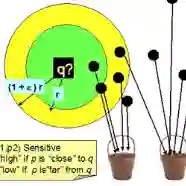
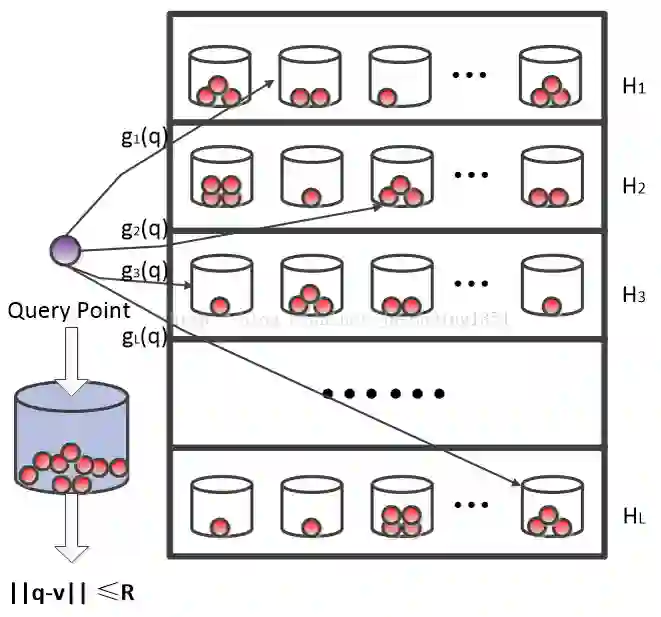
This paper presents a 6-DoF range-based Monte Carlo localization method with a GPU-accelerated Stein particle filter. To update a massive amount of particles, we propose a Gauss-Newton-based Stein variational gradient descent (SVGD) with iterative neighbor particle search. This method uses SVGD to collectively update particle states with gradient and neighborhood information, which provides efficient particle sampling. For an efficient neighbor particle search, it uses locality sensitive hashing and iteratively updates the neighbor list of each particle over time. The neighbor list is then used to propagate the posterior probabilities of particles over the neighbor particle graph. The proposed method is capable of evaluating one million particles in real-time on a single GPU and enables robust pose initialization and re-localization without an initial pose estimate. In experiments, the proposed method showed an extreme robustness to complete sensor occlusion (i.e., kidnapping), and enabled pinpoint sensor localization without any prior information.
翻译:本文提出了一种基于测距的六自由度蒙特卡洛定位方法,采用GPU加速的斯坦因粒子滤波。为更新海量粒子,我们提出了一种基于高斯-牛顿的斯坦因变分梯度下降(SVGD)方法,并引入迭代邻域粒子搜索。该方法利用SVGD通过梯度与邻域信息联合更新粒子状态,实现高效粒子采样。为提升邻域粒子搜索效率,采用局部敏感哈希技术并随时间迭代更新每个粒子的邻域列表,进而通过邻域粒子图传播粒子的后验概率。所提方法能够在单GPU上实时评估一百万个粒子,并在无需初始位姿估计的情况下实现鲁棒的位姿初始化与重定位。实验表明,该方法对完全传感器遮挡(即绑架问题)具有极强鲁棒性,且能在无任何先验信息条件下实现精确定位。




相关内容


 微信扫码咨询专知VIP会员