

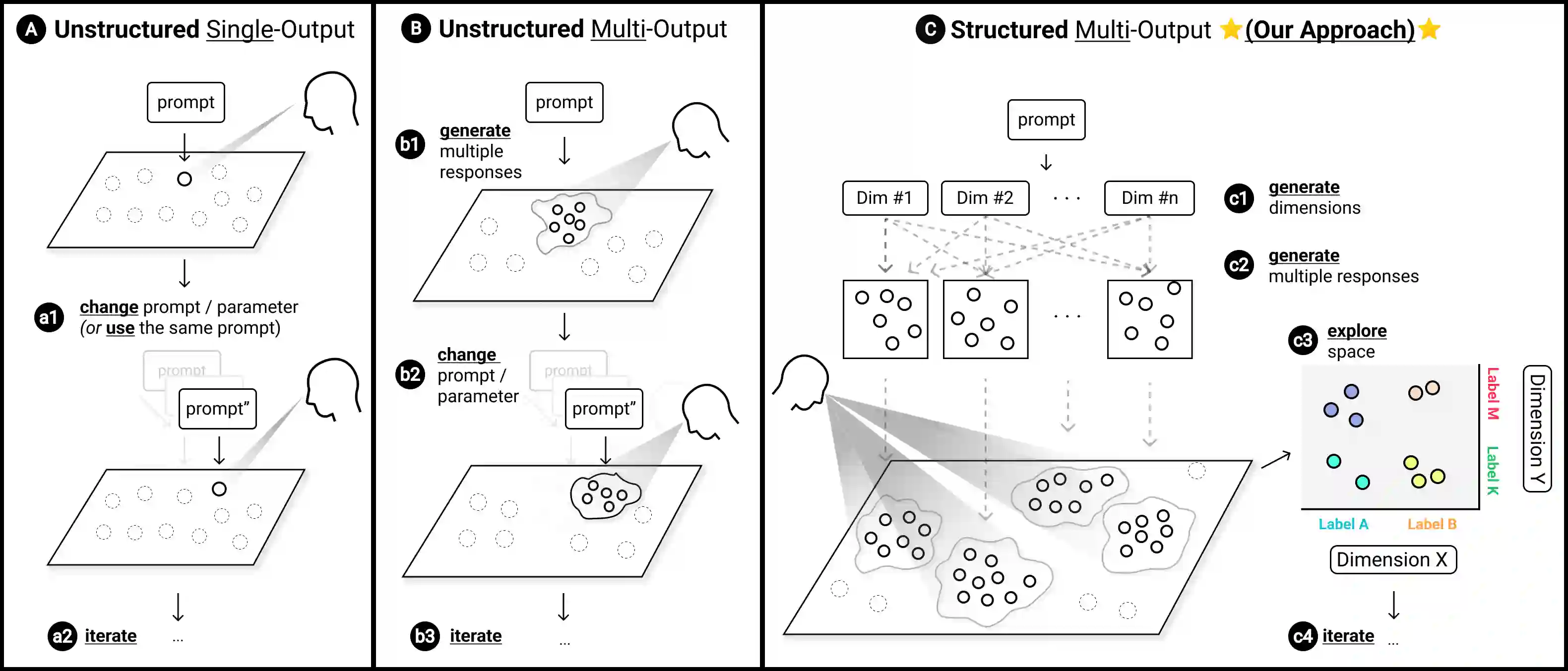
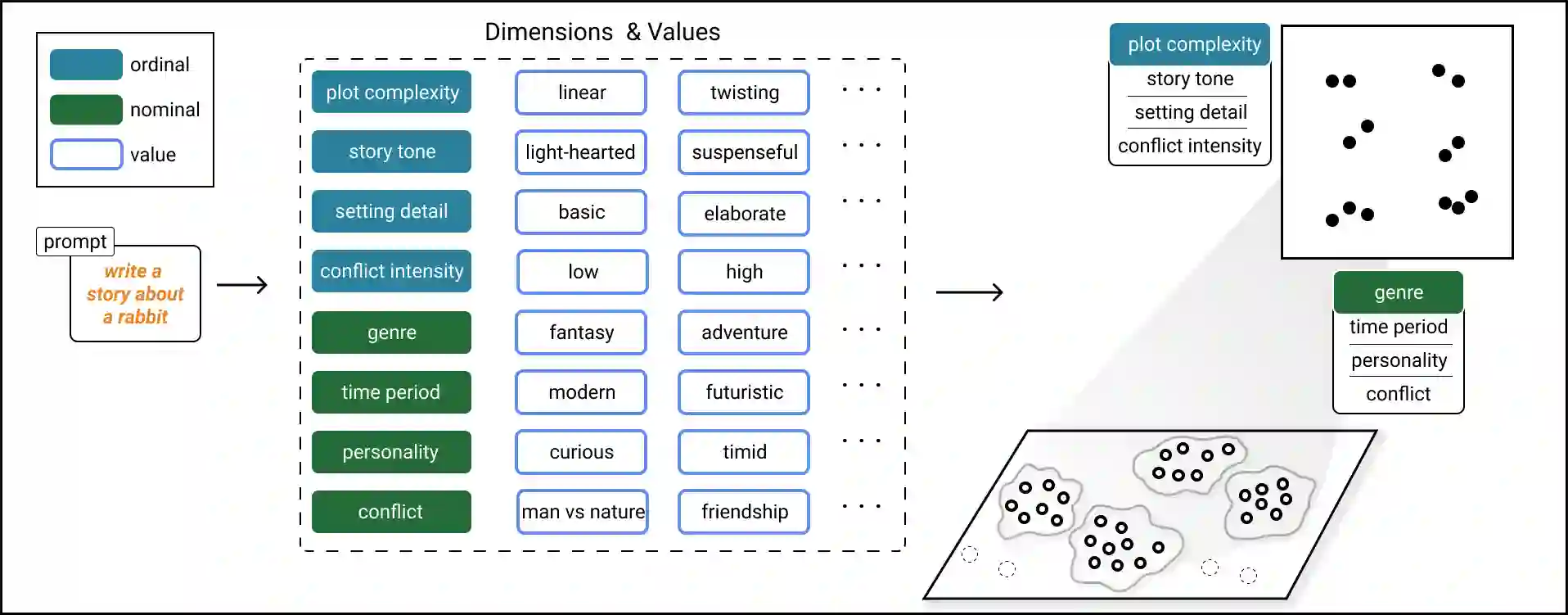
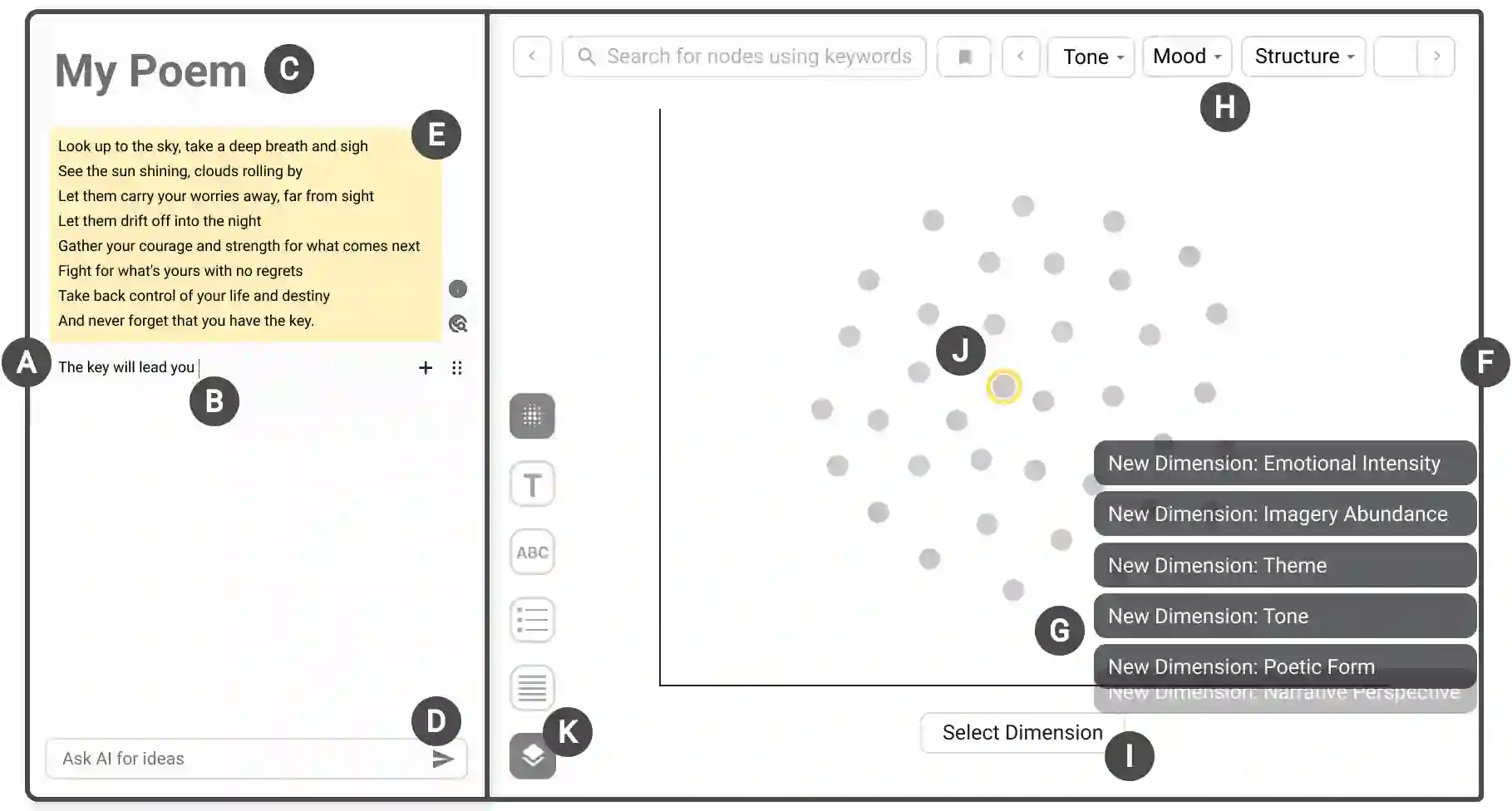
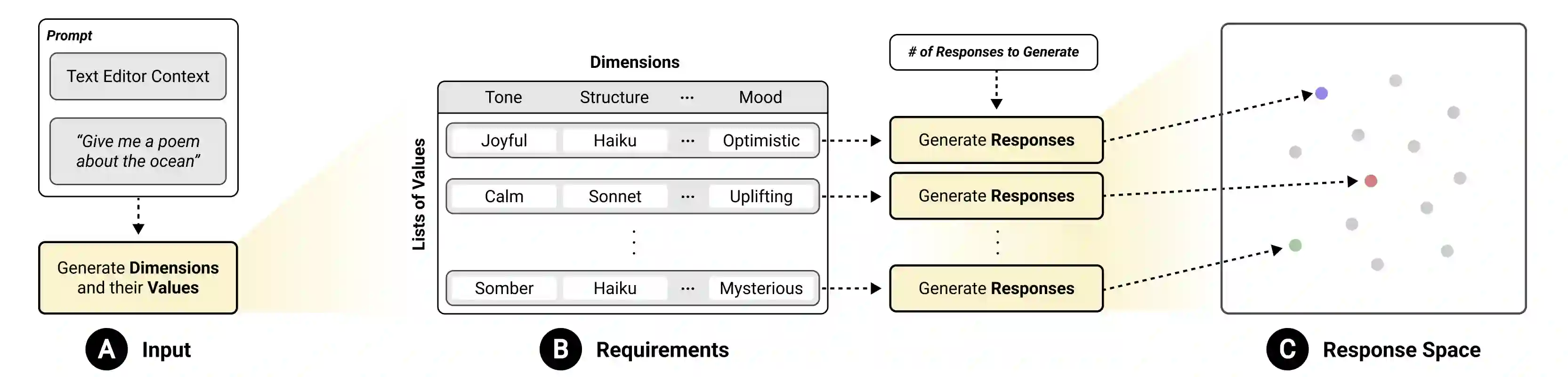
Thanks to their generative capabilities, large language models (LLMs) have become an invaluable tool for creative processes. These models have the capacity to produce hundreds and thousands of visual and textual outputs, offering abundant inspiration for creative endeavors. But are we harnessing their full potential? We argue that current interaction paradigms fall short, guiding users towards rapid convergence on a limited set of ideas, rather than empowering them to explore the vast latent design space in generative models. To address this limitation, we propose a framework that facilitates the structured generation of design space in which users can seamlessly explore, evaluate, and synthesize a multitude of responses. We demonstrate the feasibility and usefulness of this framework through the design and development of an interactive system, Luminate, and a user study with 8 professional writers. Our work advances how we interact with LLMs for creative tasks, introducing a way to harness the creative potential of LLMs.
翻译:得益于其生成能力,大语言模型已成为创意过程中不可或缺的工具。这类模型能够生成成百上千个视觉与文本输出,为创意工作提供丰富的灵感来源。然而,我们是否充分发挥了其全部潜力?我们认为,当前的交互范式存在不足——它们引导用户快速收敛于有限的想法集合,而非赋能用户探索生成模型中蕴含的广阔潜在设计空间。为突破这一局限,我们提出了一种框架,该框架能够促进设计空间的结构化生成,使用户得以无缝探索、评估并整合多种响应方案。我们通过设计并开发交互系统Luminate以及一项包含8名专业写作者的用户研究,验证了该框架的可行性与实用性。本研究推进了利用大语言模型完成创意任务的交互范式,提出了一种挖掘大语言模型创造潜能的新途径。





相关内容




 微信扫码咨询专知VIP会员