

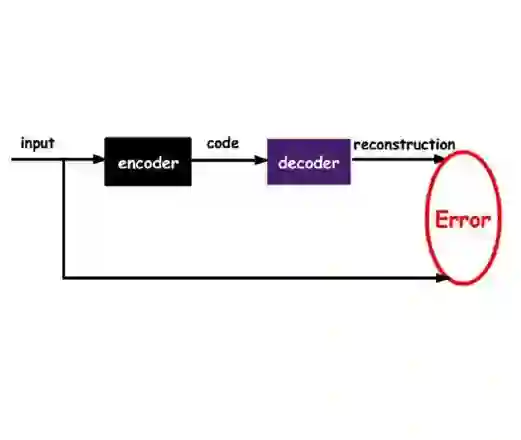
The development of mechanistic models of physical systems is essential for understanding their behavior and formulating predictions that can be validated experimentally. Calibration of these models, especially for complex systems, requires automated optimization methods due to the impracticality of manual parameter tuning. In this study, we use an autoencoder to automatically extract relevant features from the membrane trace of a complex neuron model emulated on the BrainScaleS-2 neuromorphic system, and subsequently leverage sequential neural posterior estimation (SNPE), a simulation-based inference algorithm, to approximate the posterior distribution of neuron parameters. Our results demonstrate that the autoencoder is able to extract essential features from the observed membrane traces, with which the SNPE algorithm is able to find an approximation of the posterior distribution. This suggests that the combination of an autoencoder with the SNPE algorithm is a promising optimization method for complex systems.
翻译:物理系统机理模型的开发对于理解其行为及构建可经实验验证的预测至关重要。由于手动参数调校在实际操作中不可行,这些模型(特别是复杂系统)的校准需要自动化优化方法。在本研究中,我们使用自编码器从BrainScaleS-2神经形态系统仿真的复杂神经元模型膜电位轨迹中自动提取相关特征,随后利用基于模拟的推理算法——序列神经后验估计(SNPE)来逼近神经元参数的后验分布。我们的结果表明,自编码器能够从观测到的膜电位轨迹中提取本质特征,基于这些特征,SNPE算法能够找到后验分布的近似解。这表明自编码器与SNPE算法的结合为复杂系统提供了一种具有前景的优化方法。




相关内容



 微信扫码咨询专知VIP会员