

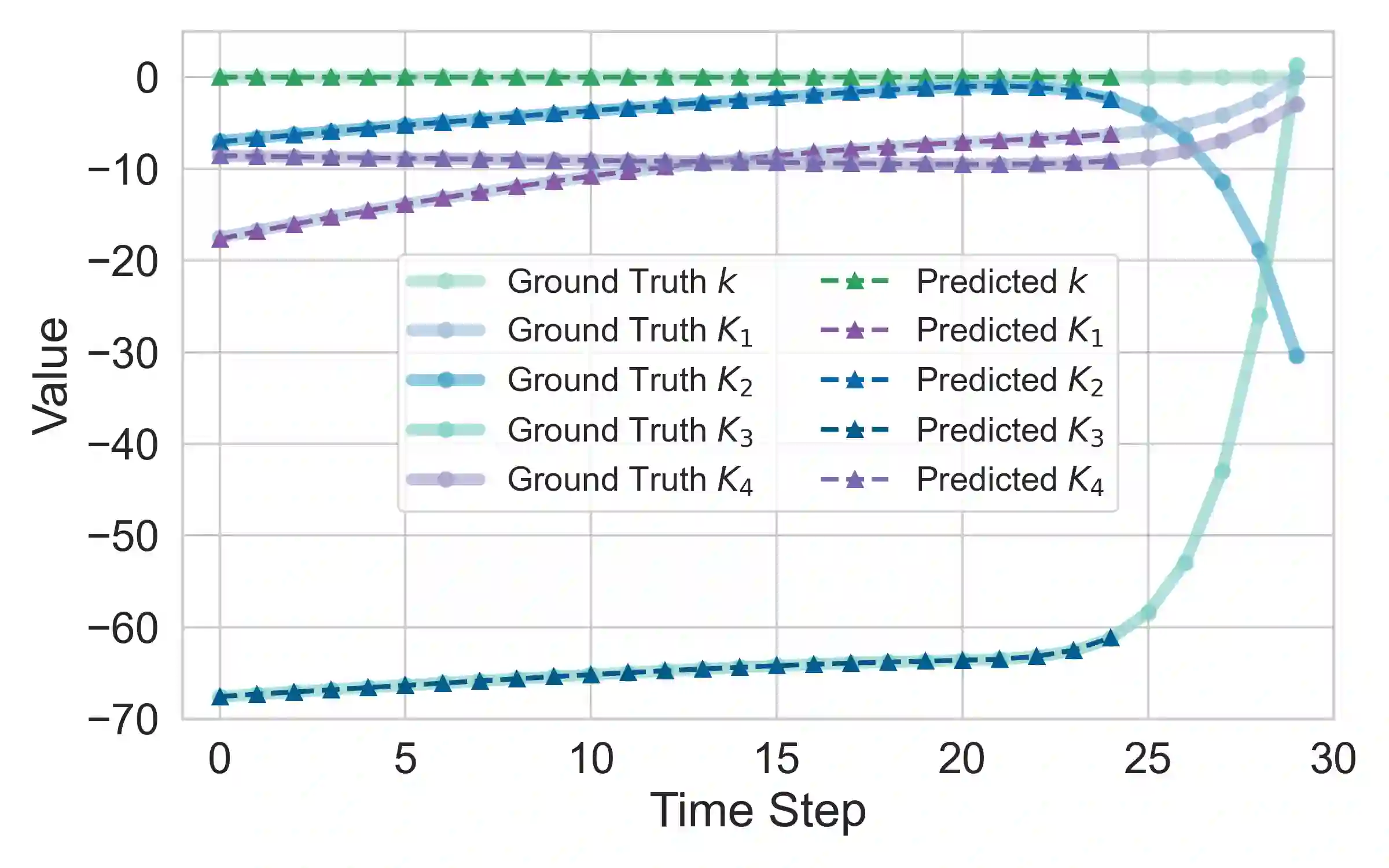
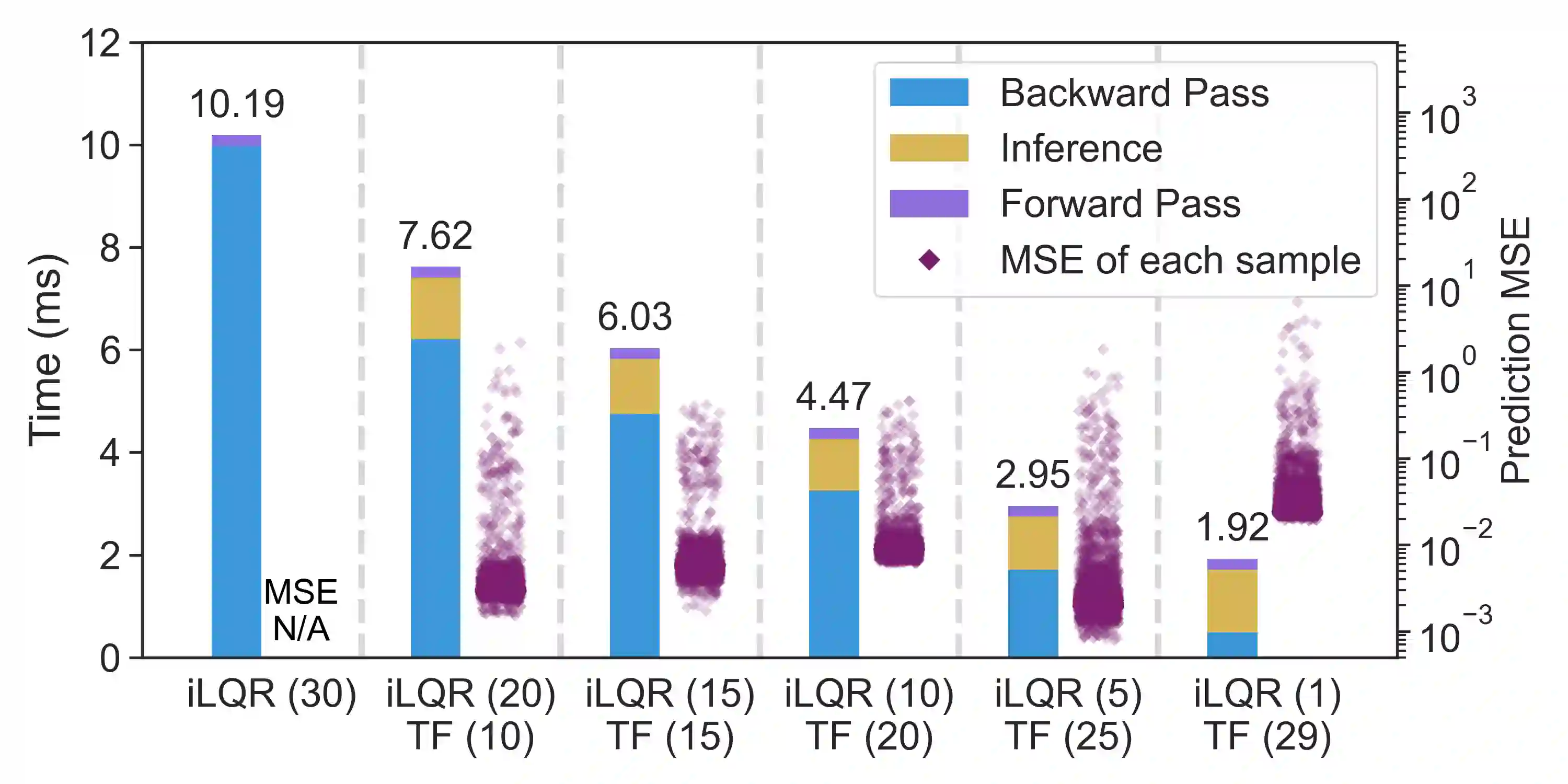
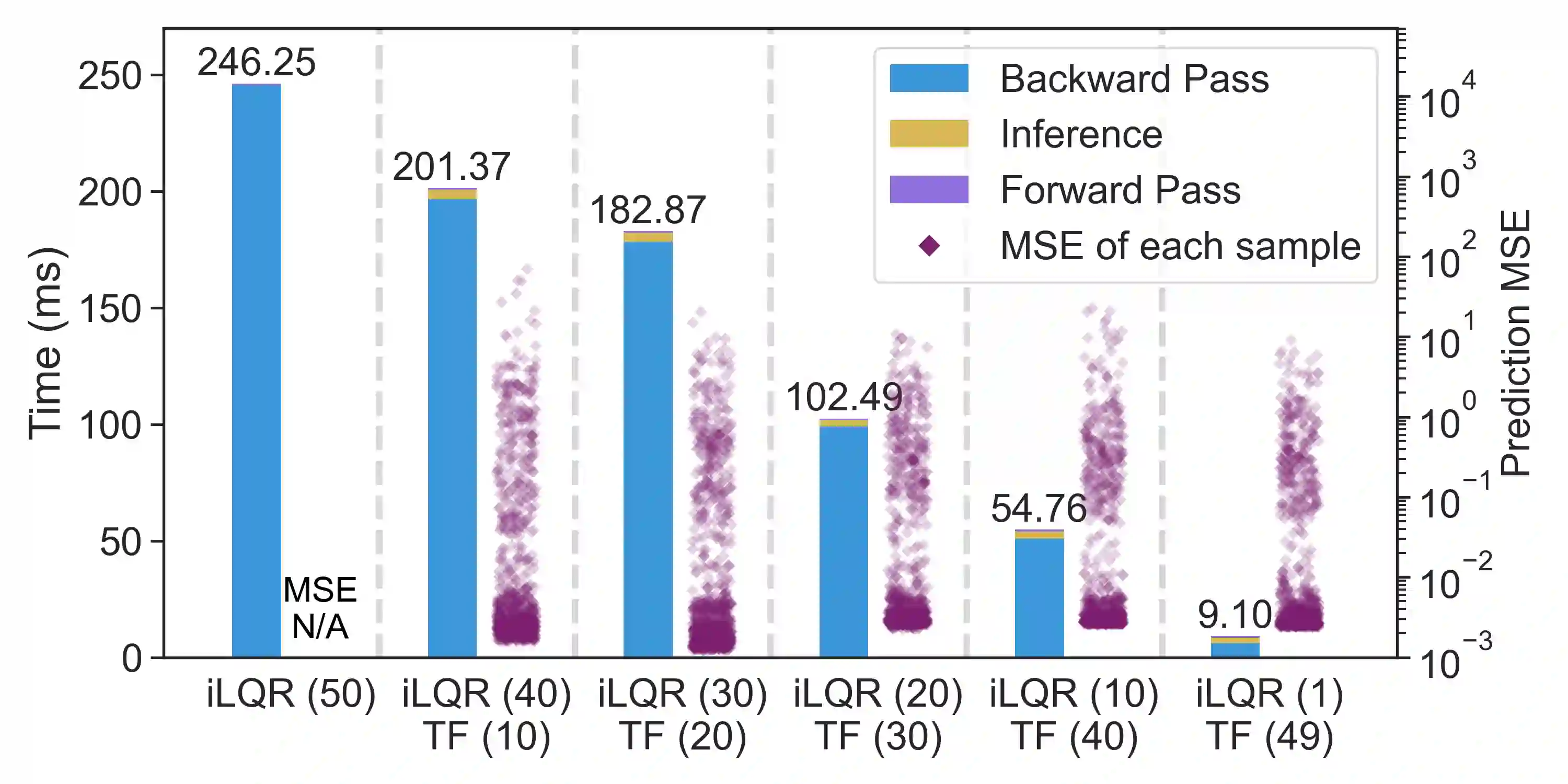
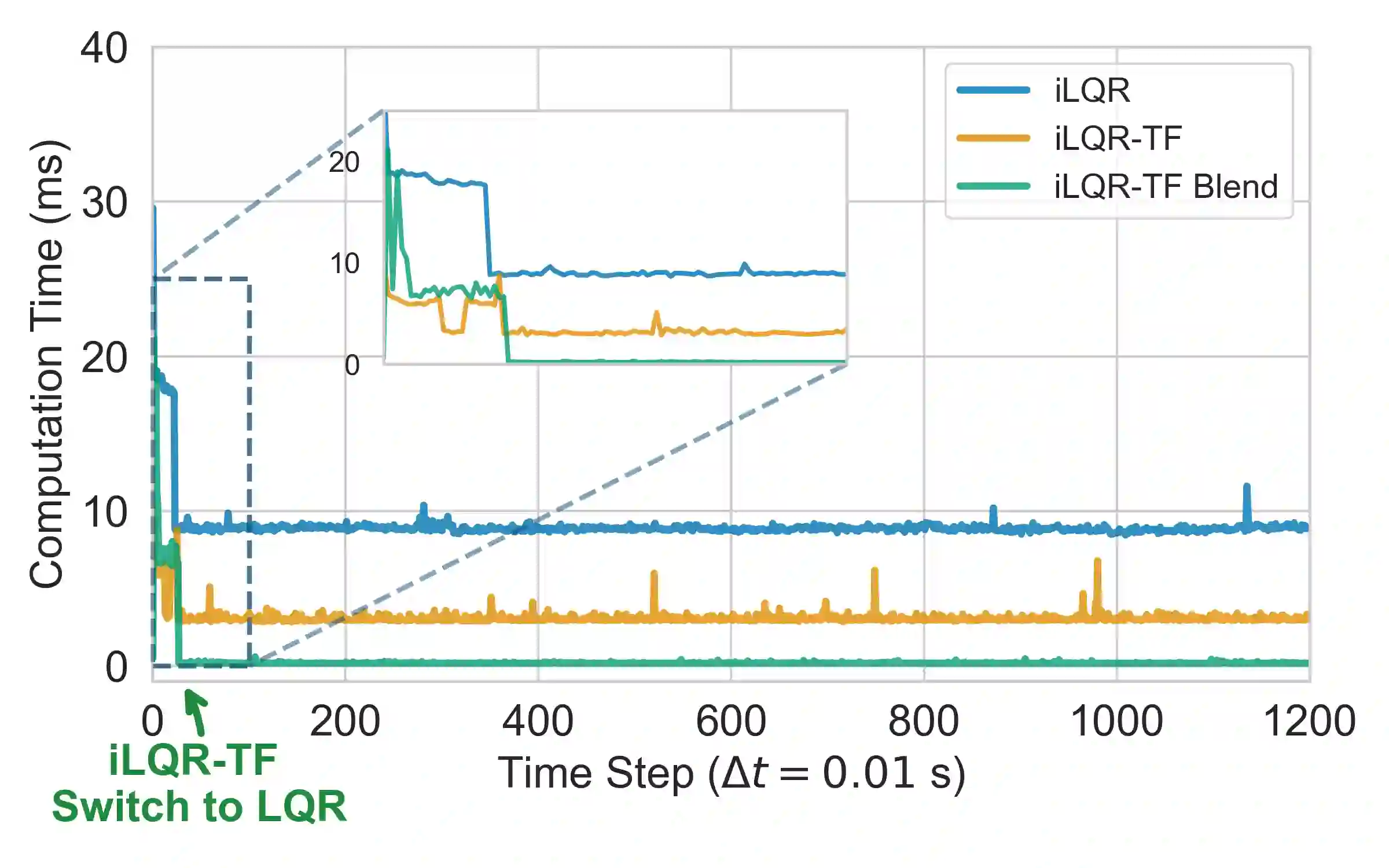
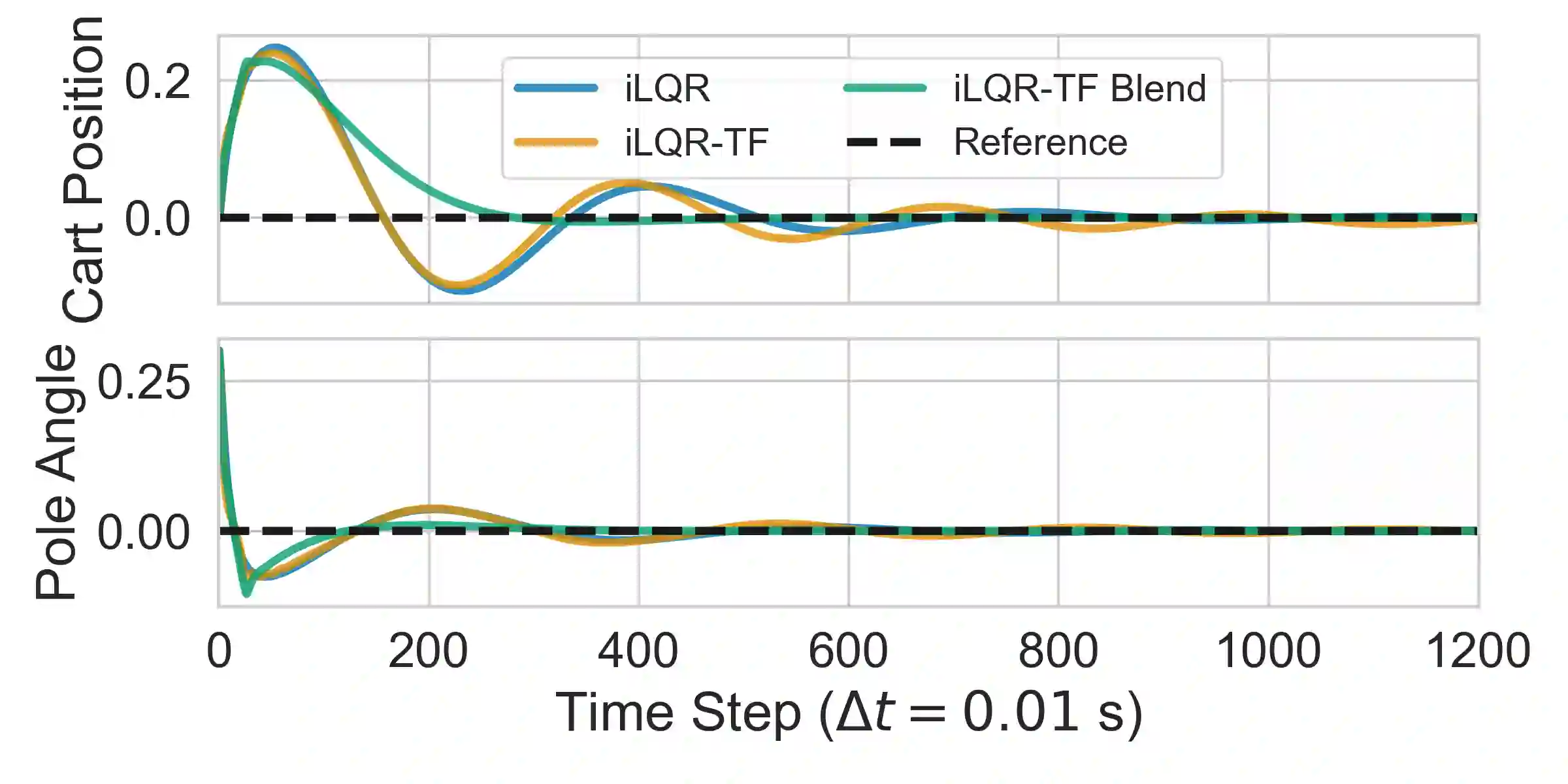
Real-time optimal control remains a fundamental challenge in robotics, especially for nonlinear systems with stringent performance requirements. As one of the representative trajectory optimization algorithms, the iterative Linear Quadratic Regulator (iLQR) faces limitations due to their inherently sequential computational nature, which restricts the efficiency and applicability of real-time control for robotic systems. While existing parallel implementations aim to overcome the above limitations, they typically demand additional computational iterations and high-performance hardware, leading to only modest practical improvements. In this paper, we introduce Quattro, a transformer-accelerated iLQR framework employing an algorithm-hardware co-design strategy to predict intermediate feedback and feedforward matrices. It facilitates effective parallel computations on resource-constrained devices without sacrificing accuracy. Experiments on cart-pole and quadrotor systems show an algorithm-level acceleration of up to 5.3$\times$ and 27$\times$ per iteration, respectively. When integrated into a Model Predictive Control (MPC) framework, Quattro achieves overall speedups of 2.8$\times$ for the cart-pole and 17.8$\times$ for the quadrotor compared to the one that applies traditional iLQR. Transformer inference is deployed on FPGA to maximize performance, achieving up to 27.3$\times$ speedup over commonly used computing devices, with around 2 to 4$\times$ power reduction and acceptable hardware overhead.
翻译:实时最优控制仍然是机器人学中的一个基本挑战,尤其对于具有严格性能要求的非线性系统。作为代表性的轨迹优化算法之一,迭代线性二次型调节器(iLQR)因其固有的串行计算特性而面临局限,这限制了机器人系统实时控制的效率和适用性。虽然现有的并行实现旨在克服上述局限,但它们通常需要额外的计算迭代和高性能硬件,导致实际改进有限。本文提出Quattro,一种采用算法-硬件协同设计策略的Transformer加速iLQR框架,用于预测中间反馈和前馈矩阵。该框架能够在资源受限的设备上实现有效的并行计算,且不牺牲精度。在倒立摆和四旋翼系统上的实验表明,每次迭代在算法层面分别实现了高达5.3$\times$和27$\times$的加速。当集成到模型预测控制(MPC)框架中时,与采用传统iLQR的框架相比,Quattro在倒立摆和四旋翼系统上分别实现了2.8$\times$和17.8$\times$的整体加速。Transformer推理部署在FPGA上以最大化性能,相比常用计算设备实现了高达27.3$\times$的加速,功耗降低约2至4$\times$,且硬件开销在可接受范围内。




相关内容




 微信扫码咨询专知VIP会员