

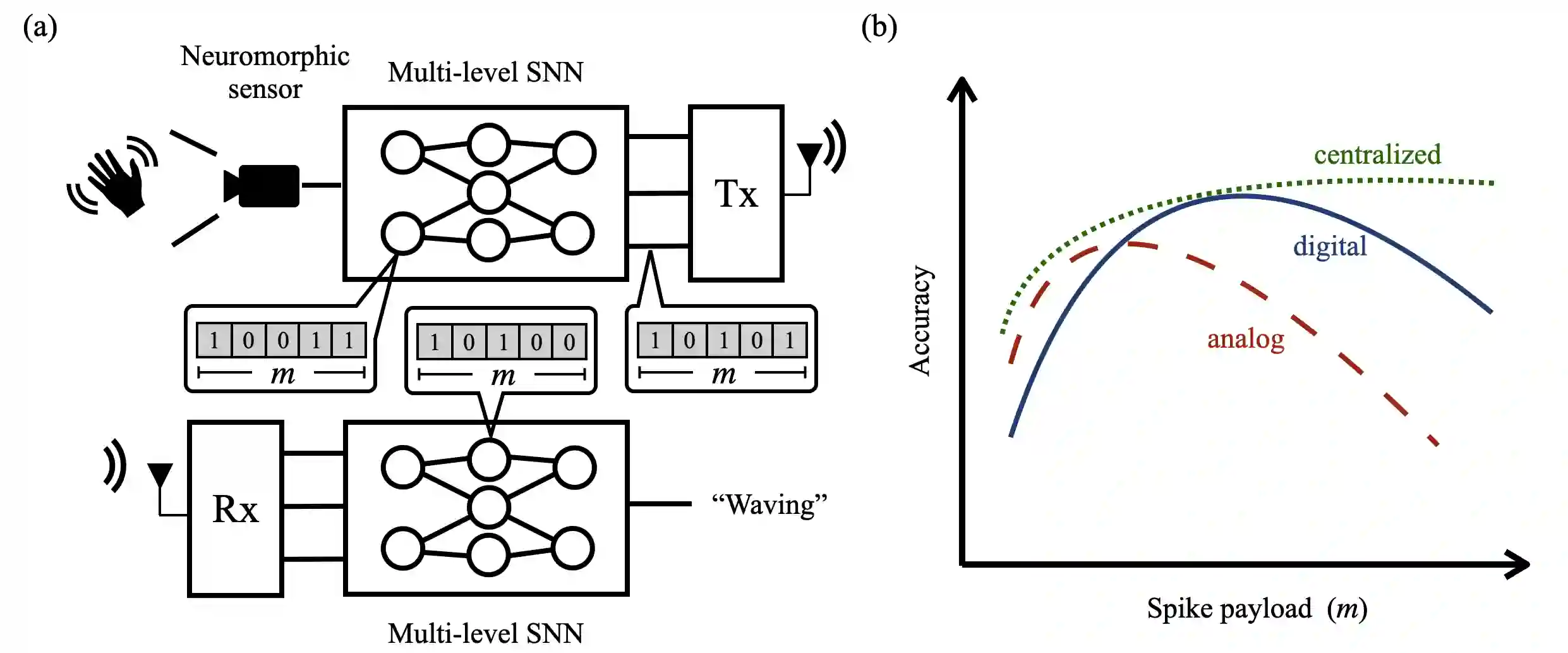
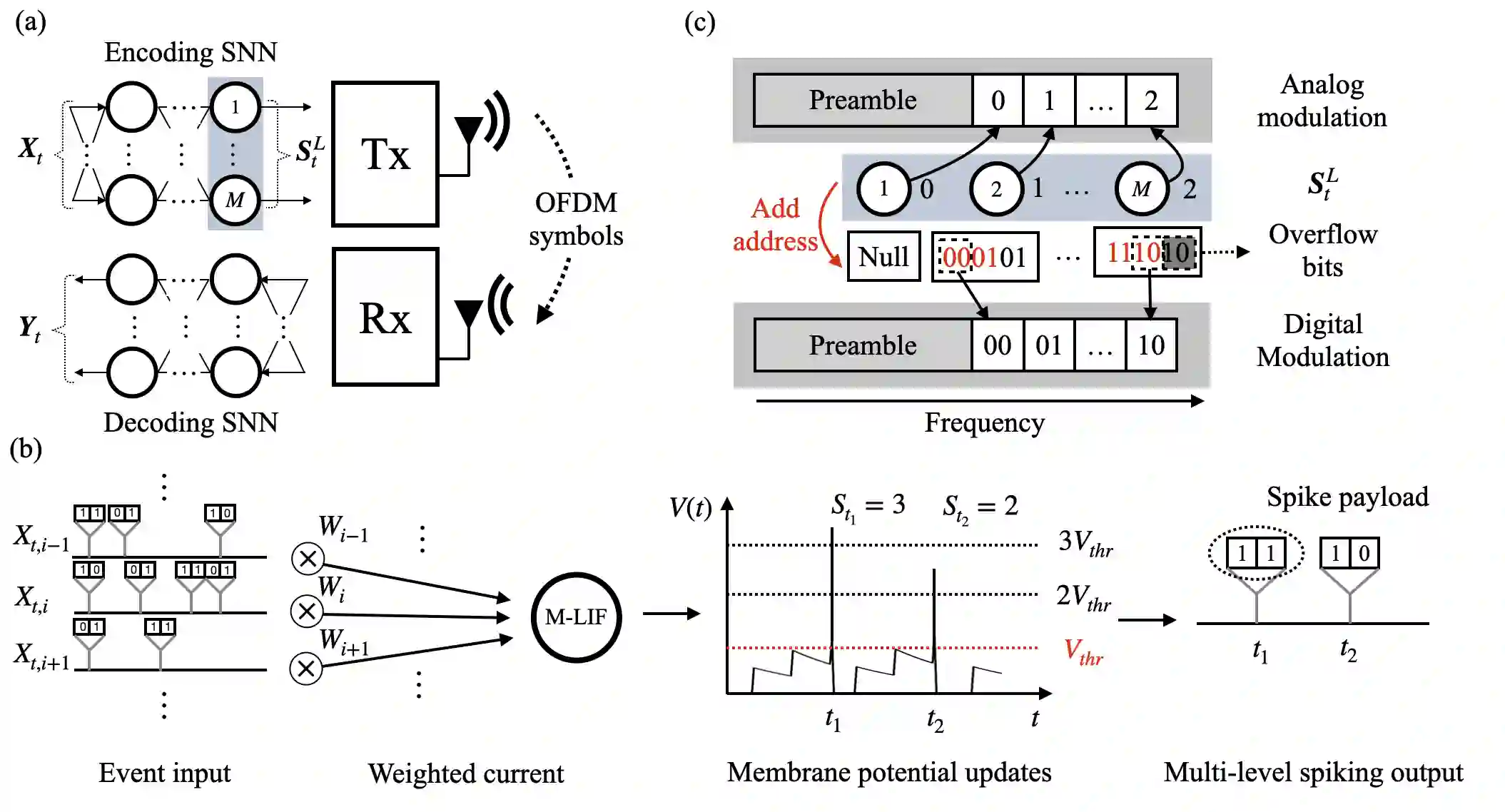
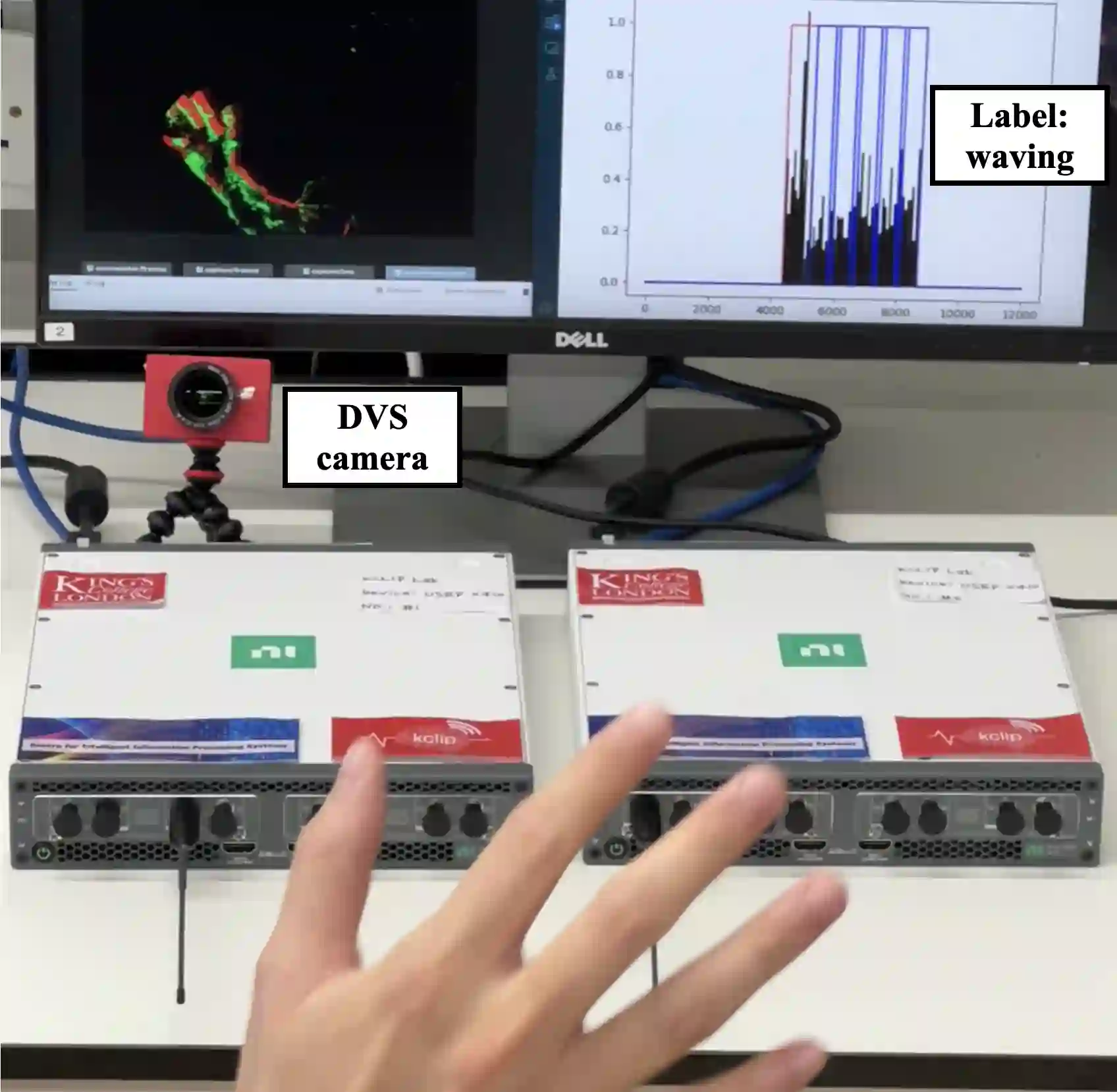
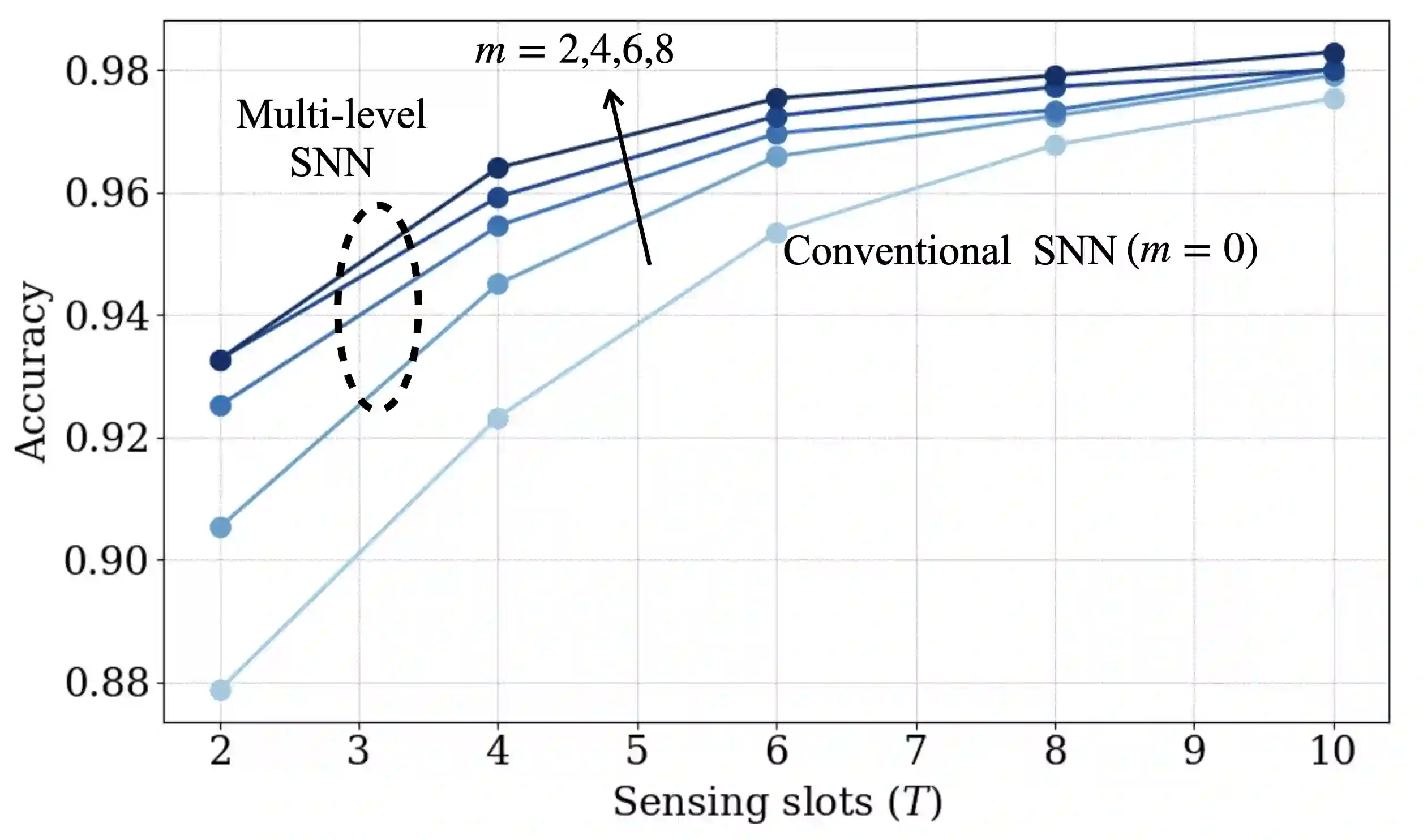
Inspired by biological processes, neuromorphic computing leverages spiking neural networks (SNNs) to perform inference tasks, offering significant efficiency gains for workloads involving sequential data. Recent advances in hardware and software have shown that embedding a small payload within each spike exchanged between spiking neurons can enhance inference accuracy without increasing energy consumption. To scale neuromorphic computing to larger workloads, split computing - where an SNN is partitioned across two devices - is a promising solution. In such architectures, the device hosting the initial layers must transmit information about the spikes generated by its output neurons to the second device. This establishes a trade-off between the benefits of multi-level spikes, which carry additional payload information, and the communication resources required for transmitting extra bits between devices. This paper presents the first comprehensive study of a neuromorphic wireless split computing architecture that employs multi-level SNNs. We propose digital and analog modulation schemes for an orthogonal frequency division multiplexing (OFDM) radio interface to enable efficient communication. Simulation and experimental results using software-defined radios reveal performance improvements achieved by multi-level SNN models and provide insights into the optimal payload size as a function of the connection quality between the transmitter and receiver.
翻译:受生物过程启发,神经形态计算利用脉冲神经网络(SNNs)执行推理任务,为涉及序列数据的工作负载提供了显著的效率提升。硬件和软件的最新进展表明,在脉冲神经元之间交换的每个脉冲中嵌入一个小的有效载荷,可以在不增加能耗的情况下提高推理精度。为了将神经形态计算扩展到更大的工作负载,分割计算——即将SNN分割到两个设备上——是一种有前景的解决方案。在此类架构中,承载初始层的设备必须将其输出神经元产生的脉冲信息传输给第二个设备。这就在多级脉冲(携带额外有效载荷信息)的优势与设备间传输额外比特所需的通信资源之间建立了一种权衡。本文首次对采用多级SNN的神经形态无线分割计算架构进行了全面研究。我们为正交频分复用(OFDM)无线电接口提出了数字和模拟调制方案,以实现高效通信。使用软件定义无线电的仿真和实验结果表明了多级SNN模型实现的性能改进,并深入探讨了作为发射机和接收机之间连接质量函数的最佳有效载荷大小。




相关内容




 微信扫码咨询专知VIP会员