

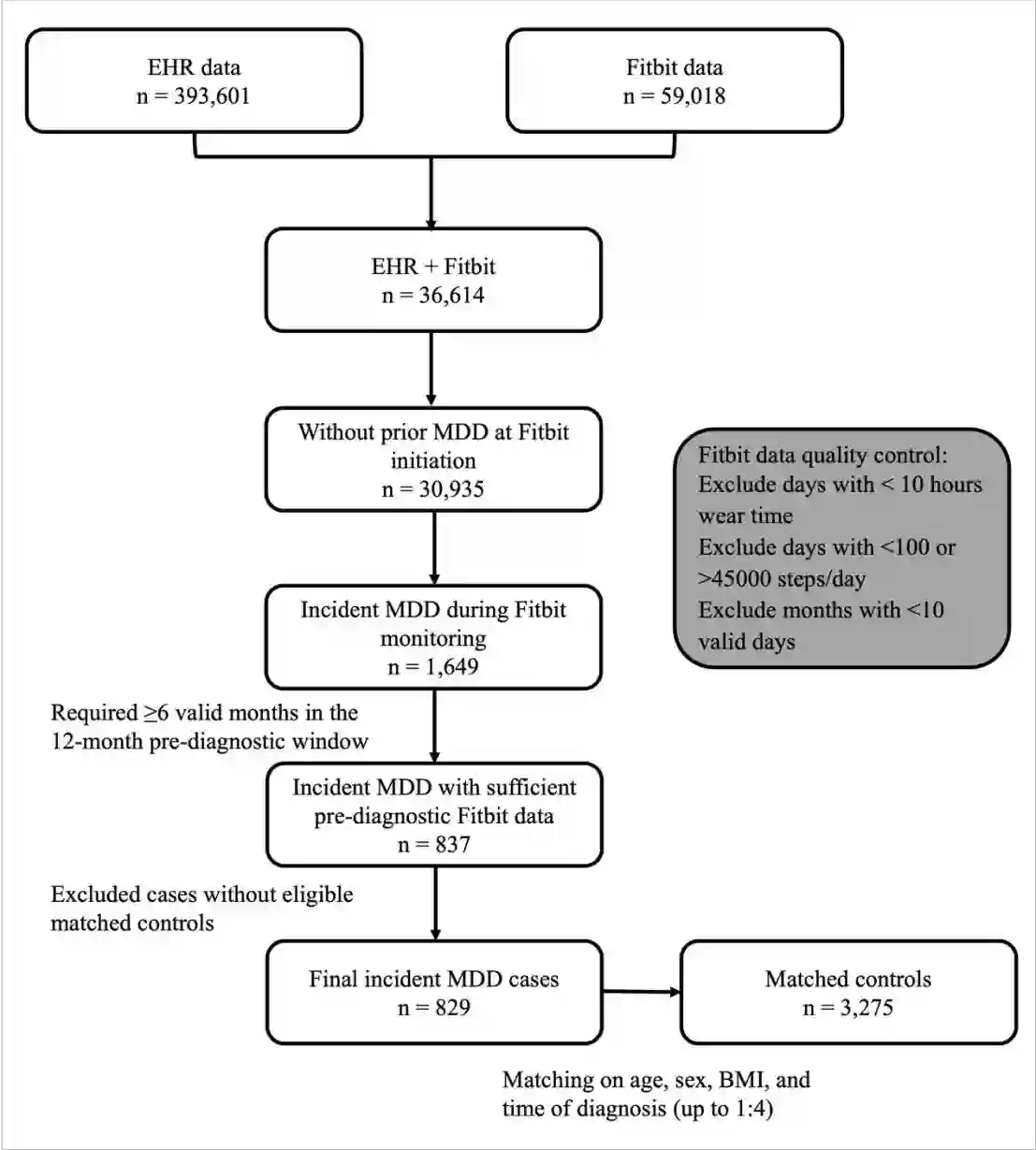
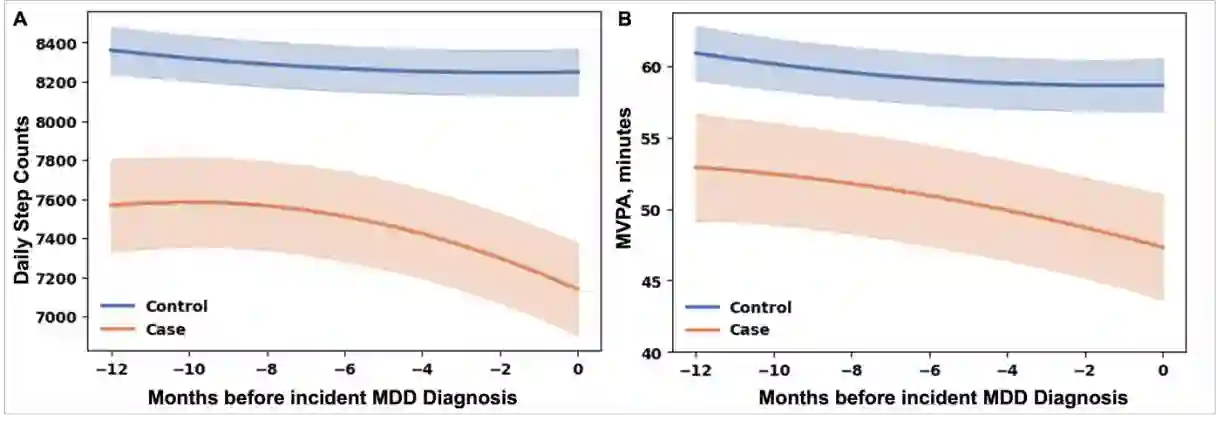
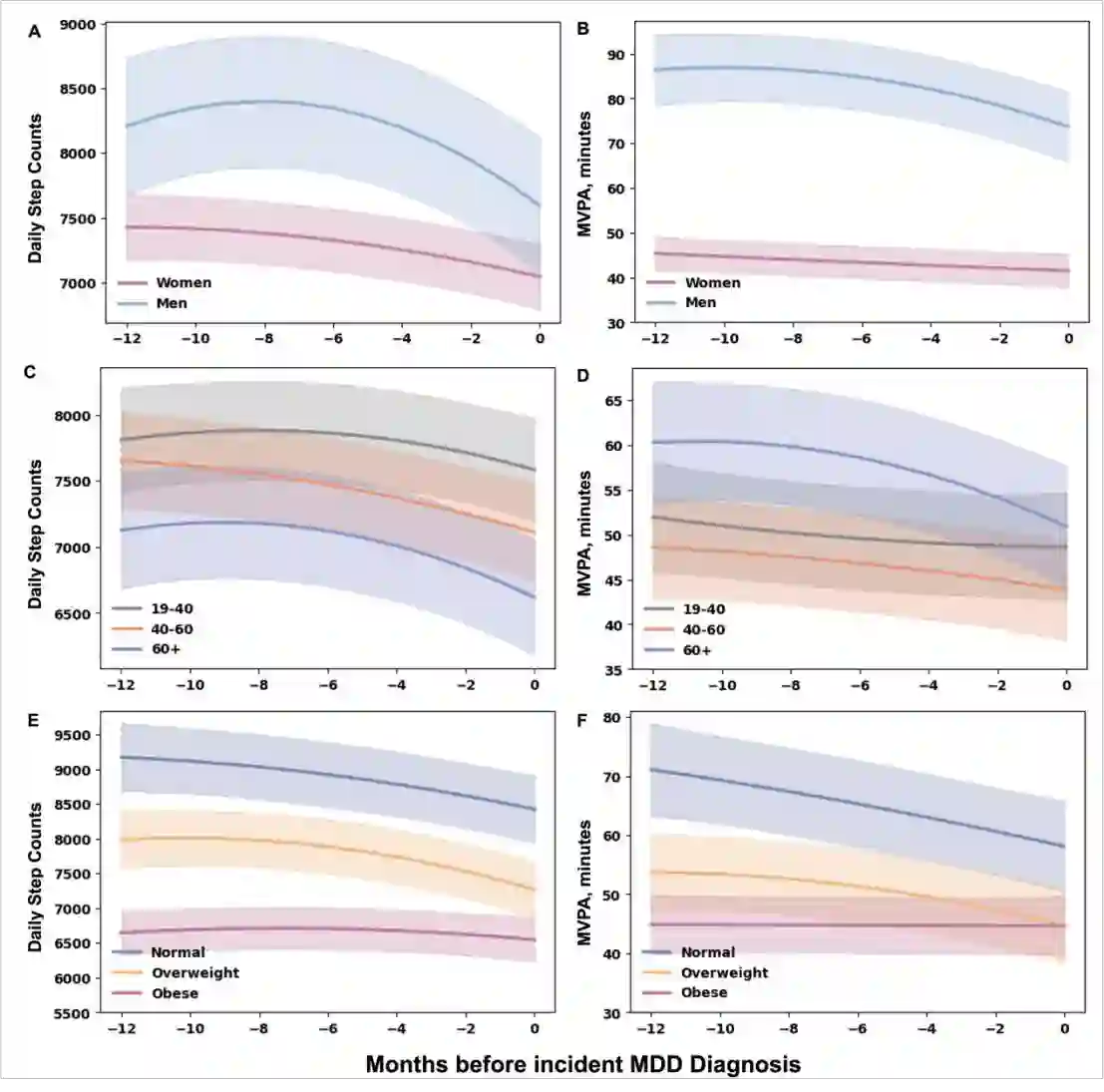
Low physical activity is a known risk factor for major depressive disorder (MDD), but changes in activity before a first clinical diagnosis remain unclear, especially using long-term objective measurements. This study characterized trajectories of wearable-measured physical activity during the year preceding incident MDD diagnosis. We conducted a retrospective nested case-control study using linked electronic health record and Fitbit data from the All of Us Research Program. Adults with at least 6 months of valid wearable data in the year before diagnosis were eligible. Incident MDD cases were matched to controls on age, sex, body mass index, and index time (up to four controls per case). Daily step counts and moderate-to-vigorous physical activity (MVPA) were aggregated into monthly averages. Linear mixed-effects models compared trajectories from 12 months before diagnosis to diagnosis. Within cases, contrasts identified when activity first significantly deviated from levels 12 months prior. The cohort included 4,104 participants (829 cases and 3,275 controls; 81.7% women; median age 48.4 years). Compared with controls, cases showed consistently lower activity and significant downward trajectories in both step counts and MVPA during the year before diagnosis (P < 0.001). Significant declines appeared about 4 months before diagnosis for step counts and 5 months for MVPA. Exploratory analyses suggested subgroup differences, including steeper declines in men, greater intensity reductions at older ages, and persistently low activity among individuals with obesity. Sustained within-person declines in physical activity emerged months before incident MDD diagnosis. Longitudinal wearable monitoring may provide early signals to support risk stratification and earlier intervention.
翻译:低身体活动是重度抑郁症(MDD)的已知风险因素,但在首次临床诊断前的活动变化尚不明确,尤其是在使用长期客观测量手段的情况下。本研究描述了在发生MDD诊断前一年内,通过可穿戴设备测量的身体活动轨迹。我们利用"全民健康研究计划"中关联的电子健康记录和Fitbit数据,开展了一项回顾性巢式病例对照研究。研究对象为在诊断前一年内拥有至少6个月有效可穿戴数据的成年人。新发MDD病例按年龄、性别、身体质量指数和索引时间与对照组进行匹配(每例病例最多匹配四名对照)。将每日步数和中等至剧烈强度身体活动(MVPA)汇总为月度平均值。使用线性混合效应模型比较从诊断前12个月至诊断时的活动轨迹。在病例组内,通过对比分析确定活动水平首次显著偏离12个月前基准值的时间节点。队列共包含4,104名参与者(829例病例和3,275名对照;女性占比81.7%;中位年龄48.4岁)。与对照组相比,病例组在诊断前一年内表现出持续较低的活动水平,且步数和MVPA均呈现显著下降轨迹(P < 0.001)。步数的显著下降出现在诊断前约4个月,MVPA的下降则出现在诊断前5个月。探索性分析提示存在亚组差异:男性下降幅度更大,高龄群体活动强度降低更明显,肥胖个体则持续保持低活动水平。在MDD发病前数月即可观察到个体身体活动的持续下降。纵向可穿戴监测可能为风险分层和早期干预提供预警信号。




相关内容

一是主要脏器无疾病,身体形态发育良好,体形均匀,人体各系统具有良好的生理功能,有较强的身体活动能力和劳动能力,这是对健康最基本的要求;
二是对疾病的抵抗能力较强,能够适应环境变化,各种生理刺激以及致病因素对身体的作用。传统的健康观是“无病即健康”,现代人的健康观是整体健康,世界卫生组织提出“健康不仅是躯体没有疾病,还要具备心理健康、社会适应良好和有道德”。因此,现代人的健康内容包括:躯体健康、心理健康、心灵健康、社会健康、智力健康、道德健康、环境健康等。健康是人的基本权利。健康是人生的第一财富。


 微信扫码咨询专知VIP会员