The Metropolis algorithm (MA) is a classic stochastic local search heuristic. It avoids getting stuck in local optima by occasionally accepting inferior solutions. To better and in a rigorous manner understand this ability, we conduct a mathematical runtime analysis of the MA on the CLIFF benchmark. Apart from one local optimum, cliff functions are monotonically increasing towards the global optimum. Consequently, to optimize a cliff function, the MA only once needs to accept an inferior solution. Despite seemingly being an ideal benchmark for the MA to profit from its main working principle, our mathematical runtime analysis shows that this hope does not come true. Even with the optimal temperature (the only parameter of the MA), the MA optimizes most cliff functions less efficiently than simple elitist evolutionary algorithms (EAs), which can only leave the local optimum by generating a superior solution possibly far away. This result suggests that our understanding of why the MA is often very successful in practice is not yet complete. Our work also suggests to equip the MA with global mutation operators, an idea supported by our preliminary experiments.


翻译:Metropolis算法(MA)是一种经典的随机局部搜索启发式算法。它通过偶尔接受劣质解来避免陷入局部最优。为更深入、严谨地理解这一特性,我们在CLIFF基准函数上对其进行了数学运行时间分析。除一个局部最优点外,悬崖函数单调递增至全局最优。因此,优化悬崖函数时,MA只需一次接受劣质解。尽管这看似是MA发挥核心工作原理的理想基准,但我们的数学运行时间分析表明,这一期望并未实现。即使在最优温度(MA的唯一参数)下,MA对多数悬崖函数的优化效率仍低于简单精英进化算法(EA)——后者仅能通过生成可能相距甚远的优越解来脱离局部最优。这一结果提示,我们对于MA在实践中常获成功的原因尚未完全理解。此外,我们的工作建议为MA配备全局变异算子,初步实验已支持这一观点。


0
下载
关闭预览

相关内容

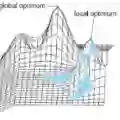
局部最优,是指对于一个问题的解在一定范围或区域内最优,或者说解决问题或达成目标的手段在一定范围或限制内最优。在应用数学和计算机科学中,优化问题的局部最优是在候选解决方案的相邻集合内最优(最大或最小)的解决方案。 这与全局最优相反,后者是所有可能的解决方案中的最优解决方案,而不仅仅是在特定值附近的最优解决方案。
【如何做研究】How to research ,22页ppt
专知会员服务
114+阅读 · 2021年4月17日
专知会员服务
52+阅读 · 2020年12月14日
强化学习最新教程,17页pdf
专知会员服务
182+阅读 · 2019年10月11日
【哈佛大学商学院课程Fall 2019】机器学习可解释性
专知会员服务
105+阅读 · 2019年10月9日
强化学习三篇论文 避免遗忘等
CreateAMind
20+阅读 · 2019年5月24日
Hierarchically Structured Meta-learning
CreateAMind
27+阅读 · 2019年5月22日
Transferring Knowledge across Learning Processes
CreateAMind
29+阅读 · 2019年5月18日
19篇ICML2019论文摘录选读!
专知
28+阅读 · 2019年4月28日
深度自进化聚类:Deep Self-Evolution Clustering
我爱读PAMI
15+阅读 · 2019年4月13日
逆强化学习-学习人先验的动机
CreateAMind
16+阅读 · 2019年1月18日
强化学习的Unsupervised Meta-Learning
CreateAMind
18+阅读 · 2019年1月7日
Unsupervised Learning via Meta-Learning
CreateAMind
44+阅读 · 2019年1月3日
【论文】变分推断(Variational inference)的总结
机器学习研究会
39+阅读 · 2017年11月16日
国家自然科学基金
1+阅读 · 2015年12月31日
国家自然科学基金
0+阅读 · 2014年12月31日
国家自然科学基金
1+阅读 · 2013年12月31日
国家自然科学基金
0+阅读 · 2013年12月31日
国家自然科学基金
0+阅读 · 2012年12月31日
国家自然科学基金
0+阅读 · 2011年12月31日
国家自然科学基金
1+阅读 · 2009年12月31日
国家自然科学基金
0+阅读 · 2009年12月31日
国家自然科学基金
0+阅读 · 2008年12月31日
Arxiv
0+阅读 · 2023年6月5日
Arxiv
0+阅读 · 2023年6月5日
Arxiv
12+阅读 · 2021年3月24日
VIP会员
最新内容
《通过小型无人机系统将情报能力“作战化”》
专知会员服务
3+阅读 · 今天7:28
消耗优势:美军的“精确规模化”概念
专知会员服务
7+阅读 · 6月15日
《离线语言支持系统:面向空战战术决策》
专知会员服务
8+阅读 · 6月15日
相关资讯
强化学习三篇论文 避免遗忘等
CreateAMind
20+阅读 · 2019年5月24日
Hierarchically Structured Meta-learning
CreateAMind
27+阅读 · 2019年5月22日
Transferring Knowledge across Learning Processes
CreateAMind
29+阅读 · 2019年5月18日
19篇ICML2019论文摘录选读!
专知
28+阅读 · 2019年4月28日
深度自进化聚类:Deep Self-Evolution Clustering
我爱读PAMI
15+阅读 · 2019年4月13日
逆强化学习-学习人先验的动机
CreateAMind
16+阅读 · 2019年1月18日
强化学习的Unsupervised Meta-Learning
CreateAMind
18+阅读 · 2019年1月7日
Unsupervised Learning via Meta-Learning
CreateAMind
44+阅读 · 2019年1月3日
【论文】变分推断(Variational inference)的总结
机器学习研究会
39+阅读 · 2017年11月16日
相关基金
国家自然科学基金
1+阅读 · 2015年12月31日
国家自然科学基金
0+阅读 · 2014年12月31日
国家自然科学基金
1+阅读 · 2013年12月31日
国家自然科学基金
0+阅读 · 2013年12月31日
国家自然科学基金
0+阅读 · 2012年12月31日
国家自然科学基金
0+阅读 · 2011年12月31日
国家自然科学基金
1+阅读 · 2009年12月31日
国家自然科学基金
0+阅读 · 2009年12月31日
国家自然科学基金
0+阅读 · 2008年12月31日
Top
微信扫码咨询专知VIP会员