

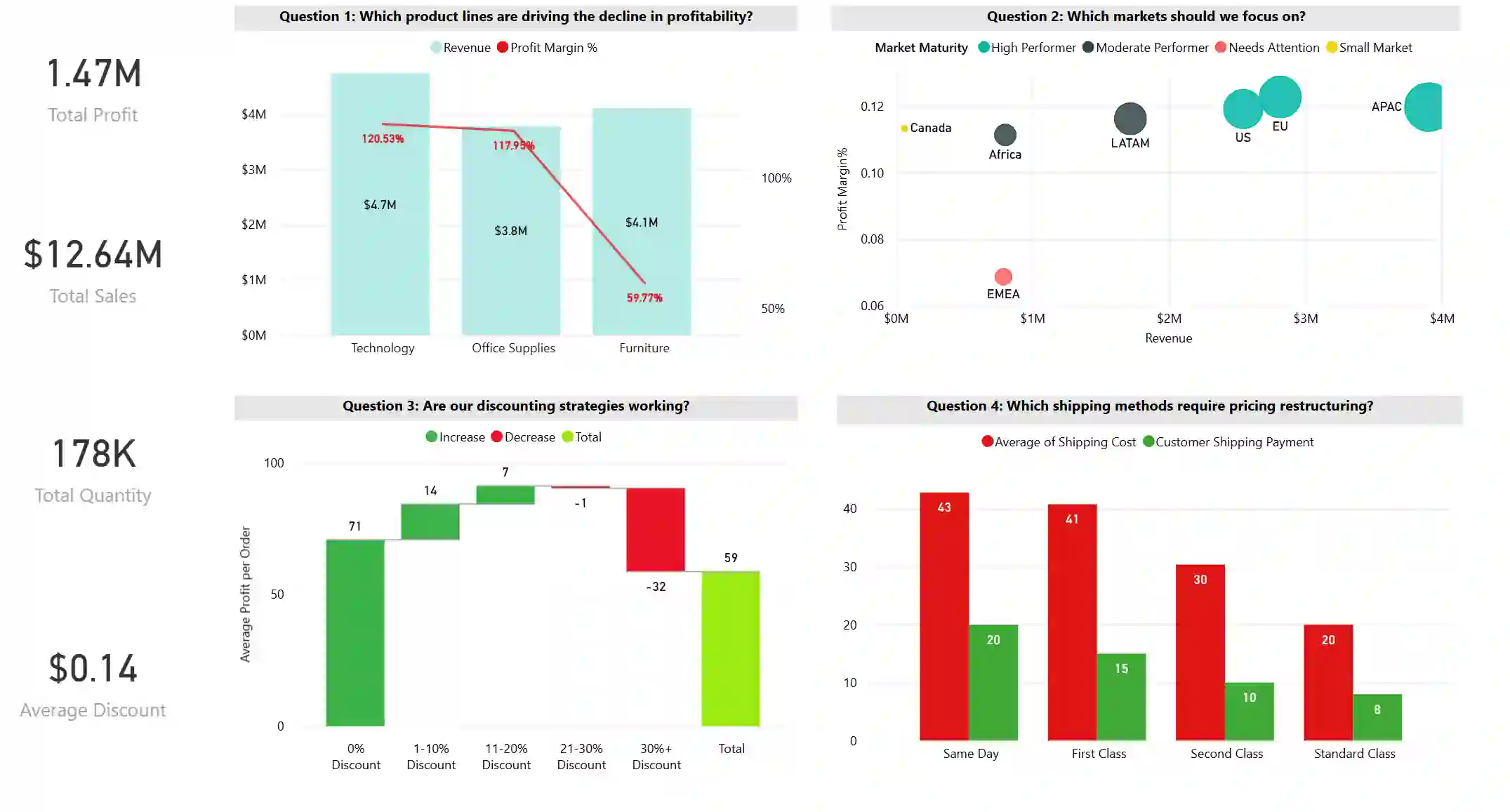
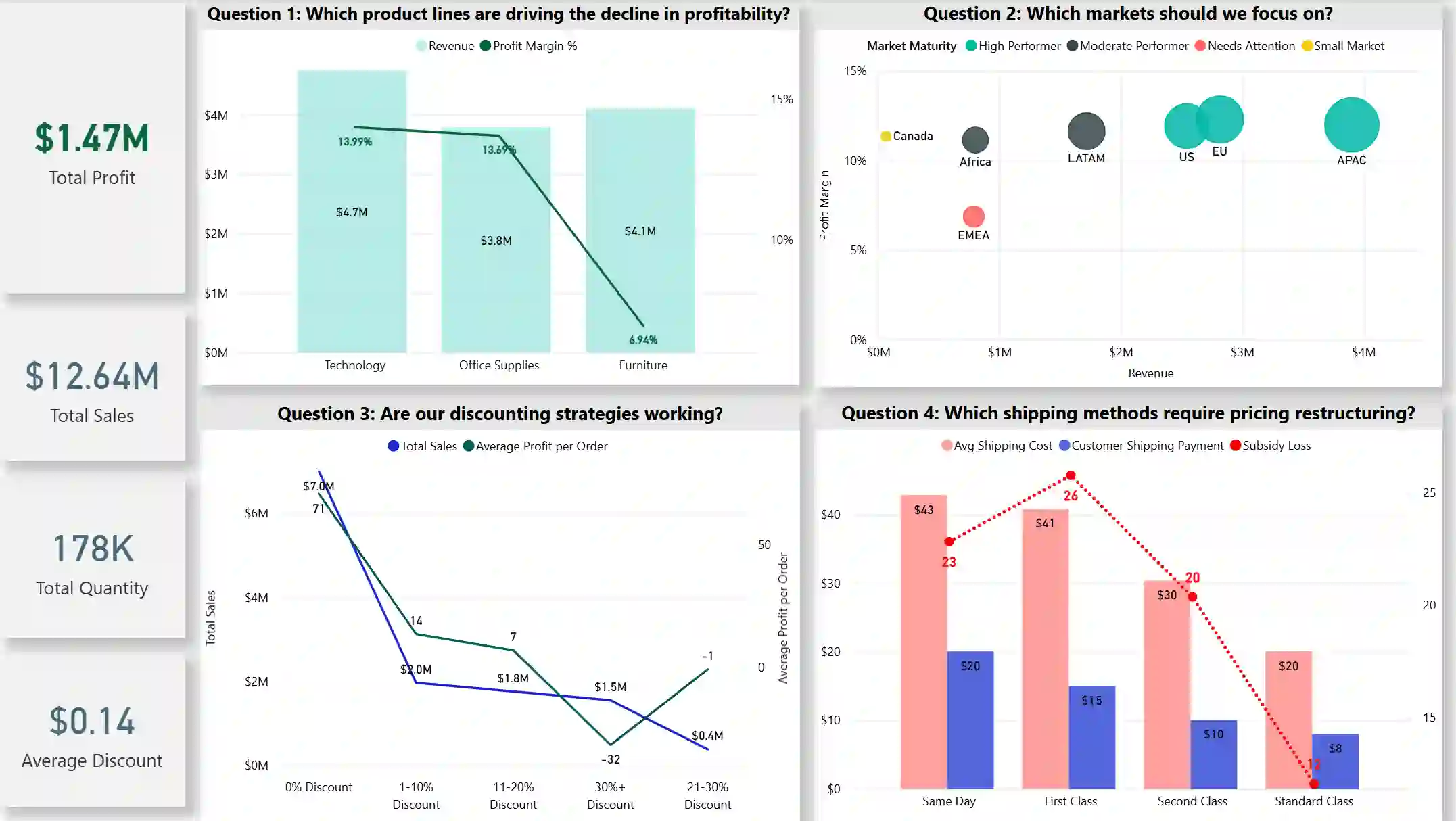
Effective business intelligence (BI) dashboards evolve through iterative refinement rather than single-pass design. Addressing the lack of structured improvement frameworks in BI practice, this study documents the four-stage evolution of a Power BI dashboard analyzing profitability decline in a fictional retail firm, Global Superstore. Using a dataset of \$12.64 million in sales across seven markets and three product categories, the project demonstrates how feedback-driven iteration and gap analysis convert exploratory visuals into decision-support tools. Guided by four executive questions on profitability, market prioritization, discount effects, and shipping costs, each iteration resolved analytical or interpretive shortcomings identified through collaborative review. Key findings include margin erosion in furniture (6.94% vs. 13.99% for technology), a 20% discount threshold beyond which profitability declined, and \$1.35 million in unrecovered shipping costs. Contributions include: (a) a replicable feedback-driven methodology grounded in iterative gap analysis; (b) DAX-based technical enhancements improving interpretive clarity; (c) an inductively derived six-element narrative framework; and (d) evidence that narrative coherence emerges organically through structured refinement. The methodology suggests transferable value for both BI practitioners and educators, pending validation across diverse organizational contexts.
翻译:有效的商业智能仪表板通过迭代优化而非一次性设计实现演进。针对商业智能实践中缺乏结构化改进框架的问题,本研究记录了一个分析虚构零售企业Global Superstore盈利能力下降的Power BI仪表板的四阶段演进过程。该项目使用涵盖七个市场、三个产品类别、总销售额达1264万美元的数据集,展示了如何通过反馈驱动的迭代与差距分析将探索性可视化转化为决策支持工具。围绕盈利能力、市场优先级、折扣效应和运输成本这四个高管关注的问题,每次迭代均通过协作评审识别并解决了分析或解释层面的不足。关键发现包括:家具类产品利润率侵蚀显著(6.94%,技术类产品为13.99%)、折扣超过20%阈值后盈利能力下降,以及135万美元的未回收运输成本。本研究的贡献包括:(a)基于迭代式差距分析、可复现的反馈驱动方法;(b)通过DAX技术增强提升解释清晰度;(c)归纳推导的六要素叙事框架;(d)叙事连贯性通过结构化优化自然形成的证据。该方法对商业智能从业者与教育者均具有可迁移价值,尚需在不同组织情境中进一步验证。






相关内容




 微信扫码咨询专知VIP会员