

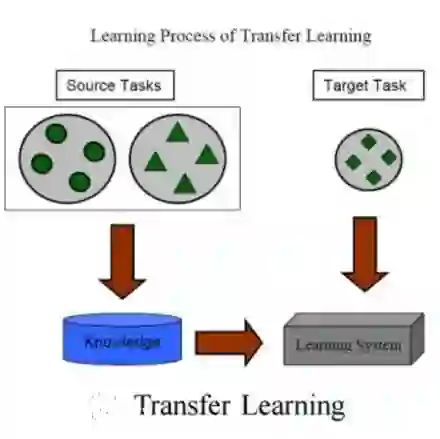
Improving diesel engine efficiency and emission reduction have been critical research topics. Recent government regulations have shifted this focus to another important area related to engine health and performance monitoring. Although the advancements in the use of deep learning methods for system monitoring have shown promising results in this direction, designing efficient methods suitable for field systems remains an open research challenge. The objective of this study is to develop a computationally efficient neural network-based approach for identifying unknown parameters of a mean value diesel engine model to facilitate physics-based health monitoring and maintenance forecasting. We propose a hybrid method combining physics informed neural networks, PINNs, and a deep neural operator, DeepONet to predict unknown parameters and gas flow dynamics in a diesel engine. The operator network predicts independent actuator dynamics learnt through offline training, thereby reducing the PINNs online computational cost. To address PINNs need for retraining with changing input scenarios, we propose two transfer learning (TL) strategies. The first strategy involves multi-stage transfer learning for parameter identification. While this method is computationally efficient as compared to online PINN training, improvements are required to meet field requirements. The second TL strategy focuses solely on training the output weights and biases of a subset of multi-head networks pretrained on a larger dataset, substantially reducing computation time during online prediction. We also evaluate our model for epistemic and aleatoric uncertainty by incorporating dropout in pretrained networks and Gaussian noise in the training dataset. This strategy offers a tailored, computationally inexpensive, and physics-based approach for parameter identification in diesel engine sub systems.
翻译:提升柴油发动机效率与降低排放一直是关键研究课题。近期政府法规将关注焦点转向发动机健康与性能监测这一重要领域。尽管深度学习在系统监测中的应用进展已展现出良好前景,但设计适用于现场系统的高效方法仍是开放的研究挑战。本研究旨在开发一种基于神经网络的计算高效方法,用于识别均值柴油发动机模型的未知参数,以促进基于物理原理的健康监测与维护预测。我们提出一种混合方法,结合物理信息神经网络(PINNs)与深度神经算子网络(DeepONet),以预测柴油发动机中的未知参数与气体流动动力学。算子网络通过离线训练学习独立的执行器动力学,从而降低PINNs的在线计算成本。针对PINNs在输入场景变化时需要重新训练的问题,我们提出两种迁移学习策略。第一种策略采用多阶段迁移学习进行参数识别。虽然该方法相较于在线PINN训练具有计算效率优势,但仍需改进以满足现场要求。第二种迁移学习策略专注于训练预训练多头网络子集的输出权重与偏置,这些网络已在更大数据集上预训练,从而显著减少在线预测时的计算时间。我们通过向预训练网络注入随机丢弃层及在训练数据集中添加高斯噪声,评估模型在认知不确定性与随机不确定性方面的表现。该策略为柴油发动机子系统参数识别提供了一种定制化、计算成本低廉且基于物理原理的解决方案。




相关内容




 微信扫码咨询专知VIP会员