

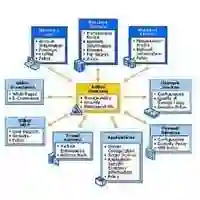
The world has been experiencing rapid urbanization over the last few decades, putting a strain on existing city infrastructure such as waste management, water supply management, public transport and electricity consumption. We are also seeing increasing pollution levels in cities threatening the environment, natural resources and health conditions. However, we must realize that the real growth lies in urbanization as it provides many opportunities to individuals for better employment, healthcare and better education. However, it is imperative to limit the ill effects of rapid urbanization through integrated action plans to enable the development of growing cities. This gave rise to the concept of a smart city in which all available information associated with a city will be utilized systematically for better city management. The proposed system architecture is divided in subsystems and is discussed in individual chapters. The first chapter introduces and gives overview to the reader of the complete system architecture. The second chapter discusses the data monitoring system and data lake system based on the oneM2M standards. DMS employs oneM2M as a middleware layer to achieve interoperability, and DLS uses a multi-tenant architecture with multiple logical databases, enabling efficient and reliable data management. The third chapter discusses energy monitoring and electric vehicle charging systems developed to illustrate the applicability of the oneM2M standards. The fourth chapter discusses the Data Exchange System based on the Indian Urban Data Exchange framework. DES uses IUDX standard data schema and open APIs to avoid data silos and enable secure data sharing. The fifth chapter discusses the 5D-IoT framework that provides uniform data quality assessment of sensor data with meaningful data descriptions.
翻译:过去几十年来,全球经历了快速城市化进程,对现有城市基础设施(如废物管理、供水管理、公共交通和电力消耗)带来了巨大压力。与此同时,城市污染水平日益升高,威胁着环境、自然资源和居民健康状况。然而我们必须认识到,真正的增长恰恰蕴含于城市化之中——它为个人提供了更好的就业机会、医疗卫生服务和教育资源。但至关重要的是,必须通过综合行动计划来限制快速城市化带来的负面影响,从而推动发展中的城市持续进步。由此催生了智慧城市的概念:即系统性地利用城市所有可用信息,实现更优的城市管理。本文提出的系统架构被划分为多个子系统,并在各章节中分别论述。第一章为读者介绍并概述完整系统架构。第二章讨论基于oneM2M标准的数据监测系统和数据湖系统:DMS采用oneM2M作为中间件层以实现互操作性,而DLS则采用多租户架构并结合多个逻辑数据库,实现高效可靠的数据管理。第三章讨论为验证oneM2M标准适用性而开发的能耗监测与电动汽车充电系统。第四章讨论基于印度城市数据交换框架的数据交换系统:DES采用IUDX标准数据模式与开放API,避免数据孤岛并实现安全数据共享。第五章讨论5D-IoT框架,该框架通过有意义的数据描述实现对传感器数据的统一数据质量评估。




相关内容



 微信扫码咨询专知VIP会员