

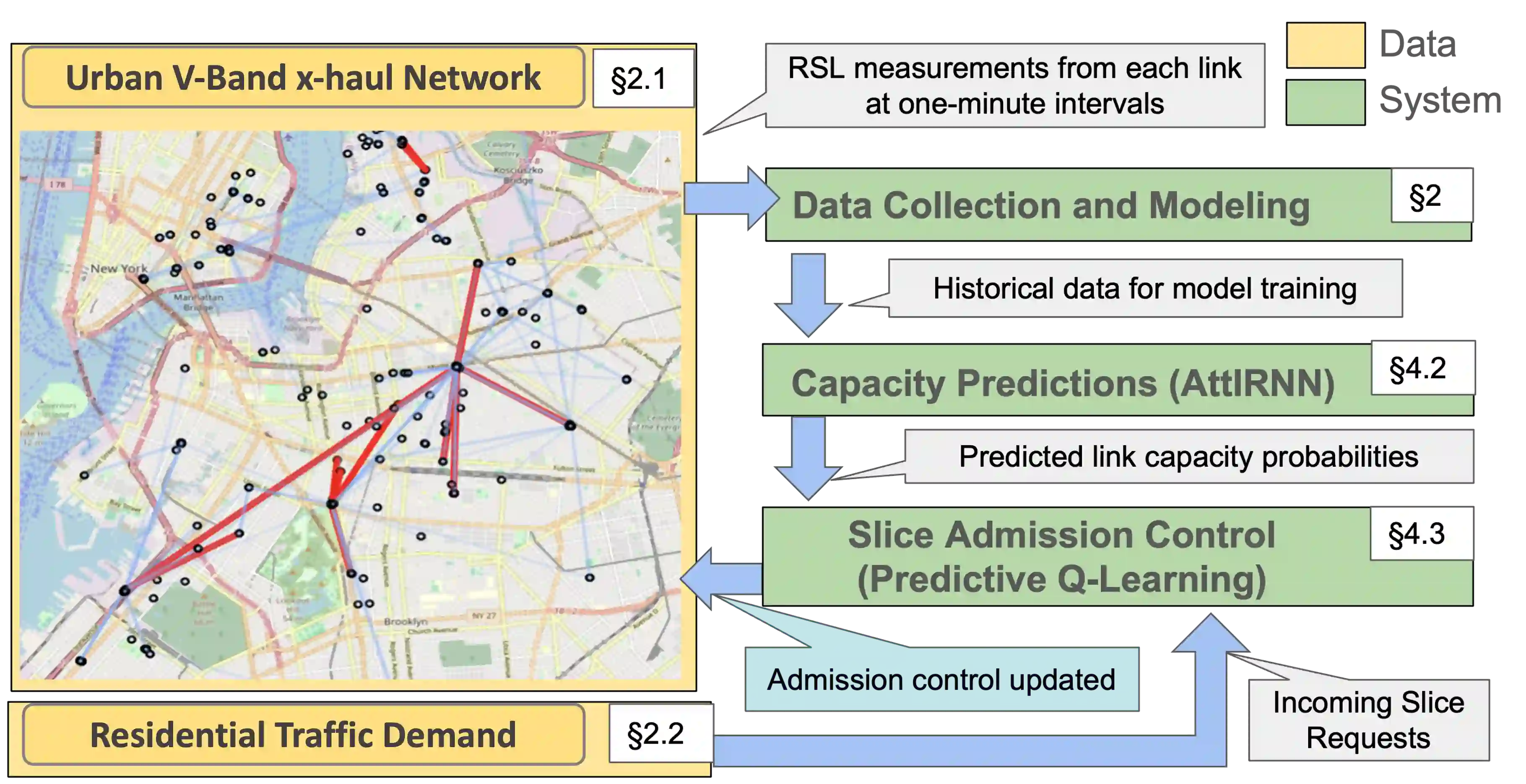
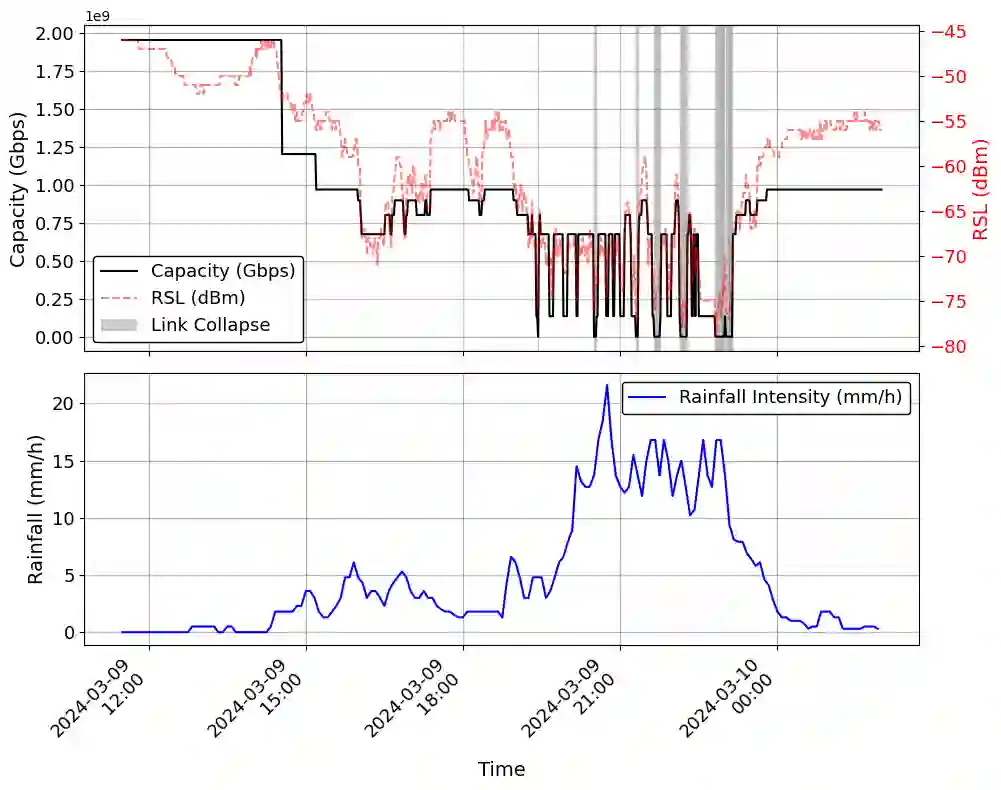
As emerging applications demand higher throughput and lower latencies, operators are increasingly deploying millimeter-wave (mmWave) links within x-haul transport networks, spanning fronthaul, midhaul, and backhaul segments. However, the inherent susceptibility of mmWave frequencies to weather-related attenuation, particularly rain fading, complicates the maintenance of stringent Quality of Service (QoS) requirements. This creates a critical challenge: making admission decisions under uncertainty regarding future network capacity. To address this, we develop a proactive slice admission control framework for mmWave x-haul networks subject to rain-induced fluctuations. Our objective is to improve network performance, ensure QoS, and optimize revenue, thereby surpassing the limitations of standard reactive approaches. The proposed framework integrates a deep learning predictor of future network conditions with a proactive Q-learning-based slice admission control mechanism. We validate our solution using real-world data from a mmWave x-haul deployment in a dense urban area, incorporating realistic models of link capacity attenuation and dynamic slice demands. Extensive evaluations demonstrate that our proactive solution achieves 2-3x higher long-term average revenue under dynamic link conditions, providing a scalable and resilient framework for adaptive admission control.
翻译:随着新兴应用对更高吞吐量和更低延迟的需求日益增长,运营商越来越多地在x-haul传输网络(涵盖前传、中传和回传段)内部署毫米波(mmWave)链路。然而,毫米波频率固有的易受天气相关衰减(尤其是雨衰)影响的特性,使得维持严格的服务质量(QoS)要求变得复杂。这带来了一个关键挑战:在未来网络容量不确定的情况下做出准入决策。为解决此问题,我们开发了一个针对受雨衰波动影响的毫米波x-haul网络的主动切片准入控制框架。我们的目标是提升网络性能、确保QoS并优化收益,从而超越标准被动式方法的局限。所提出的框架集成了一个用于预测未来网络状况的深度学习预测器和一个基于主动Q学习的切片准入控制机制。我们利用来自密集城区毫米波x-haul部署的真实数据,并结合了链路容量衰减和动态切片需求的真实模型,验证了我们的解决方案。广泛的评估表明,在动态链路条件下,我们的主动解决方案实现了2-3倍的长期平均收益提升,为自适应准入控制提供了一个可扩展且具有韧性的框架。





相关内容



 微信扫码咨询专知VIP会员