

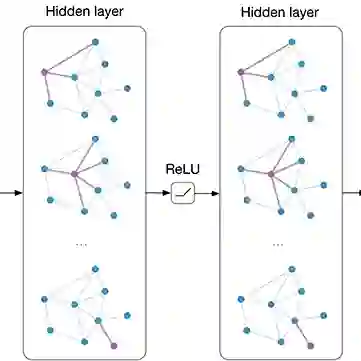
This study introduces a robust solution for the detection of Distributed Denial of Service (DDoS) attacks in Internet of Things (IoT) systems, leveraging the capabilities of Graph Convolutional Networks (GCN). By conceptualizing IoT devices as nodes within a graph structure, we present a detection mechanism capable of operating efficiently even in lossy network environments. We introduce various graph topologies for modeling IoT networks and evaluate them for detecting tunable futuristic DDoS attacks. By studying different levels of network connection loss and various attack situations, we demonstrate that the correlation-based hybrid graph structure is effective in spotting DDoS attacks, substantiating its good performance even in lossy network scenarios. The results indicate a remarkable performance of the GCN-based DDoS detection model with an F1 score of up to 91%. Furthermore, we observe at most a 2% drop in F1-score in environments with up to 50% connection loss. The findings from this study highlight the advantages of utilizing GCN for the security of IoT systems which benefit from high detection accuracy while being resilient to connection disruption.
翻译:本研究提出了一种针对物联网系统中分布式拒绝服务(DDoS)攻击的鲁棒检测方案,充分利用图卷积网络(GCN)的建模能力。通过将物联网设备抽象为图结构中的节点,我们构建了一种即使在有损网络环境下仍能高效运行的检测机制。我们引入了多种图拓扑结构用于物联网网络建模,并评估了它们在检测可调参数的未来型DDoS攻击中的表现。通过分析不同网络连接丢失程度及多种攻击场景,证明基于相关性的混合图结构在识别DDoS攻击方面具有显著有效性,即使面对有损网络场景仍能维持良好性能。实验结果表明,基于GCN的DDoS检测模型性能优异,F1分数最高可达91%。此外,在连接丢失高达50%的网络环境中,我们观察到F1分数下降幅度不超过2%。本研究揭示了图卷积网络在物联网系统安全中的应用优势,该方法在保持高检测精度的同时,对网络连接中断具有良好鲁棒性。




相关内容




 微信扫码咨询专知VIP会员