

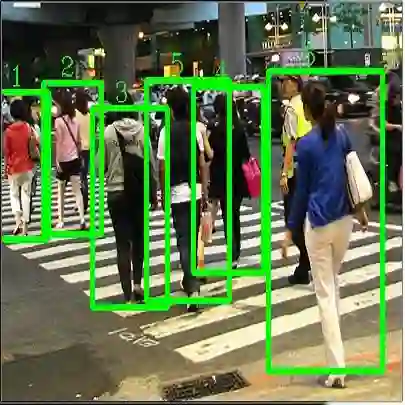
Semantic communication is focused on optimizing the exchange of information by transmitting only the most relevant data required to convey the intended message to the receiver and achieve the desired communication goal. For example, if we consider images as the information and the goal of the communication is object detection at the receiver side, the semantic of information would be the objects in each image. Therefore, by only transferring the semantics of images we can achieve the communication goal. In this paper, we propose a design framework for implementing semantic-aware and goal-oriented communication of images. To achieve this, we first define the baseline problem as a set of mathematical problems that can be optimized to improve the efficiency and effectiveness of the communication system. We consider two scenarios in which either the data rate or the error at the receiver is the limiting constraint. Our proposed system model and solution is inspired by the concept of auto-encoders, where the encoder and the decoder are respectively implemented at the transmitter and receiver to extract semantic information for specific object detection goals. Our numerical results validate the proposed design framework to achieve low error or near-optimal in a goal-oriented communication system while reducing the amount of data transfers.
翻译:语义通信致力于优化信息交换过程,通过仅传输接收方传达预期消息并达成通信目标所需的最相关数据。例如,若以图像作为信息载体,且通信目标为接收端的物体检测,则信息语义即为每幅图像中的物体。因此,仅需传输图像语义即可实现通信目标。本文提出一种实现图像语义感知与目标导向通信的设计框架。为此,我们首先将基准问题定义为可通过优化提升通信系统效率与效能的一系列数学问题,并考虑数据速率或接收端误差作为限制条件的两种场景。所提出的系统模型与解决方案基于自编码器概念,其中编码器与解码器分别部署于发射端与接收端,用于提取特定物体检测目标的语义信息。数值结果验证了所提设计框架在减少数据传输量的同时,可在目标导向通信系统中实现低误差或近最优性能。




相关内容



 微信扫码咨询专知VIP会员