

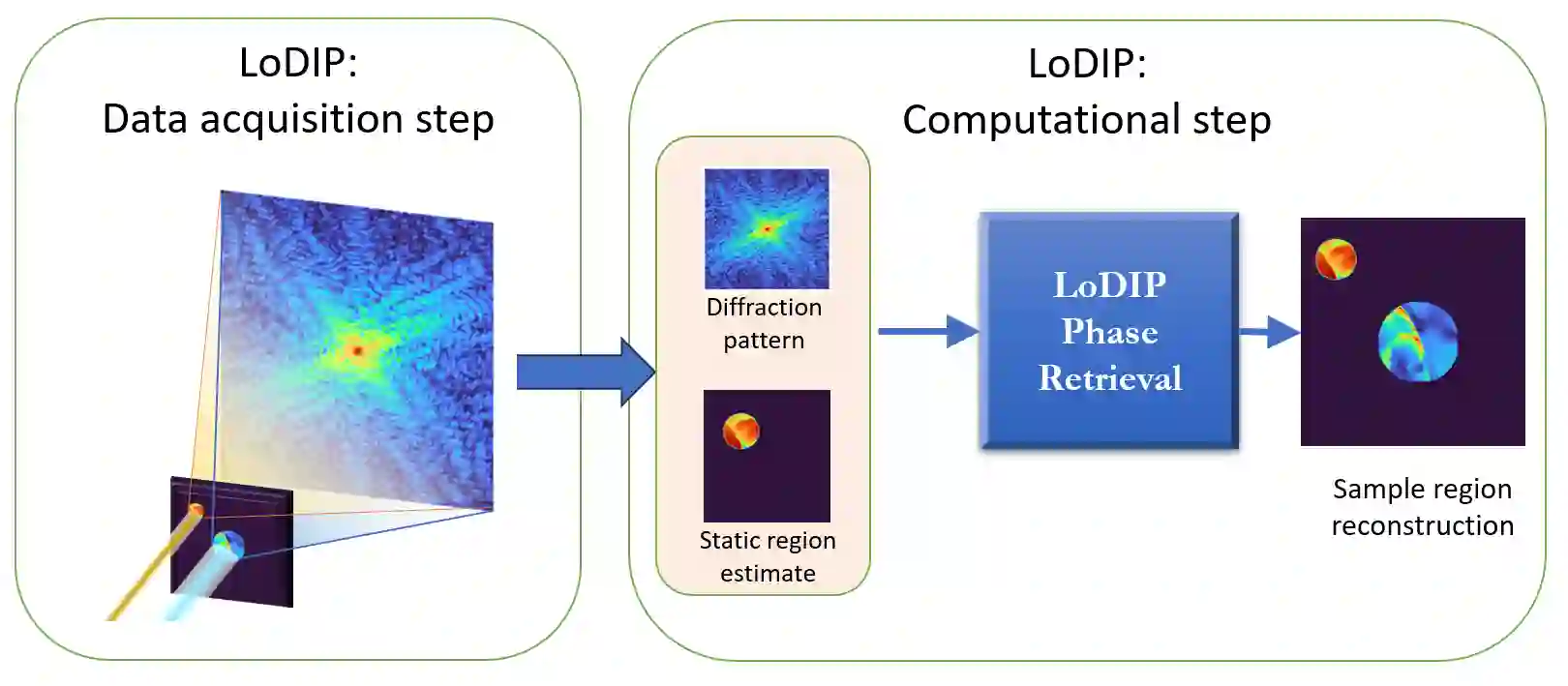
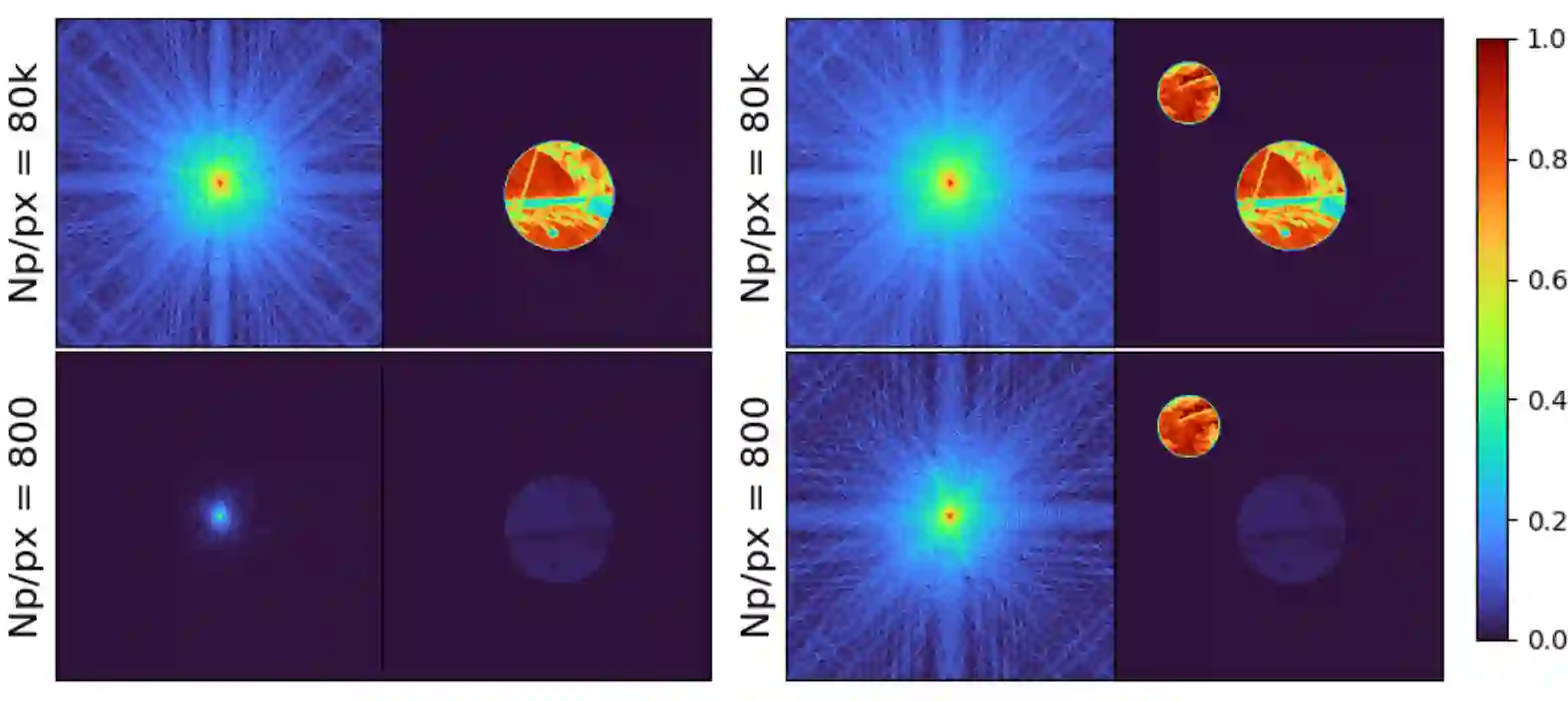
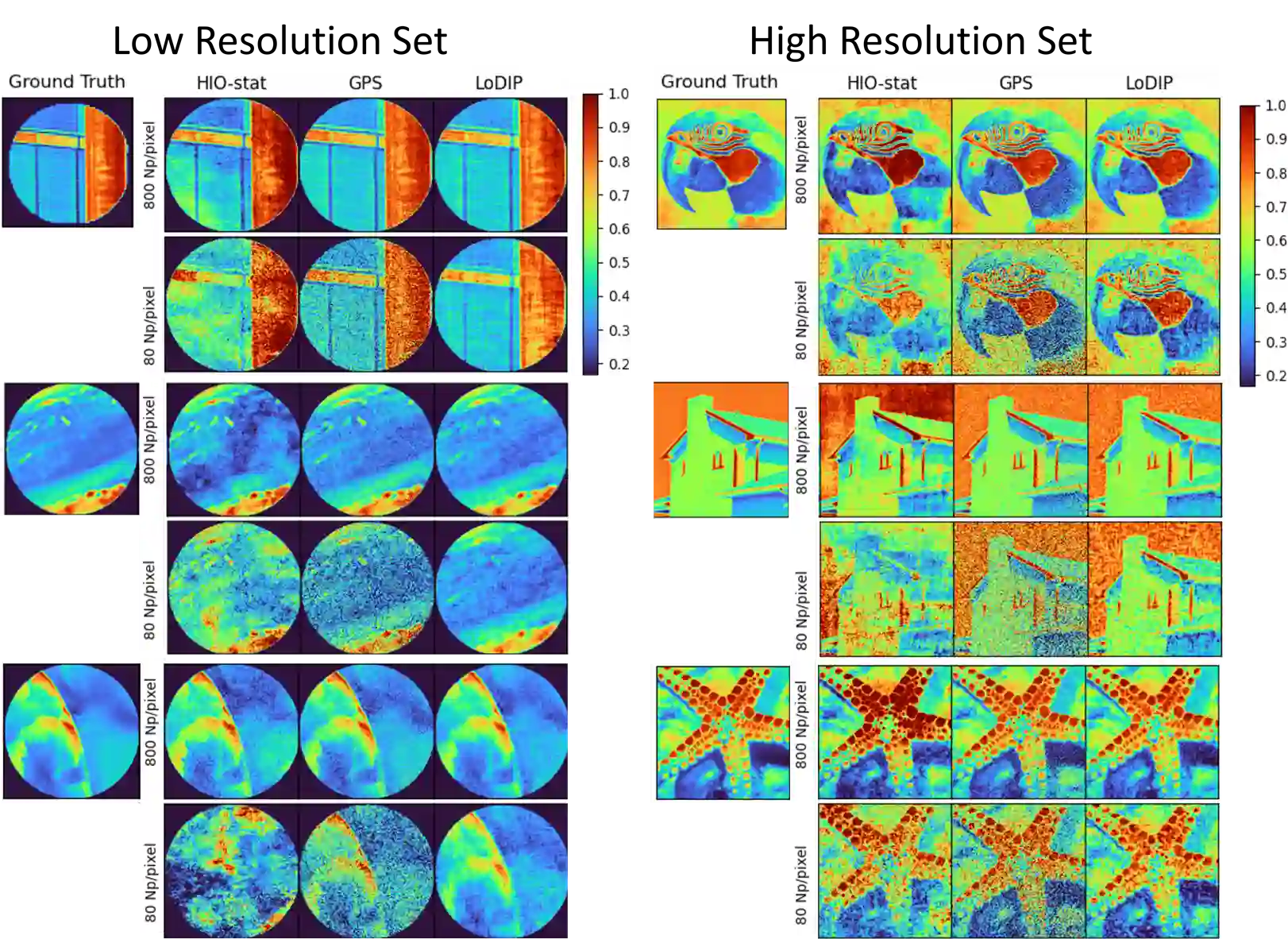
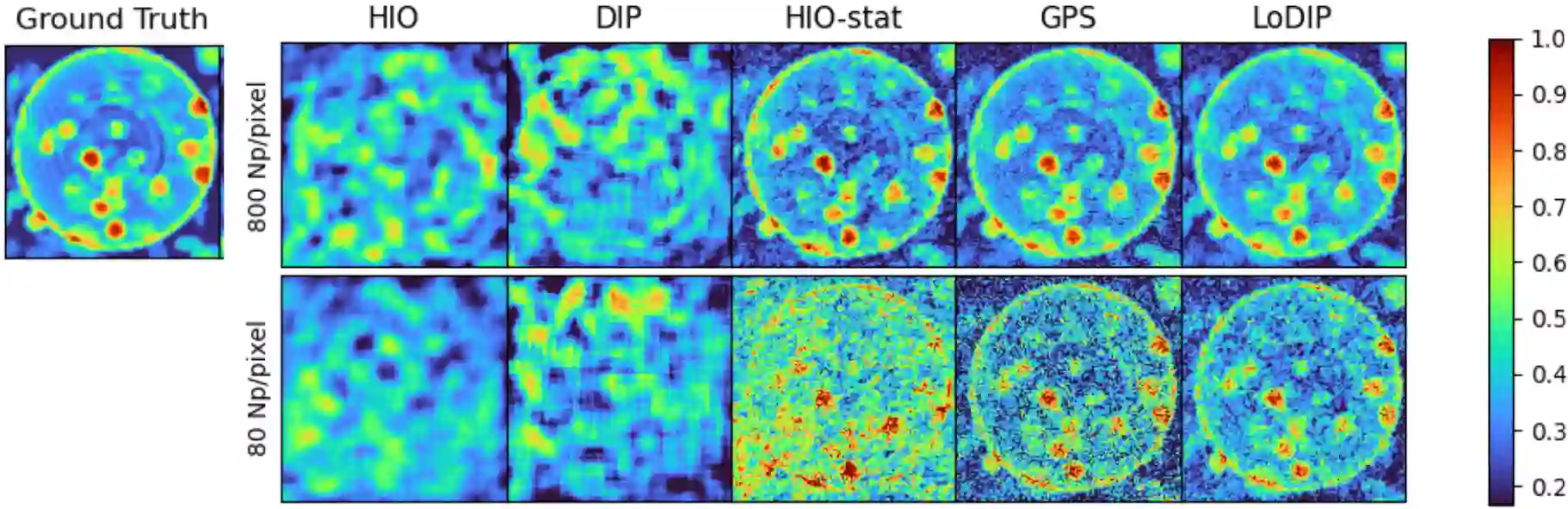
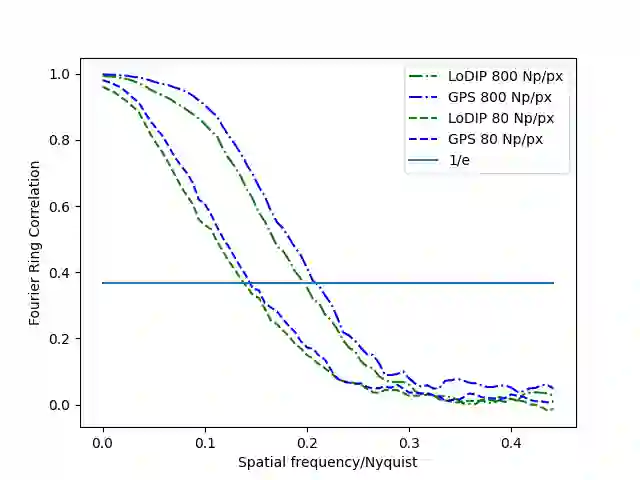
Phase retrieval (PR) is a fundamental challenge in scientific imaging, enabling nanoscale techniques like coherent diffractive imaging (CDI). Imaging at low radiation doses becomes important in applications where samples are susceptible to radiation damage. However, most PR methods struggle in low dose scenario due to the presence of very high shot noise. Advancements in the optical data acquisition setup, exemplified by in-situ CDI, have shown potential for low-dose imaging. But these depend on a time series of measurements, rendering them unsuitable for single-image applications. Similarly, on the computational front, data-driven phase retrieval techniques are not readily adaptable to the single-image context. Deep learning based single-image methods, such as deep image prior, have been effective for various imaging tasks but have exhibited limited success when applied to PR. In this work, we propose LoDIP which combines the in-situ CDI setup with the power of implicit neural priors to tackle the problem of single-image low-dose phase retrieval. Quantitative evaluations demonstrate the superior performance of LoDIP on this task as well as applicability to real experimental scenarios.
翻译:相位恢复(PR)是科学成像中的一项基本挑战,它支撑着相干衍射成像(CDI)等纳米级技术。在样品易受辐射损伤的应用中,低剂量成像变得尤为重要。然而,由于存在极高的散粒噪声,大多数相位恢复方法在低剂量场景下难以奏效。以原位CDI为代表的光学数据采集装置的进步,已显示出低剂量成像的潜力。但这些方法依赖于时间序列测量,因此不适用于单幅图像应用。同样,在计算方面,数据驱动的相位恢复技术也难以直接适配单幅图像场景。基于深度学习的单幅图像方法(如深度图像先验)虽已在多种成像任务中有效,但在应用于相位恢复时效果有限。本研究提出LoDIP,将原位CDI成像装置与隐式神经先验的强大能力相结合,以解决单幅图像低剂量相位恢复问题。定量评估表明,LoDIP在该任务上具有优越性能,且能应用于真实实验场景。




相关内容



 微信扫码咨询专知VIP会员