

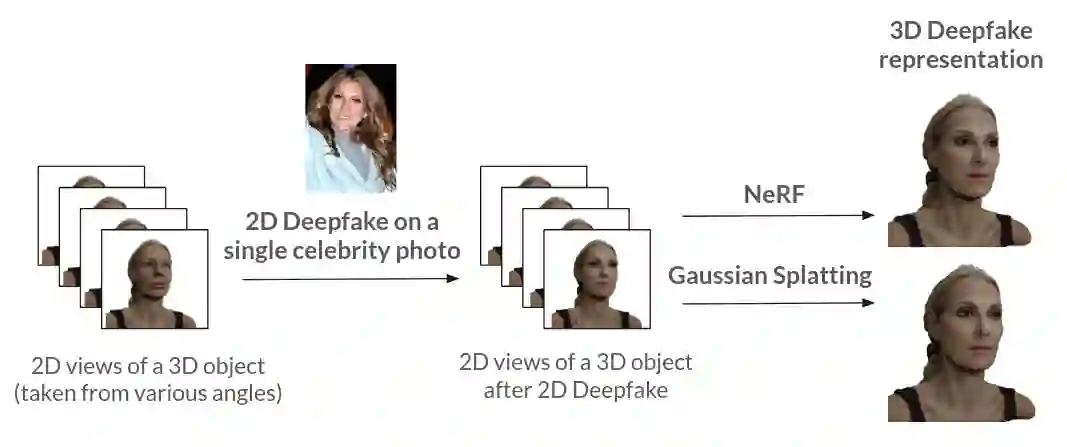
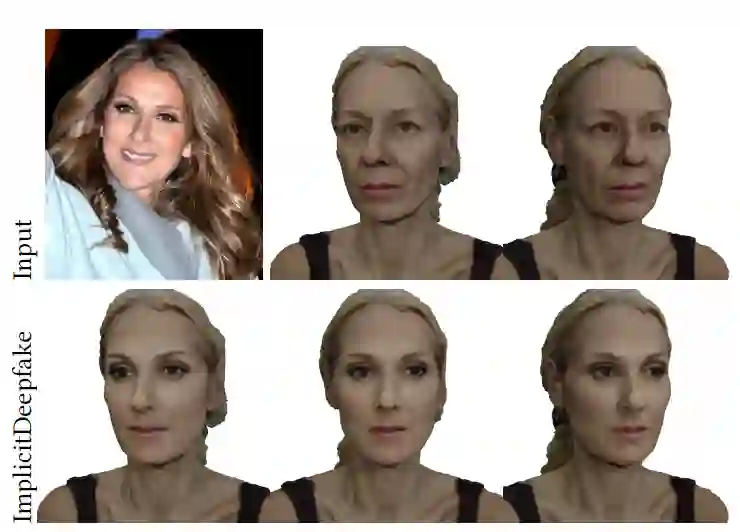
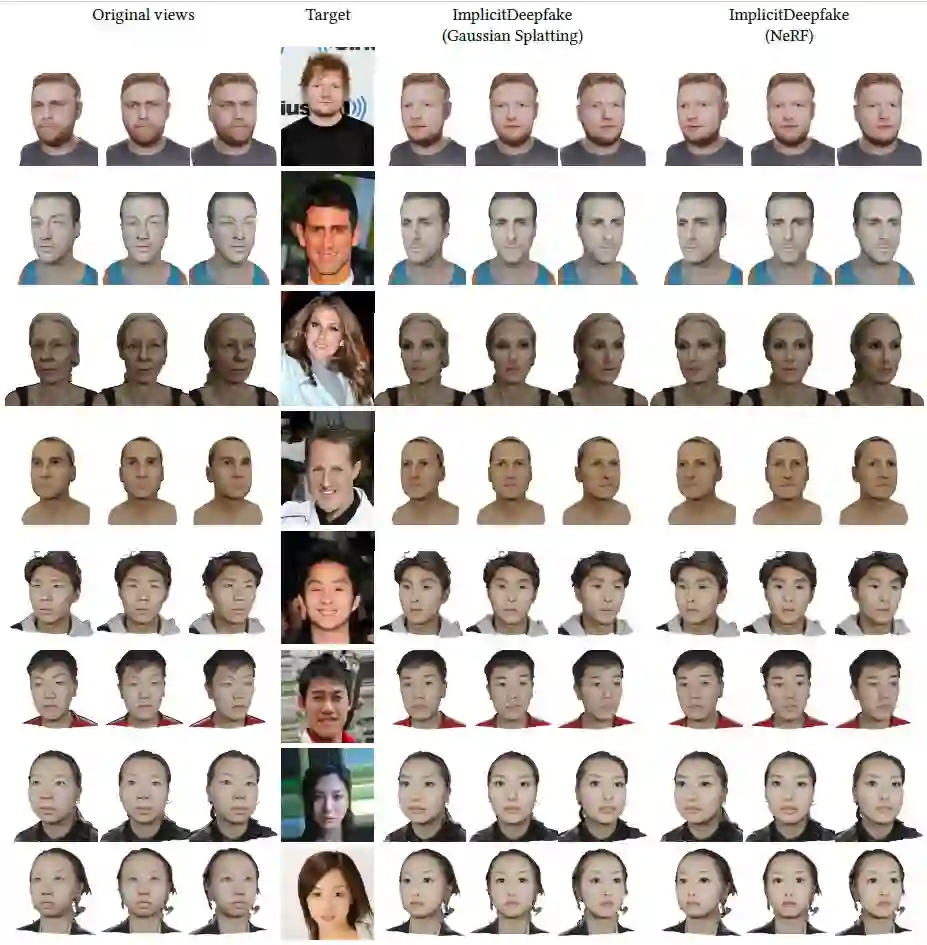
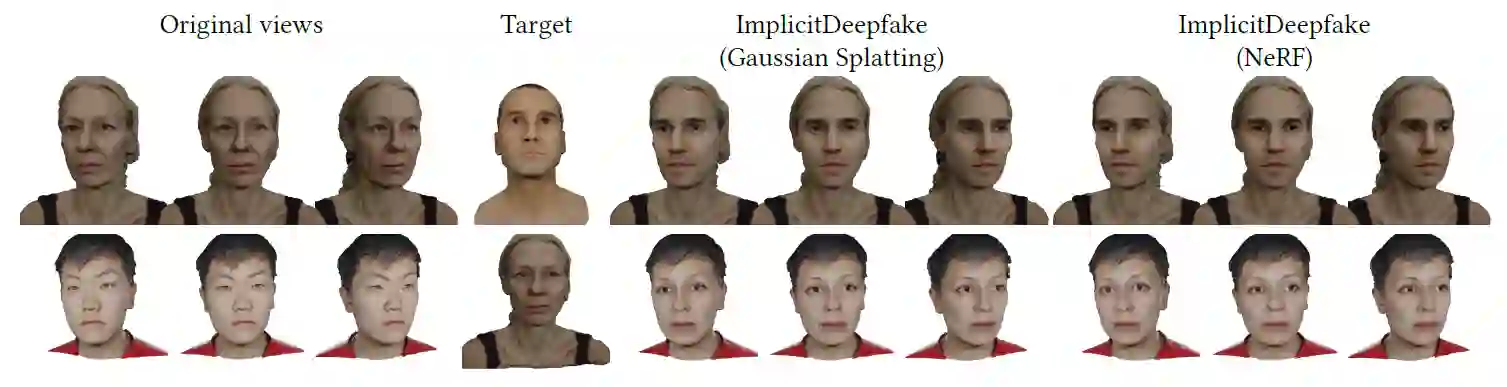
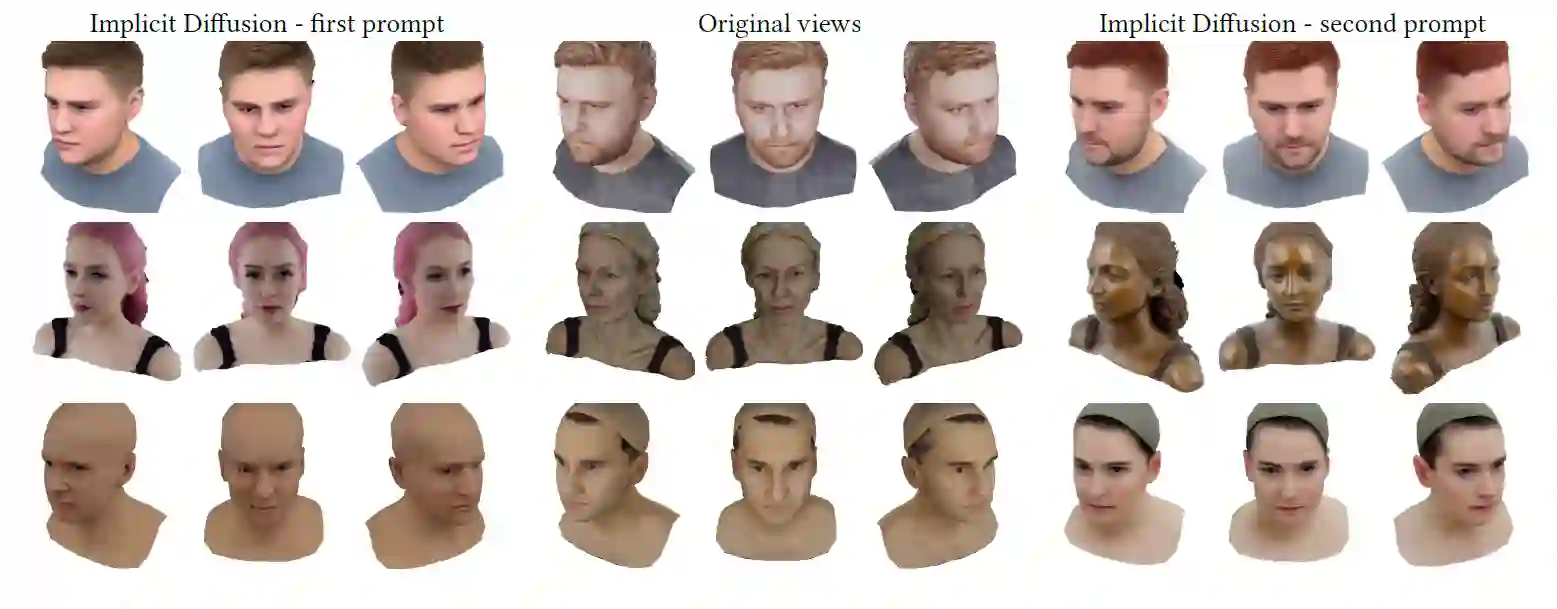
Numerous emerging deep-learning techniques have had a substantial impact on computer graphics. Among the most promising breakthroughs are the rise of Neural Radiance Fields (NeRFs) and Gaussian Splatting (GS). NeRFs encode the object's shape and color in neural network weights using a handful of images with known camera positions to generate novel views. In contrast, GS provides accelerated training and inference without a decrease in rendering quality by encoding the object's characteristics in a collection of Gaussian distributions. These two techniques have found many use cases in spatial computing and other domains. On the other hand, the emergence of deepfake methods has sparked considerable controversy. Deepfakes refers to artificial intelligence-generated videos that closely mimic authentic footage. Using generative models, they can modify facial features, enabling the creation of altered identities or expressions that exhibit a remarkably realistic appearance to a real person. Despite these controversies, deepfake can offer a next-generation solution for avatar creation and gaming when of desirable quality. To that end, we show how to combine all these emerging technologies to obtain a more plausible outcome. Our ImplicitDeepfake uses the classical deepfake algorithm to modify all training images separately and then train NeRF and GS on modified faces. Such simple strategies can produce plausible 3D deepfake-based avatars.
翻译:众多新兴的深度学习技术已对计算机图形学产生重大影响。其中最具前景的突破包括神经辐射场(NeRF)与高斯溅射(GS)的兴起。NeRF利用少量已知相机位置的图像,将物体的形状与颜色编码于神经网络权重中,以生成新视角图像。相比之下,GS通过将物体特征编码为一组高斯分布,在保持渲染质量的同时实现了加速训练与推理。这两种技术已在空间计算及其他领域获得广泛应用。另一方面,深度伪造方法的出现引发了显著争议。深度伪造指通过人工智能生成、能高度模拟真实影像的视频。借助生成模型,它们可以修改面部特征,从而创建出与真实人物具有惊人相似度的身份或表情替换效果。尽管存在争议,当达到理想质量时,深度伪造技术可为虚拟化身创建与游戏领域提供下一代解决方案。为此,我们展示了如何整合这些新兴技术以获得更逼真的结果。我们的隐式深度伪造方法采用经典深度伪造算法分别修改所有训练图像,随后在修改后的面部数据上训练NeRF与GS模型。这种简洁策略能够生成基于深度伪造的逼真三维虚拟化身。




相关内容



 微信扫码咨询专知VIP会员