

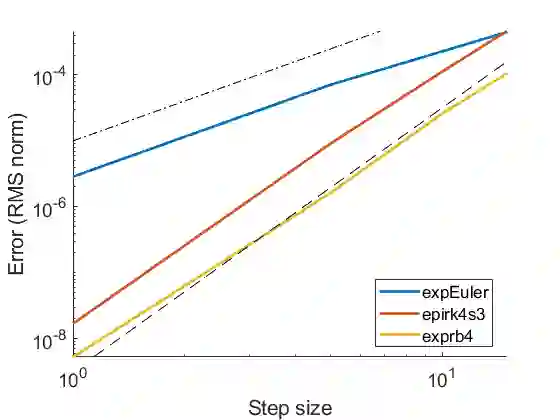
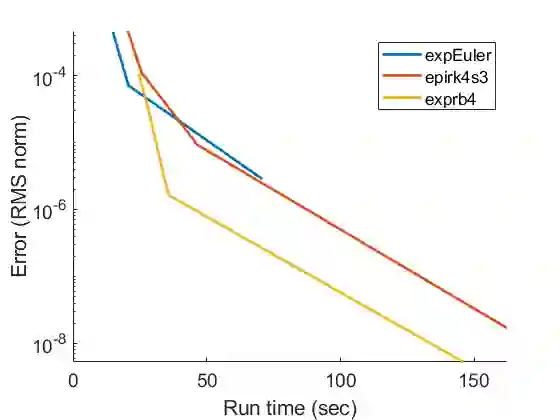
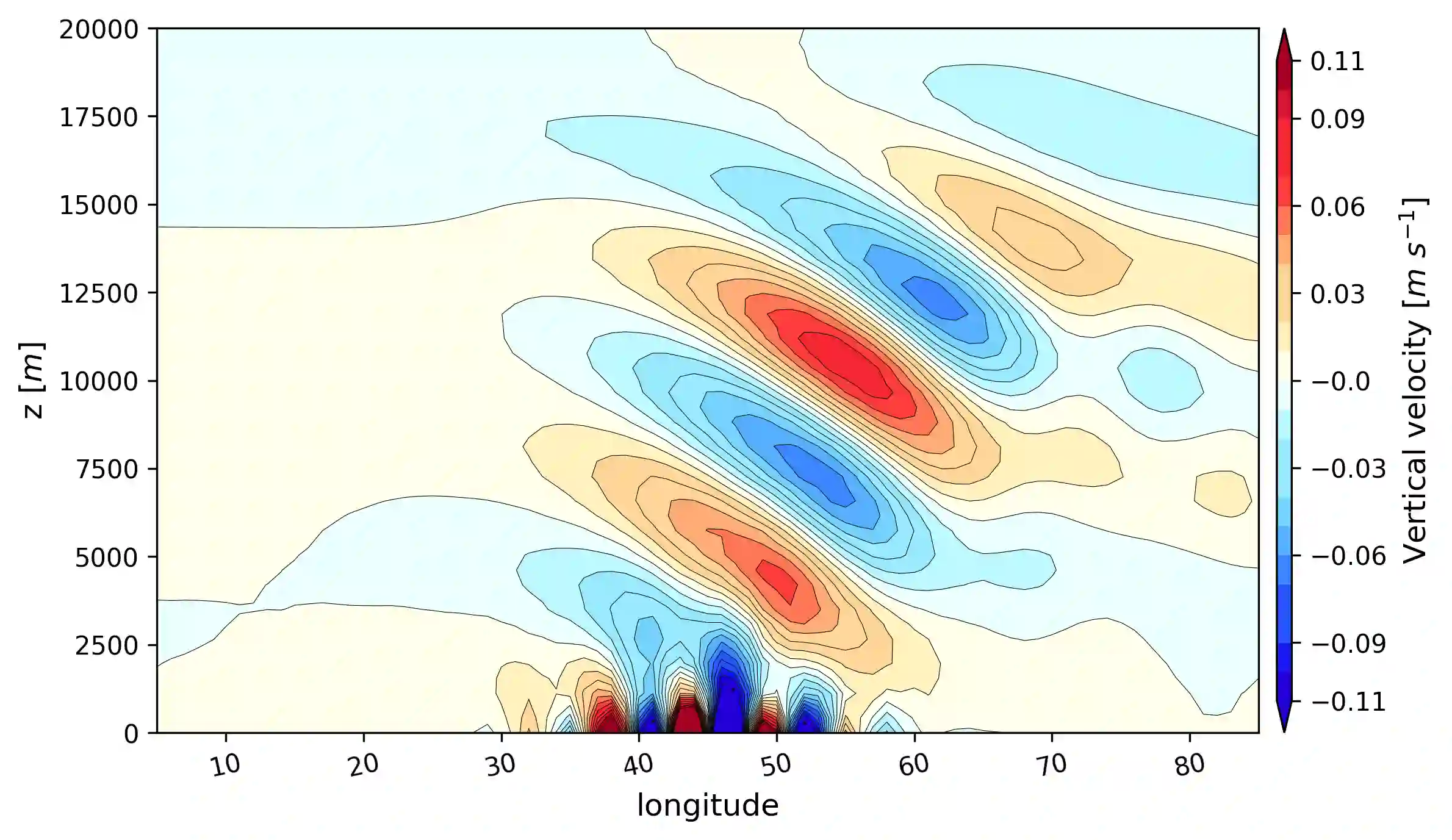
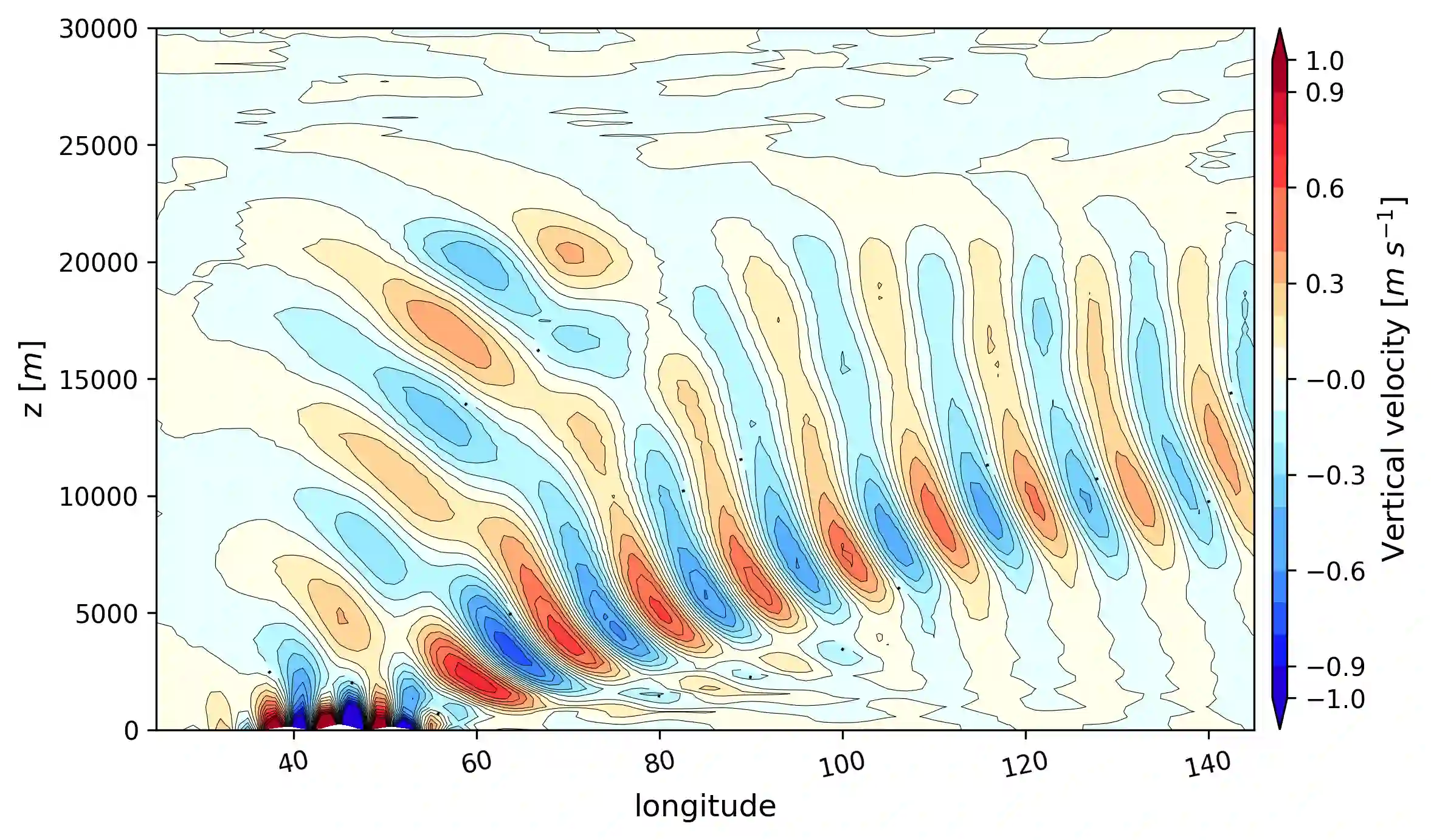
Recent advancements in evaluating matrix-exponential functions have opened the doors to the practical use of exponential time-integration methods in numerical weather prediction (NWP). The success of exponential methods in shallow water simulations has led to the question of whether they can be beneficial in a 3D atmospheric model. In this paper, we take the first step forward by evaluating the behavior of exponential time-integration methods in the Navy's compressible deep-atmosphere nonhydrostatic global model (NEPTUNE-Navy Environmental Prediction sysTem Utilizing a Nonhydrostatic Engine). Simulations are conducted on a set of idealized test cases designed to assess key features of a nonhydrostatic model and demonstrate that exponential integrators capture the desired large and small-scale traits, yielding results comparable to those found in the literature. We propose a new upper boundary absorbing layer independent of reference state and shown to be effective in both idealized and real-data simulations. A real-data forecast using an exponential method with full physics is presented, providing a positive outlook for using exponential integrators for NWP.
翻译:近年来,矩阵指数函数求值技术的进展为在数值天气预报(NWP)中实用化指数时间积分方法打开了大门。指数方法在浅水模拟中的成功引发了其在三维大气模型中是否能够发挥作用的思考。本文迈出了第一步,考察了指数时间积分方法在美国海军可压缩深层大气非静力全球模型(NEPTUNE——基于非静力引擎的海军环境预报系统)中的表现。通过一组设计用于评估非静力模型关键特征的理想化测试案例进行模拟,结果表明指数积分器能够捕捉所需的大尺度和小尺度特征,所得结果与文献报道相当。我们提出了一种与参考态无关的新型上层边界吸收层,并在理想化模拟和真实数据模拟中均验证了其有效性。本文还展示了采用全物理过程指数方法的真实数据预报结果,为将指数积分器应用于NWP提供了积极前景。




相关内容





 微信扫码咨询专知VIP会员