

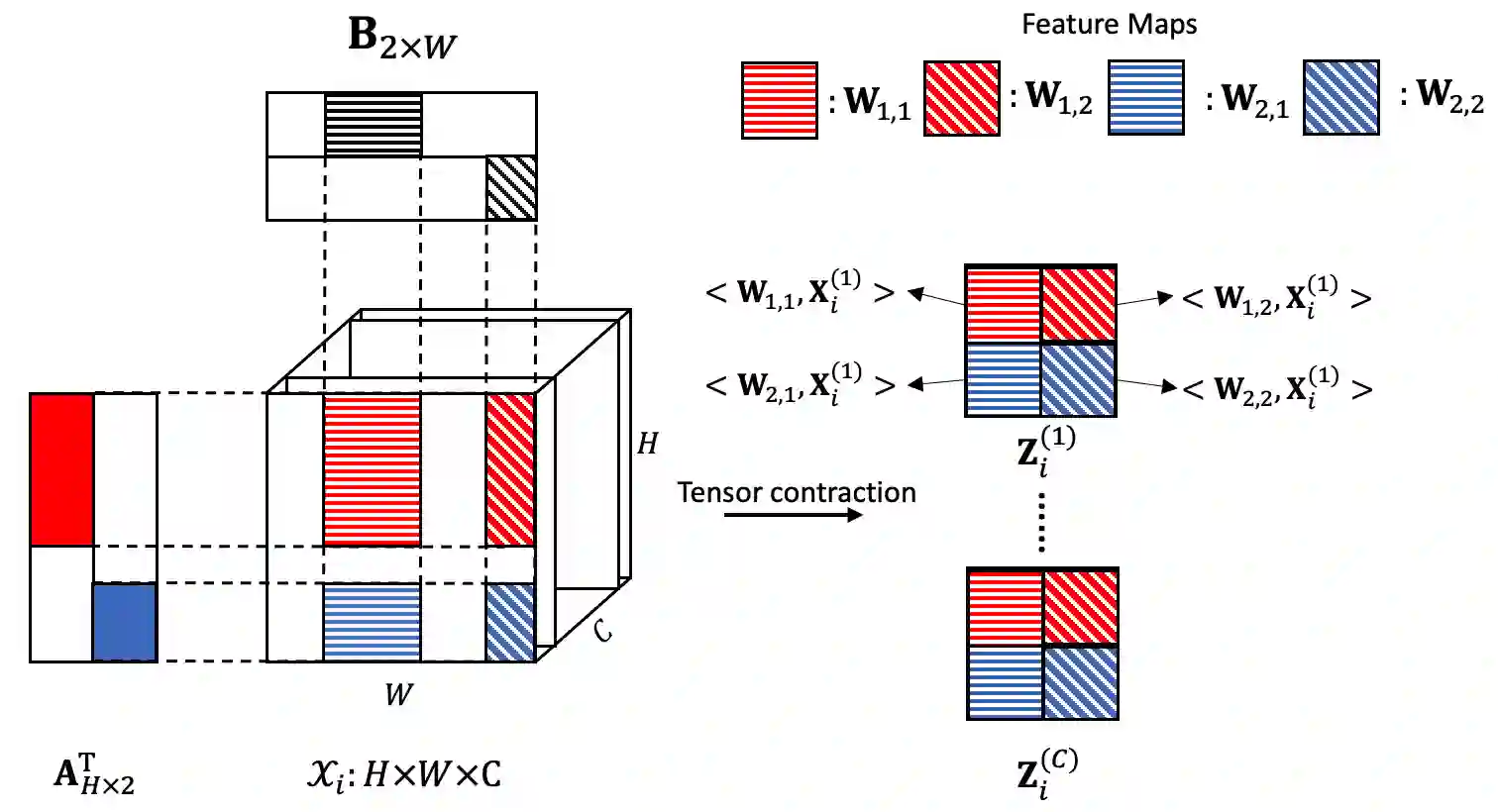
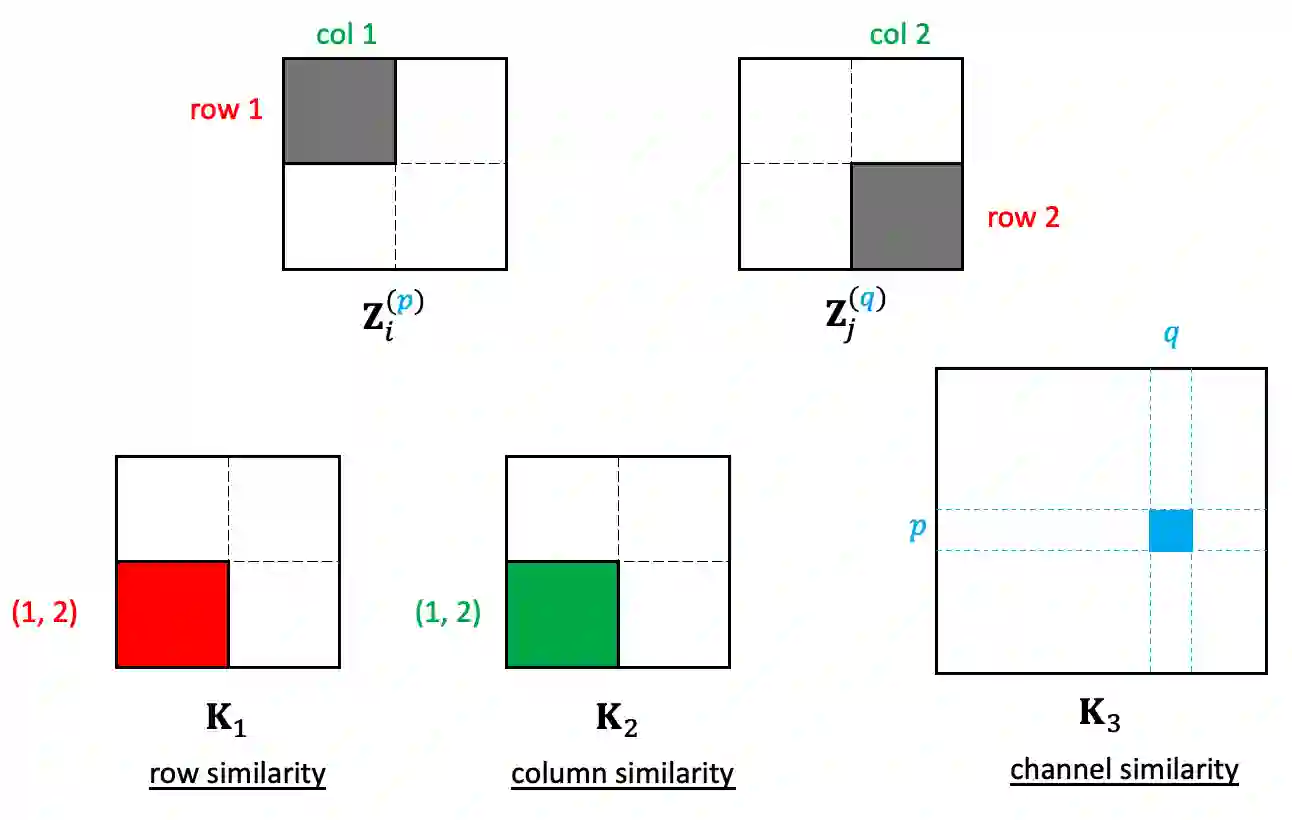
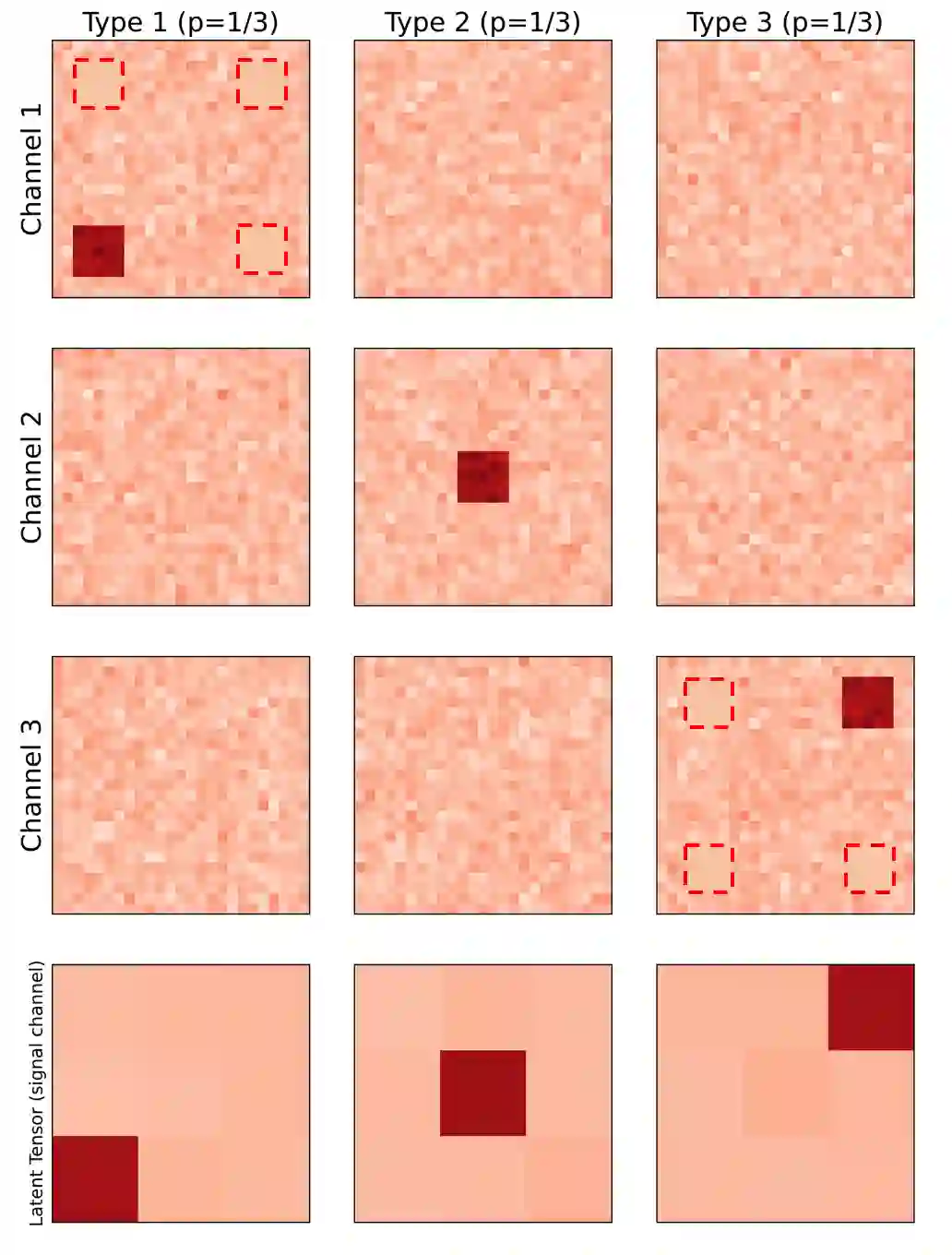
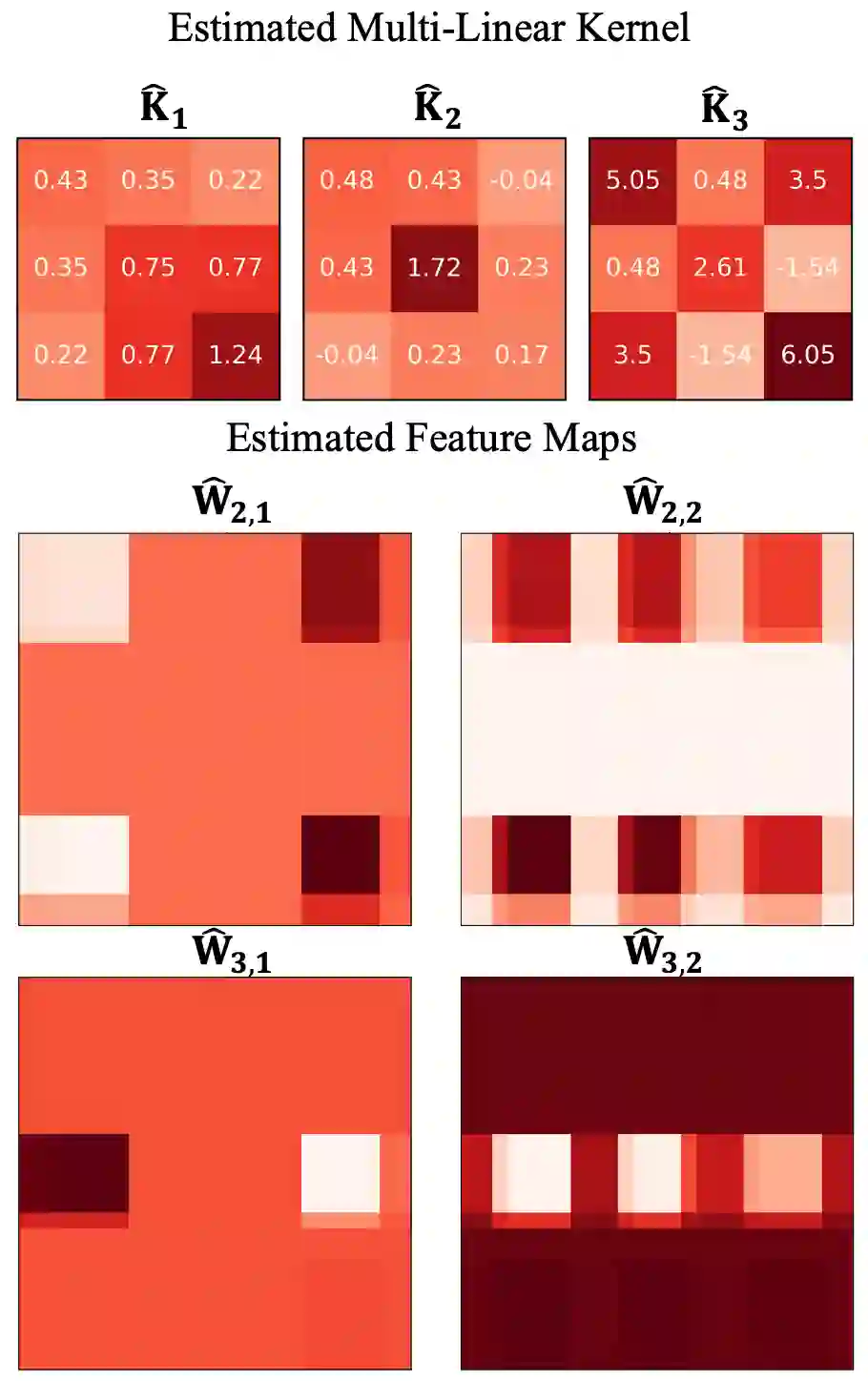
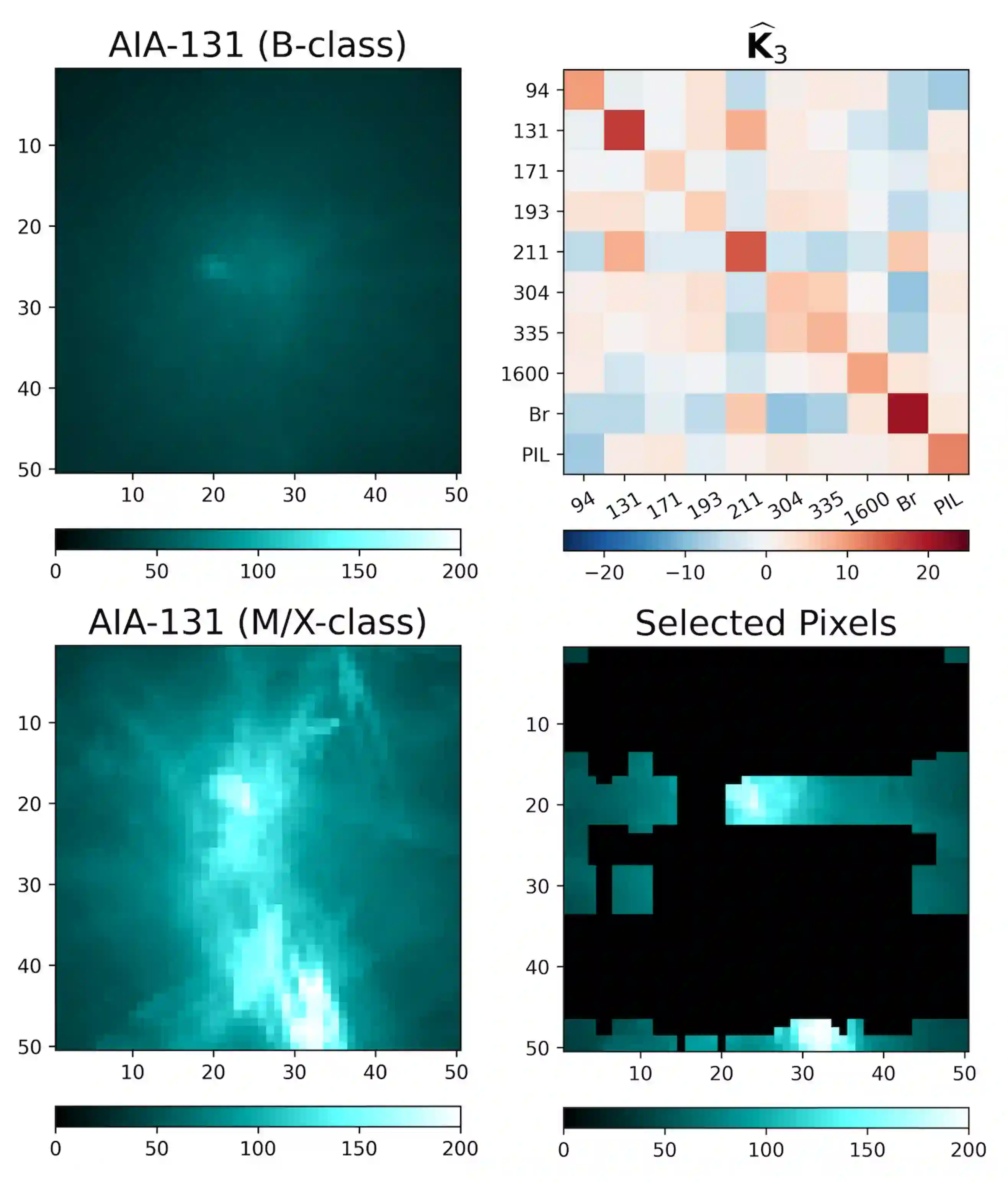
Multi-channel imaging data is a prevalent data format in scientific fields such as astronomy and biology. The structured information and the high dimensionality of these 3-D tensor data makes the analysis an intriguing but challenging topic for statisticians and practitioners. The low-rank scalar-on-tensor regression model, in particular, has received widespread attention and has been re-formulated as a tensor Gaussian Process (Tensor-GP) model with multi-linear kernel in Yu et al.(2018). In this paper, we extend the Tensor-GP model by introducing an integrative dimensionality reduction technique, called tensor contraction, with a Tensor-GP for a scalar-on-tensor regression task with multi-channel imaging data. This is motivated by the solar flare forecasting problem with high dimensional multi-channel imaging data. We first estimate a latent, reduced-size tensor for each data tensor and then apply a multi-linear Tensor-GP on the latent tensor data for prediction. We introduce an anisotropic total-variation regularization when conducting the tensor contraction to obtain a sparse and smooth latent tensor. We then propose an alternating proximal gradient descent algorithm for estimation. We validate our approach via extensive simulation studies and applying it to the solar flare forecasting problem.
翻译:多通道成像数据是天文学和生物学等科学领域中常见的数据格式。这种三维张量数据蕴含的结构化信息和高维特性,使其成为统计学家和实践者既感兴趣又富有挑战性的分析课题。其中,低秩标量-张量回归模型受到广泛关注,并在Yu等人(2018)的研究中被重新表述为具有多线性核的张量高斯过程模型。本文通过引入一种称为张量收缩的集成降维技术,扩展了张量高斯过程模型,将其应用于多通道成像数据的标量-张量回归任务。该研究源于高维多通道成像数据驱动的太阳耀斑预测问题。我们首先为每个数据张量估计一个潜在的低维张量,然后对潜在张量数据应用多线性张量高斯过程进行预测。在进行张量收缩时,我们引入各向异性总变分正则化以获得稀疏且平滑的潜在张量。随后提出交替近端梯度下降算法进行参数估计。通过大量仿真实验及太阳耀斑预测问题的实际应用,我们验证了所提出方法的有效性。




相关内容



 微信扫码咨询专知VIP会员