

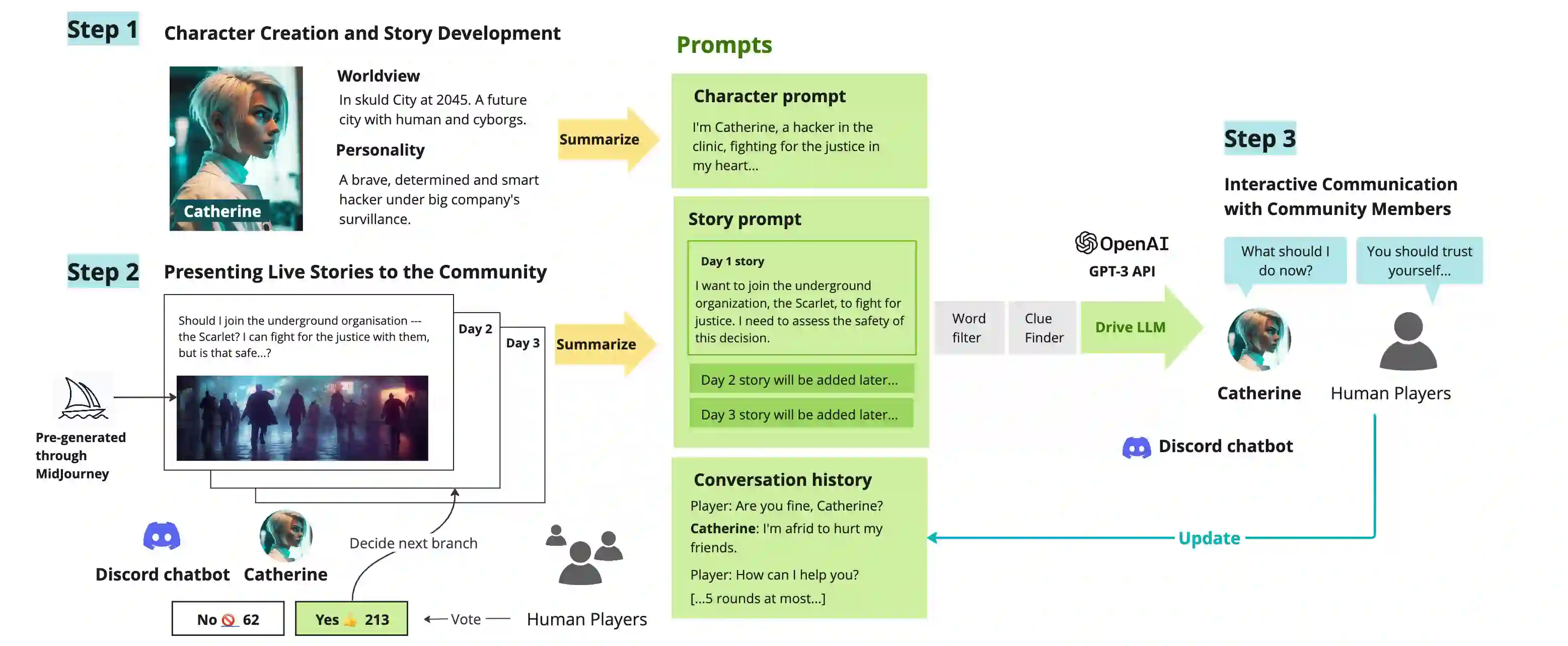
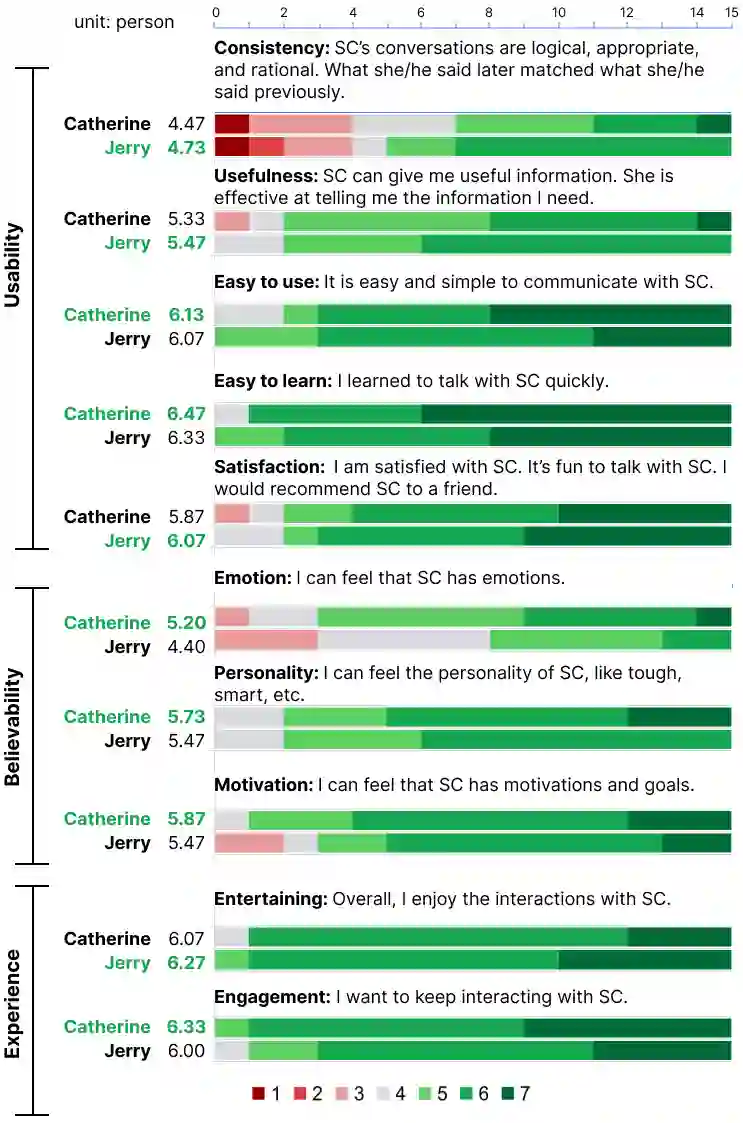
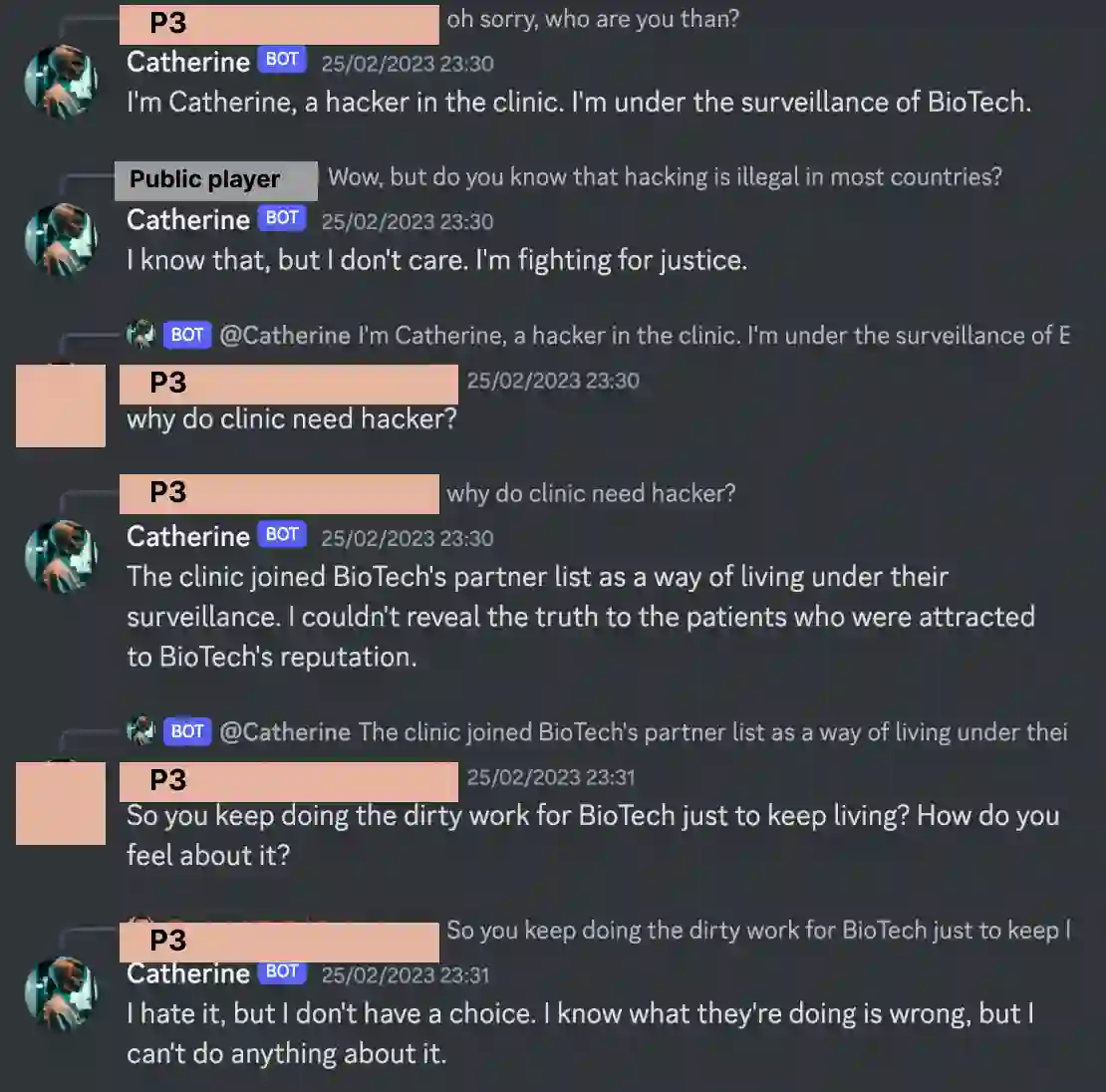
We address the integration of storytelling and Large Language Models (LLMs) to develop engaging and believable Social Chatbots (SCs) in community settings. Motivated by the potential of fictional characters to enhance social interactions, we introduce Storytelling Social Chatbots (SSCs) and the concept of story engineering to transform fictional game characters into "live" social entities within player communities. Our story engineering process includes three steps: (1) Character and story creation, defining the SC's personality and worldview, (2) Presenting Live Stories to the Community, allowing the SC to recount challenges and seek suggestions, and (3) Communication with community members, enabling interaction between the SC and users. We employed the LLM GPT-3 to drive our SSC prototypes, "David" and "Catherine," and evaluated their performance in an online gaming community, "DE (Alias)," on Discord. Our mixed-method analysis, based on questionnaires (N=15) and interviews (N=8) with community members, reveals that storytelling significantly enhances the engagement and believability of SCs in community settings.
翻译:我们整合故事叙述与大语言模型,旨在开发能融入社区环境、兼具吸引力和可信度的社交聊天机器人。受虚构角色增强社交互动潜力的启发,我们提出故事型社交聊天机器人及其核心概念"故事工程",将虚构游戏角色转化为玩家社区中的"鲜活"社交实体。该故事工程流程包含三个步骤:(1)角色与故事创作,定义社交聊天机器人的性格与世界观;(2)向社区呈现鲜活故事,使社交聊天机器人能讲述挑战并寻求建议;(3)社区成员交流,实现社交聊天机器人与人之间的互动。我们运用大语言模型GPT-3驱动"大卫"和"凯瑟琳"两个故事型社交聊天机器人原型,并在Discord平台的在线游戏社区"DE(化名)"中评估其表现。基于社区成员的问卷调查(N=15)和访谈(N=8)进行的混合方法分析表明,故事叙述能显著提升社交聊天机器人在社区环境中的参与度与可信度。




相关内容




 微信扫码咨询专知VIP会员