

In this work, we introduce PhononBench, the first large-scale benchmark for dynamical stability in AI-generated crystals. Leveraging the recently developed MatterSim interatomic potential, which achieves DFT-level accuracy in phonon predictions across more than 10,000 materials, PhononBench enables efficient large-scale phonon calculations and dynamical-stability analysis for 108,843 crystal structures generated by six leading crystal generation models. PhononBench reveals a widespread limitation of current generative models in ensuring dynamical stability: the average dynamical-stability rate across all generated structures is only 25.83%, with the top-performing model, MatterGen, reaching just 41.0%. Further case studies show that in property-targeted generation-illustrated here by band-gap conditioning with MatterGen--the dynamical-stability rate remains as low as 23.5% even at the optimal band-gap condition of 0.5 eV. In space-group-controlled generation, higher-symmetry crystals exhibit better stability (e.g., cubic systems achieve rates up to 49.2%), yet the average stability across all controlled generations is still only 34.4%. An important additional outcome of this study is the identification of 28,119 crystal structures that are phonon-stable across the entire Brillouin zone, providing a substantial pool of reliable candidates for future materials exploration. By establishing the first large-scale dynamical-stability benchmark, this work systematically highlights the current limitations of crystal generation models and offers essential evaluation criteria and guidance for their future development toward the design and discovery of physically viable materials. All model-generated crystal structures, phonon calculation results, and the high-throughput evaluation workflows developed in PhononBench will be openly released at https://github.com/xqh19970407/PhononBench
翻译:本研究提出了PhononBench,这是首个针对AI生成晶体的动态稳定性的大规模基准。借助近期开发的MatterSim原子间势函数(其在超过10,000种材料的声子预测中达到了DFT级别的精度),PhononBench能够对六个领先晶体生成模型产生的108,843个晶体结构进行高效的大规模声子计算与动态稳定性分析。PhononBench揭示了当前生成模型在确保动态稳定性方面存在的普遍局限:所有生成结构的平均动态稳定率仅为25.83%,其中表现最佳的模型MatterGen也仅达到41.0%。进一步的案例研究表明,在面向特定性能的生成中(本文以MatterGen的带隙条件生成为例),即使在0.5 eV的最佳带隙条件下,动态稳定率仍低至23.5%。在空间群受控的生成中,更高对称性的晶体表现出更好的稳定性(例如立方晶系的稳定率可达49.2%),但所有受控生成的平均稳定率仍仅为34.4%。本研究的一个重要附加成果是识别出28,119个在整个布里渊区内声子稳定的晶体结构,为未来的材料探索提供了大量可靠的候选材料。通过建立首个大规模动态稳定性基准,本工作系统性地揭示了当前晶体生成模型的局限性,并为其未来朝着设计与发现物理可行材料的方向发展提供了必要的评估标准与指导。所有模型生成的晶体结构、声子计算结果以及PhononBench中开发的高通量评估工作流将在https://github.com/xqh19970407/PhononBench 公开。



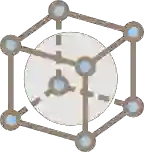





相关内容


 微信扫码咨询专知VIP会员