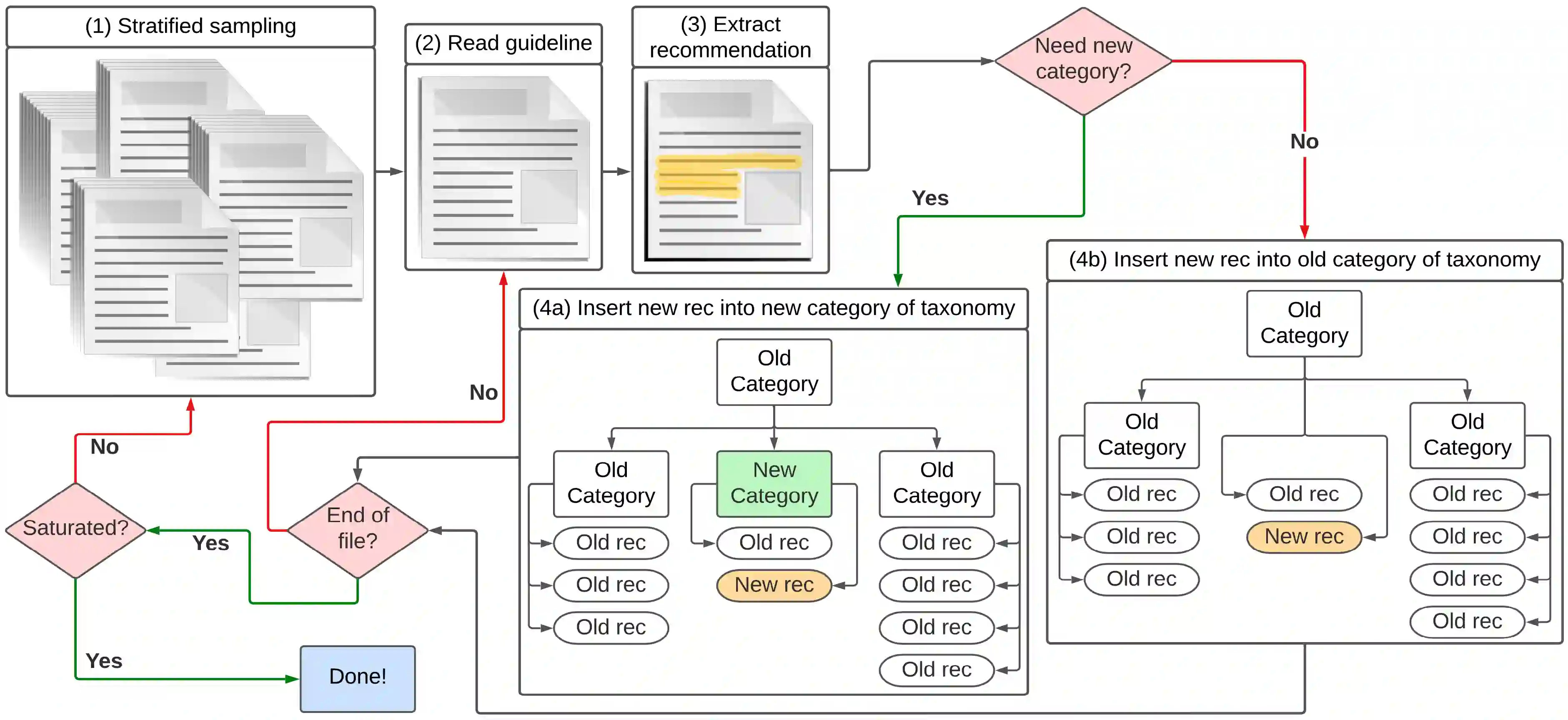
Cybersecurity concerns about Internet of Things (IoT) devices and infrastructure are growing each year. In response, organizations worldwide have published IoT cybersecurity guidelines to protect their citizens and customers. These guidelines constrain the development of IoT systems, which include substantial software components both on-device and in the Cloud. While these guidelines are being widely adopted, e.g. by US federal contractors, their content and merits have not been critically examined. Two notable gaps are: (1) We do not know how these guidelines differ by the topics and details of their recommendations; and (2) We do not know how effective they are at mitigating real-world IoT failures. In this paper, we address these questions through an exploratory sequential mixed-method study of IoT cybersecurity guidelines. We collected a corpus of 142 general IoT cybersecurity guidelines, sampling them for recommendations until saturation was reached. From the resulting 958 unique recommendations, we iteratively developed a hierarchical taxonomy following grounded theory coding principles. We measured the guidelines' usefulness by asking novice engineers about the actionability of each recommendation, and by matching cybersecurity recommendations to the root causes of failures (CVEs and news stories). We report that: (1) Comparing guidelines to one another, each guideline has gaps in its topic coverage and comprehensiveness; and (2) Although 87.2% recommendations are actionable and the union of the guidelines mitigates all 17 of the failures from news stories, 21% of the CVEs apparently evade the guidelines. In summary, we report shortcomings in every guideline's depth and breadth, but as a whole they are capable of preventing security issues. Our results will help software engineers determine which and how many guidelines to study as they implement IoT systems.


翻译:针对物联网设备及基础设施的网络安全担忧每年都在加剧。为此,全球相关机构纷纷发布物联网网络安全指南,以保护民众与客户。这些指南约束了物联网系统的开发流程,此类系统包含设备端和云端的大量软件组件。尽管这些指南已被广泛采用(例如美国联邦承包商),但其内容与价值尚未得到严格审视。两大显著空白在于:(1)我们不清楚各指南在主题范围与建议细节上存在何种差异;(2)我们不了解它们在缓解真实物联网故障方面成效几何。本文通过探索性序贯混合方法研究物联网网络安全指南,试图回答上述问题。我们收集了142份通用物联网网络安全指南语料库,对建议内容持续采样直至理论饱和。基于此得到的958条独立建议,我们依据扎根理论编码原则迭代开发了层级分类体系。通过评估新手工程师对每条建议的可操作性认知,并将网络安全建议与故障根因(CVE漏洞与新闻报道)进行匹配,我们测算了指南的有效性。研究结果表明:(1)横向对比各指南,其在主题覆盖度与全面性上均存在缺失;(2)尽管87.2%的建议具备可操作性,且所有指南的并集可防范全部17个新闻报道中的故障案例,但仍有21%的CVE漏洞明显规避了现有指南。总结而言,我们发现每份指南在深度与广度上均有缺陷,但整体而言它们仍具备预防安全问题的能力。我们的研究成果将帮助软件工程师在实现物联网系统时确定需研读的指南种类与数量。
0
下载
关闭预览

相关内容

分类学是分类的实践和科学。Wikipedia类别说明了一种分类法,可以通过自动方式提取Wikipedia类别的完整分类法。截至2009年,已经证明,可以使用人工构建的分类法(例如像WordNet这样的计算词典的分类法)来改进和重组Wikipedia类别分类法。 从广义上讲,分类法还适用于除父子层次结构以外的关系方案,例如网络结构。然后分类法可能包括有多父母的单身孩子,例如,“汽车”可能与父母双方一起出现“车辆”和“钢结构”;但是对某些人而言,这仅意味着“汽车”是几种不同分类法的一部分。分类法也可能只是将事物组织成组,或者是按字母顺序排列的列表;但是在这里,术语词汇更合适。在知识管理中的当前用法中,分类法被认为比本体论窄,因为本体论应用了各种各样的关系类型。 在数学上,分层分类法是给定对象集的分类树结构。该结构的顶部是适用于所有对象的单个分类,即根节点。此根下的节点是更具体的分类,适用于总分类对象集的子集。推理的进展从一般到更具体。

知识荟萃

精品入门和进阶教程、论文和代码整理等

更多

查看相关VIP内容、论文、资讯等
Linux导论,Introduction to Linux,96页ppt
专知会员服务
82+阅读 · 2020年7月26日
FlowQA: Grasping Flow in History for Conversational Machine Comprehension
专知会员服务
34+阅读 · 2019年10月18日
Stabilizing Transformers for Reinforcement Learning
专知会员服务
60+阅读 · 2019年10月17日
《DeepGCNs: Making GCNs Go as Deep as CNNs》
专知会员服务
32+阅读 · 2019年10月17日
Keras François Chollet 《Deep Learning with Python 》, 386页pdf
专知会员服务
164+阅读 · 2019年10月12日
【SIGGRAPH2019】TensorFlow 2.0深度学习计算机图形学应用
专知会员服务
41+阅读 · 2019年10月9日
Hierarchically Structured Meta-learning
CreateAMind
27+阅读 · 2019年5月22日
Transferring Knowledge across Learning Processes
CreateAMind
29+阅读 · 2019年5月18日
强化学习的Unsupervised Meta-Learning
CreateAMind
18+阅读 · 2019年1月7日
Unsupervised Learning via Meta-Learning
CreateAMind
44+阅读 · 2019年1月3日
A Technical Overview of AI & ML in 2018 & Trends for 2019
待字闺中
18+阅读 · 2018年12月24日
STRCF for Visual Object Tracking
统计学习与视觉计算组
15+阅读 · 2018年5月29日
Focal Loss for Dense Object Detection
统计学习与视觉计算组
12+阅读 · 2018年3月15日
可解释的CNN
CreateAMind
18+阅读 · 2017年10月5日
IJCAI | Cascade Dynamics Modeling with Attention-based RNN
KingsGarden
13+阅读 · 2017年7月16日
From Softmax to Sparsemax-ICML16(1)
KingsGarden
74+阅读 · 2016年11月26日
国家自然科学基金
13+阅读 · 2017年12月31日
国家自然科学基金
2+阅读 · 2015年12月31日
国家自然科学基金
3+阅读 · 2015年12月31日
国家自然科学基金
47+阅读 · 2015年12月31日
国家自然科学基金
2+阅读 · 2015年12月31日
国家自然科学基金
0+阅读 · 2014年12月31日
国家自然科学基金
0+阅读 · 2014年12月31日
国家自然科学基金
2+阅读 · 2014年12月31日
国家自然科学基金
6+阅读 · 2014年12月31日
Arxiv
15+阅读 · 2023年10月21日
Arxiv
21+阅读 · 2023年7月12日
VIP会员
最新内容
综述 | OPSD:大语言模型的在线策略自蒸馏
专知会员服务
2+阅读 · 6月1日
帕兰蒂尔Maven:军事人工智能的新纪元
专知会员服务
7+阅读 · 6月1日
超越网格:作战环境对炮兵的影响
专知会员服务
3+阅读 · 5月31日
BES:让语言模型通过双向进化搜索自我改进
专知会员服务
6+阅读 · 5月30日
以色列-美国-伊朗战争中的无人机:关键要点
专知会员服务
7+阅读 · 5月30日
相关资讯
Hierarchically Structured Meta-learning
CreateAMind
27+阅读 · 2019年5月22日
Transferring Knowledge across Learning Processes
CreateAMind
29+阅读 · 2019年5月18日
强化学习的Unsupervised Meta-Learning
CreateAMind
18+阅读 · 2019年1月7日
Unsupervised Learning via Meta-Learning
CreateAMind
44+阅读 · 2019年1月3日
A Technical Overview of AI & ML in 2018 & Trends for 2019
待字闺中
18+阅读 · 2018年12月24日
STRCF for Visual Object Tracking
统计学习与视觉计算组
15+阅读 · 2018年5月29日
Focal Loss for Dense Object Detection
统计学习与视觉计算组
12+阅读 · 2018年3月15日
可解释的CNN
CreateAMind
18+阅读 · 2017年10月5日
IJCAI | Cascade Dynamics Modeling with Attention-based RNN
KingsGarden
13+阅读 · 2017年7月16日
From Softmax to Sparsemax-ICML16(1)
KingsGarden
74+阅读 · 2016年11月26日
相关基金
国家自然科学基金
13+阅读 · 2017年12月31日
国家自然科学基金
2+阅读 · 2015年12月31日
国家自然科学基金
3+阅读 · 2015年12月31日
国家自然科学基金
47+阅读 · 2015年12月31日
国家自然科学基金
2+阅读 · 2015年12月31日
国家自然科学基金
0+阅读 · 2014年12月31日
国家自然科学基金
0+阅读 · 2014年12月31日
国家自然科学基金
2+阅读 · 2014年12月31日
国家自然科学基金
6+阅读 · 2014年12月31日
Top
微信扫码咨询专知VIP会员