

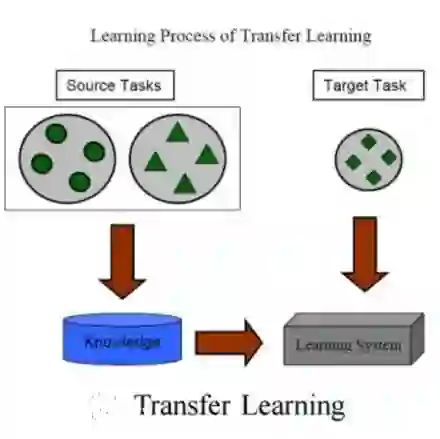
Remote medical diagnosis has emerged as a critical and indispensable technique in practical medical systems, where medical data are required to be efficiently compressed and transmitted for diagnosis by either professional doctors or intelligent diagnosis devices. In this process, a large amount of redundant content irrelevant to the diagnosis is subjected to high-fidelity coding, leading to unnecessary transmission costs. To mitigate this, we propose diagnosis-oriented medical image compression, a special semantic compression task designed for medical scenarios, targeting to reduce the compression cost without compromising the diagnosis accuracy. However, collecting sufficient medical data to optimize such a compression system is significantly expensive and challenging due to privacy issues and the lack of professional annotation. In this study, we propose DMIC, the first efficient transfer learning-based codec, for diagnosis-oriented medical image compression, which can be effectively optimized with only few-shot annotated medical examples, by reusing the knowledge in the existing reinforcement learning-based task-driven semantic coding framework, i.e., HRLVSC [1]. Concretely, we focus on tuning only the partial parameters of the policy network for bit allocation within HRLVSC, which enables it to adapt to the medical images. In this work, we validate our DMIC with the typical medical task, Coronary Artery Segmentation. Extensive experiments have demonstrated that our DMIC can achieve 47.594%BD-Rate savings compared to the HEVC anchor, by tuning only the A2C module (2.7% parameters) of the policy network with only 1 medical sample.
翻译:远程医疗诊断已成为实际医疗系统中一项关键且不可或缺的技术,其中医学数据需被高效压缩并传输,以供专业医生或智能诊断设备进行诊断。在此过程中,大量与诊断无关的冗余内容被进行高保真编码,导致不必要的传输成本。为缓解这一问题,我们提出面向诊断的医学图像压缩,这是一种专为医疗场景设计的特殊语义压缩任务,旨在在不牺牲诊断精度的前提下降低压缩成本。然而,由于隐私问题及缺乏专业标注,收集足够的医学数据来优化此类压缩系统代价高昂且极具挑战性。在本研究中,我们提出DMIC,这是首个基于高效迁移学习的编解码器,用于面向诊断的医学图像压缩,通过复用现有基于强化学习的任务驱动语义编码框架(即HRLVSC [1])中的知识,仅需少量标注的医学示例即可有效优化。具体而言,我们专注于微调HRLVSC中比特分配策略网络的部分参数,使其能够适应医学图像。本研究以典型的医学任务——冠状动脉分割——验证了我们的DMIC。大量实验表明,仅通过调整策略网络的A2C模块(占2.7%的参数)并使用1个医学样本,DMIC相比HEVC基准即可实现47.594%的BD-Rate节省。




相关内容



 微信扫码咨询专知VIP会员