

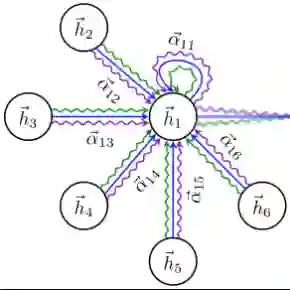
Traffic flow forecasting (TFF) is of great importance to the construction of Intelligent Transportation Systems (ITS). To mitigate communication burden and tackle with the problem of privacy leakage aroused by centralized forecasting methods, Federated Learning (FL) has been applied to TFF. However, existing FL-based approaches employ batch learning manner, which makes the pre-trained models inapplicable to subsequent traffic data, thus exhibiting subpar prediction performance. In this paper, we perform the first study of forecasting traffic flow adopting Online Learning (OL) manner in FL framework and then propose a novel prediction method named Online Spatio-Temporal Correlation-based Federated Learning (FedOSTC), aiming to guarantee performance gains regardless of traffic fluctuation. Specifically, clients employ Gated Recurrent Unit (GRU)-based encoders to obtain the internal temporal patterns inside traffic data sequences. Then, the central server evaluates spatial correlation among clients via Graph Attention Network (GAT), catering to the dynamic changes of spatial closeness caused by traffic fluctuation. Furthermore, to improve the generalization of the global model for upcoming traffic data, a period-aware aggregation mechanism is proposed to aggregate the local models which are optimized using Online Gradient Descent (OGD) algorithm at clients. We perform comprehensive experiments on two real-world datasets to validate the efficiency and effectiveness of our proposed method and the numerical results demonstrate the superiority of FedOSTC.
翻译:交通流预测对智能交通系统(ITS)的建设至关重要。为缓解集中式预测方法带来的通信负担及解决其引发的隐私泄露问题,联邦学习(FL)已被应用于交通流预测。然而,现有基于FL的方法采用批量学习模式,导致预训练模型难以适用于后续交通数据,从而表现出次优的预测性能。本文首次在联邦学习框架下采用在线学习(OL)模式研究交通流预测问题,提出名为"在线时空关联联邦学习(FedOSTC)"的新型预测方法,旨在保障无论交通波动如何均能获得性能提升。具体而言,客户端采用基于门控循环单元(GRU)的编码器获取交通数据序列的内部时间模式;随后,中心服务器通过图注意力网络(GAT)评估客户端间的空间关联性,以应对交通波动导致的空间邻近性动态变化。此外,为提升全局模型对后续交通数据的泛化能力,提出一种周期感知聚合机制,用于聚合客户端采用在线梯度下降(OGD)算法优化的局部模型。我们在两个真实数据集上开展全面实验验证所提方法的效率与有效性,数值结果表明FedOSTC具有显著优越性。




相关内容



 微信扫码咨询专知VIP会员