

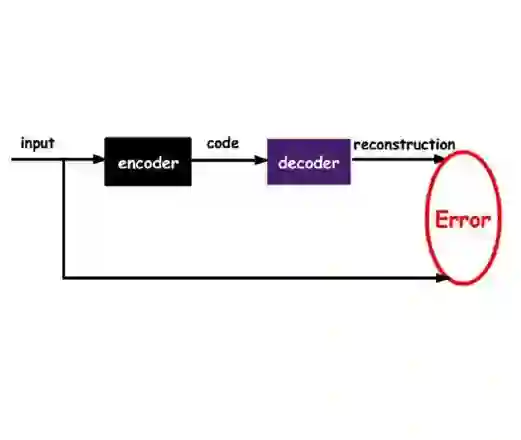
Graph anomaly detection is crucial for identifying nodes that deviate from regular behavior within graphs, benefiting various domains such as fraud detection and social network. Although existing reconstruction-based methods have achieved considerable success, they may face the \textit{Anomaly Overfitting} and \textit{Homophily Trap} problems caused by the abnormal patterns in the graph, breaking the assumption that normal nodes are often better reconstructed than abnormal ones. Our observations indicate that models trained on graphs with fewer anomalies exhibit higher detection performance. Based on this insight, we introduce a novel two-stage framework called Anomaly-Denoised Autoencoders for Graph Anomaly Detection (ADA-GAD). In the first stage, we design a learning-free anomaly-denoised augmentation method to generate graphs with reduced anomaly levels. We pretrain graph autoencoders on these augmented graphs at multiple levels, which enables the graph autoencoders to capture normal patterns. In the next stage, the decoders are retrained for detection on the original graph, benefiting from the multi-level representations learned in the previous stage. Meanwhile, we propose the node anomaly distribution regularization to further alleviate \textit{Anomaly Overfitting}. We validate the effectiveness of our approach through extensive experiments on both synthetic and real-world datasets.
翻译:图异常检测对于识别图中偏离正常行为的节点至关重要,在欺诈检测和社交网络等多个领域具有广泛应用。尽管现有的基于重构的方法已取得显著成功,但它们可能面临由图中异常模式引起的《异常过拟合》和《同质性陷阱》问题,这打破了正常节点通常比异常节点重构得更好的假设。我们的观察表明,在异常较少的图上训练的模型展现出更高的检测性能。基于这一见解,我们提出了一种名为异常去噪自编码器图异常检测(ADA-GAD)的新型两阶段框架。在第一阶段,我们设计了一种无需学习的异常去噪增强方法,用于生成异常水平较低的图。我们在此增强图上进行多级预训练,使图自编码器能够捕获正常模式。在下一阶段,解码器在原始图上重新训练以进行检测,得益于前一阶段学习到的多级表示。同时,我们提出了节点异常分布正则化,以进一步缓解《异常过拟合》。通过在合成数据集和真实数据集上的大量实验,我们验证了该方法的有效性。




相关内容


 微信扫码咨询专知VIP会员