

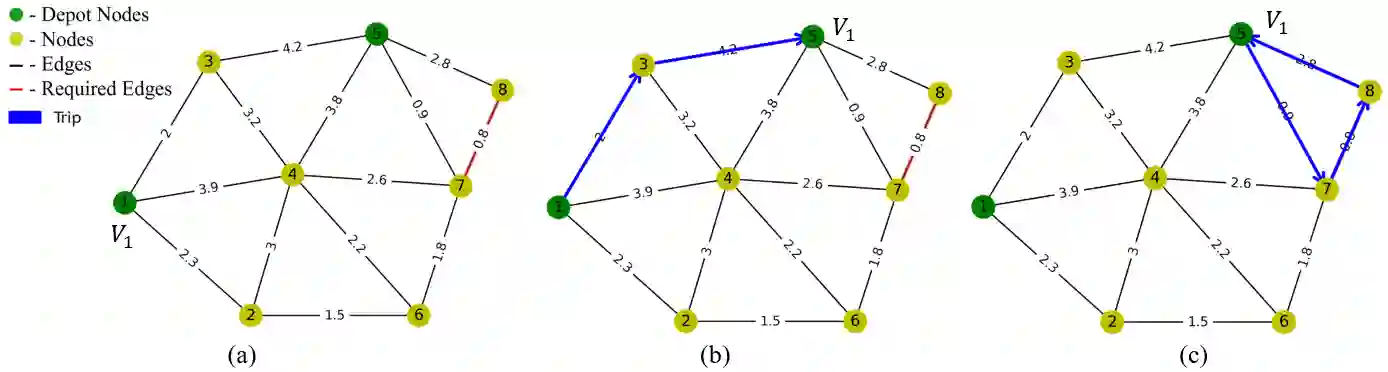
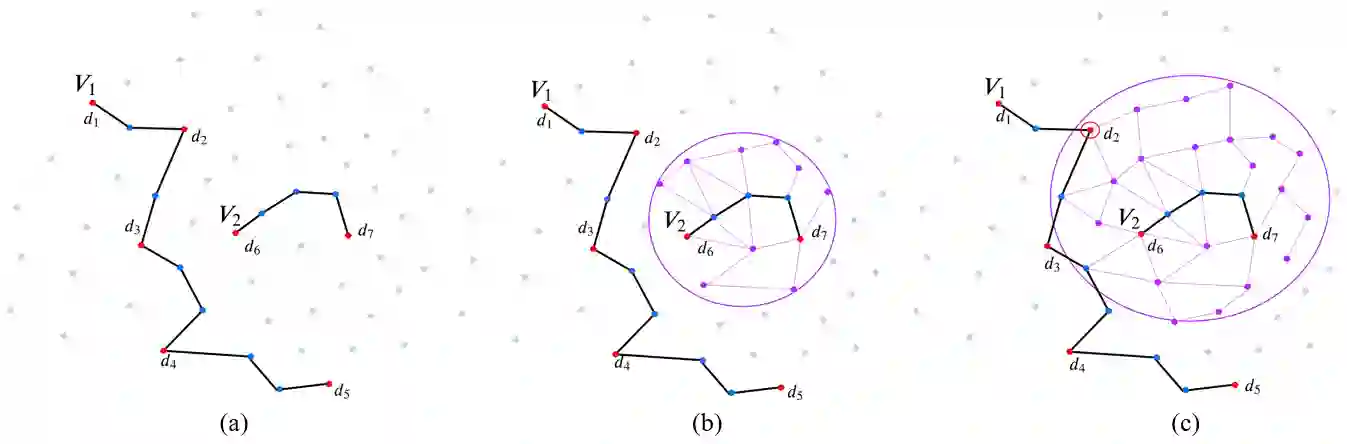
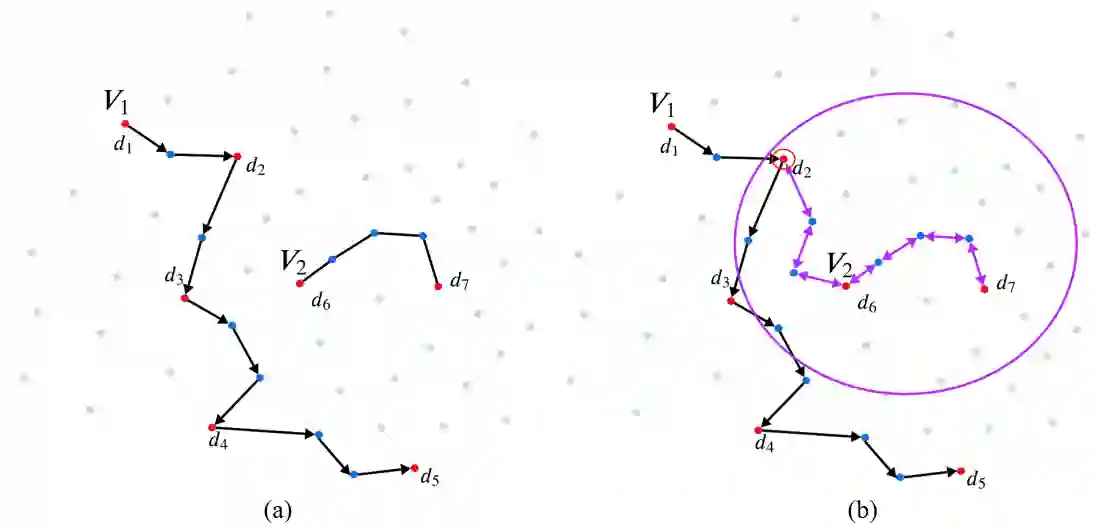
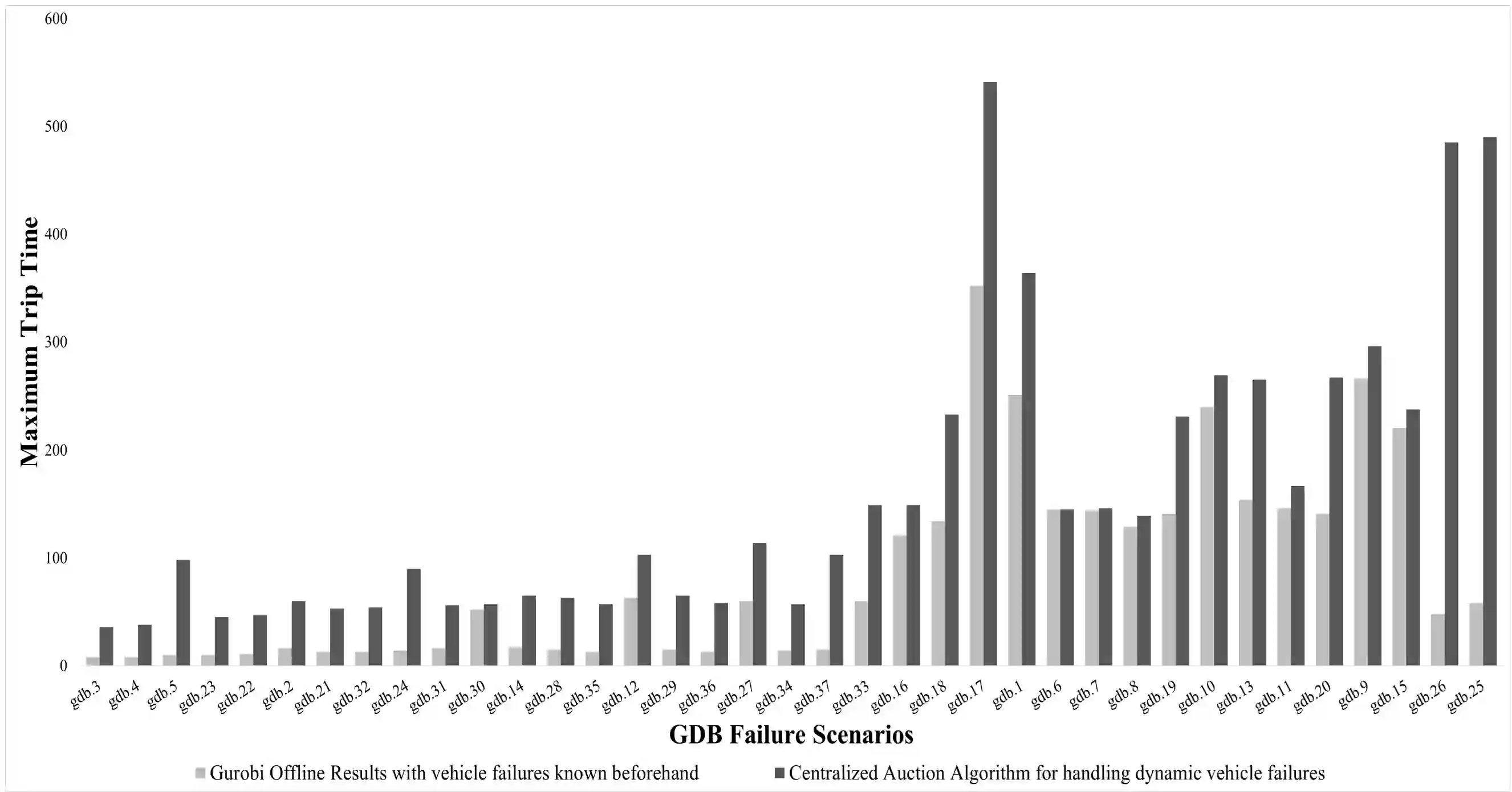
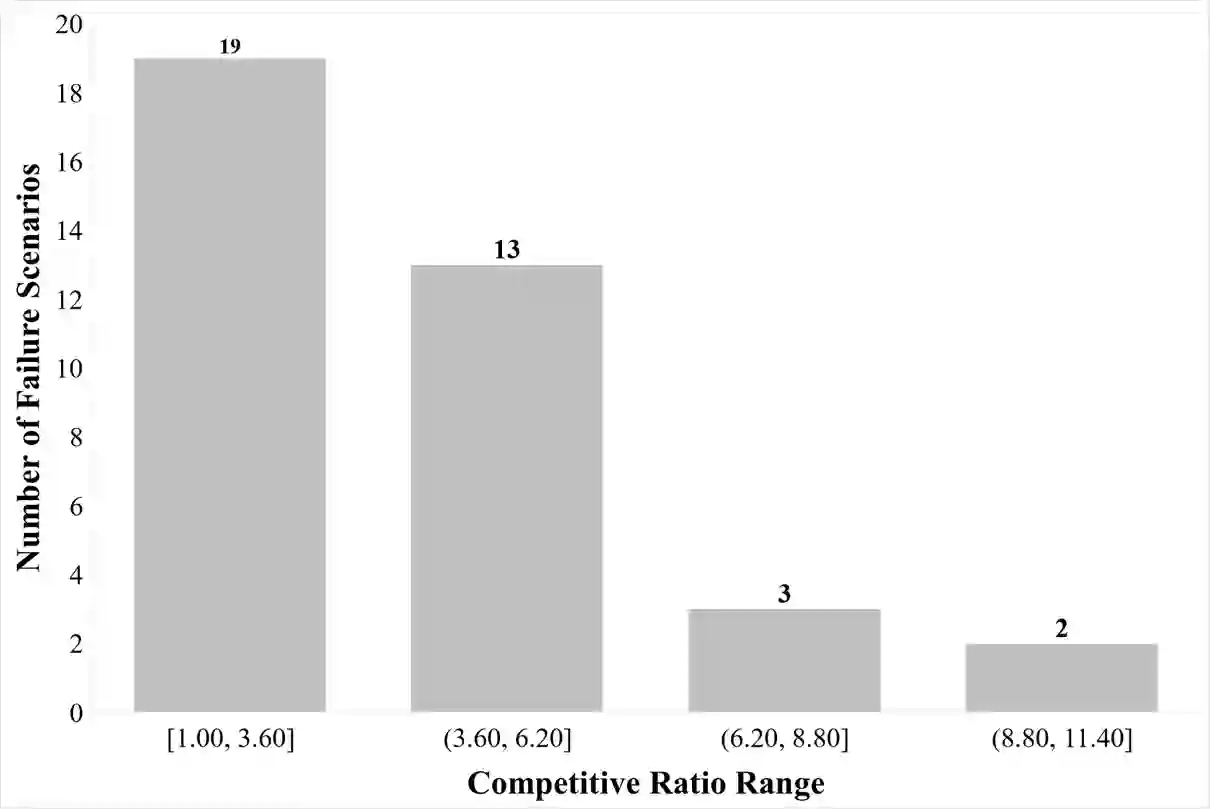
We present a centralized auction algorithm to solve the Multi-Depot Rural Postman Problem with Rechargeable and Reusable Vehicles (MD-RPP-RRV), focusing on rescheduling arc routing after vehicle failures. The problem involves finding heuristically obtained best feasible routes for multiple rechargeable and reusable vehicles with capacity constraints capable of performing multiple trips from multiple depots, with the possibility of vehicle failures. Our algorithm auctions the failed trips to active (non-failed) vehicles through local auctioning, modifying initial routes to handle dynamic vehicle failures efficiently. When a failure occurs, the algorithm searches for the best active vehicle to perform the failed trip and inserts the trip into that vehicle's route, which avoids a complete rescheduling and reduces the computational effort. We compare the algorithm's solutions against offline optimal solutions obtained from solving a Mixed Integer Linear Programming (MILP) formulation using the Gurobi solver; this formulation assumes that perfect information about the vehicle failures and failure times is given. The results demonstrate that the centralized auction algorithm produces solutions that are, in some cases, near optimal; moreover, the execution time for the proposed approach is much more consistent and is, for some instances, orders of magnitude less than the execution time of the Gurobi solver. The theoretical analysis provides an upper bound for the competitive ratio and computational complexity of our algorithm, offering a formal performance guarantee in dynamic failure scenarios.
翻译:本文提出了一种集中式拍卖算法,用于求解多仓库可充电可复用车辆农村邮路问题,重点关注车辆故障后的弧路径重调度。该问题涉及为多辆具有容量约束、能够从多个仓库执行多次行程的可充电可复用车辆,在存在车辆故障可能性的情况下,启发式地寻找最佳可行路径。我们的算法通过局部拍卖将故障行程拍卖给活跃(未故障)车辆,修改初始路径以高效处理动态车辆故障。当故障发生时,算法会搜索最佳活跃车辆来执行故障行程,并将该行程插入该车辆的路径中,从而避免了完全重调度并减少了计算量。我们将算法得到的解与通过求解混合整数线性规划(MILP)模型获得的离线最优解进行比较,该模型使用Gurobi求解器求解,并假设已知车辆故障及故障时间的完整信息。结果表明,集中式拍卖算法得到的解在某些情况下接近最优;此外,所提方法的执行时间更为稳定,且在某些算例中比Gurobi求解器的执行时间少几个数量级。理论分析给出了我们算法竞争比和计算复杂度的上界,为动态故障场景提供了正式的性能保证。




相关内容



 微信扫码咨询专知VIP会员