

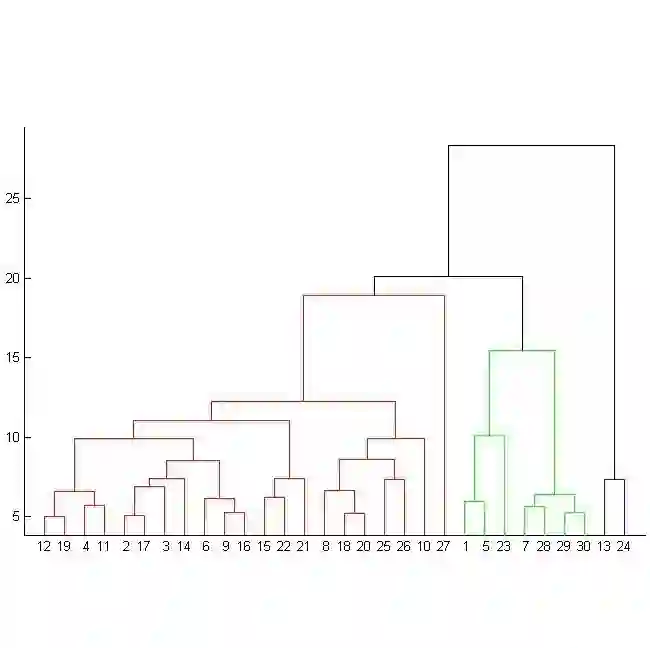
We propose tabular two-dimensional correlation analysis for extracting features from multifaceted characterization data, essential for understanding material properties. This method visualizes similarities and phase lags in structural parameter changes through heatmaps, combining hierarchical clustering and asynchronous correlations. We applied the proposed method to datasets of carbon nanotube (CNTs) films annealed at various temperatures and revealed the complexity of their hierarchical structures, which include elements like voids, bundles, and amorphous carbon. Our analysis addresses the challenge of attempting to understand the sequence of structural changes, especially in multifaceted characterization data where 11 structural parameters derived from 8 characterization methods interact with complex behavior. The results show how phase lags (asynchronous changes from stimuli) and parameter similarities can illuminate the sequence of structural changes in materials, providing insights into phenomena like the removal of amorphous carbon and graphitization in annealed CNTs. This approach is beneficial even with limited data and holds promise for a wide range of material analyses, demonstrating its potential in elucidating complex material behaviors and properties.
翻译:我们提出了表格化二维相关分析方法,用于从多层面表征数据中提取特征,这对于理解材料性质至关重要。该方法通过热力图可视化结构参数变化中的相似性与相位延迟,结合层次聚类与非同步相关性。我们将所提出的方法应用于不同温度退火处理的碳纳米管薄膜数据集,揭示了其层次结构的复杂性——包括空隙、束状结构及无定形碳等元素。我们的分析解决了试图理解结构变化序列的挑战,尤其是在来自8种表征方法的11个结构参数以复杂行为相互交织的多层面表征数据中。结果表明,相位延迟(由刺激引发的非同步变化)与参数相似性如何阐明材料结构变化的序列,为退火碳纳米管中无定形碳去除及石墨化等现象提供了见解。该方法即便在数据量有限的情况下依然有效,并有望广泛应用于各类材料分析,展现了其在阐释复杂材料行为与性质方面的潜力。




相关内容



 微信扫码咨询专知VIP会员