

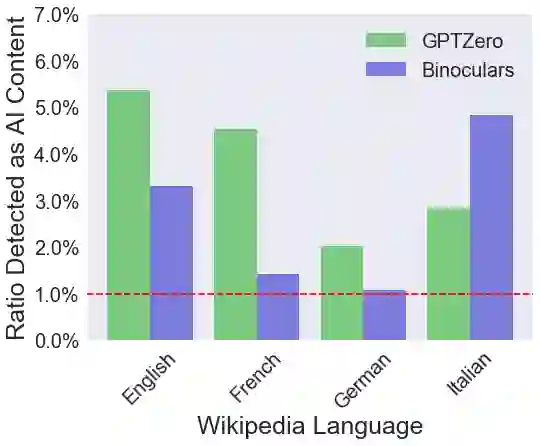
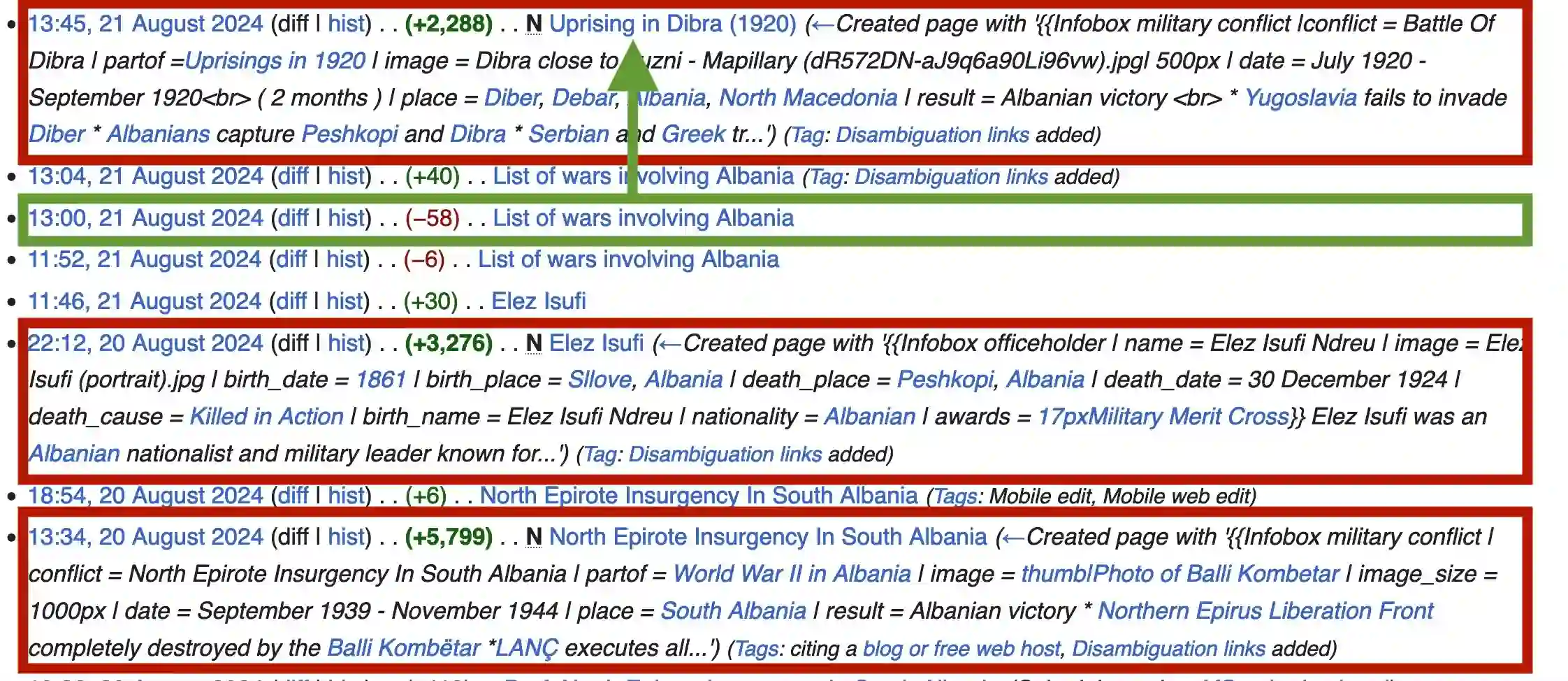
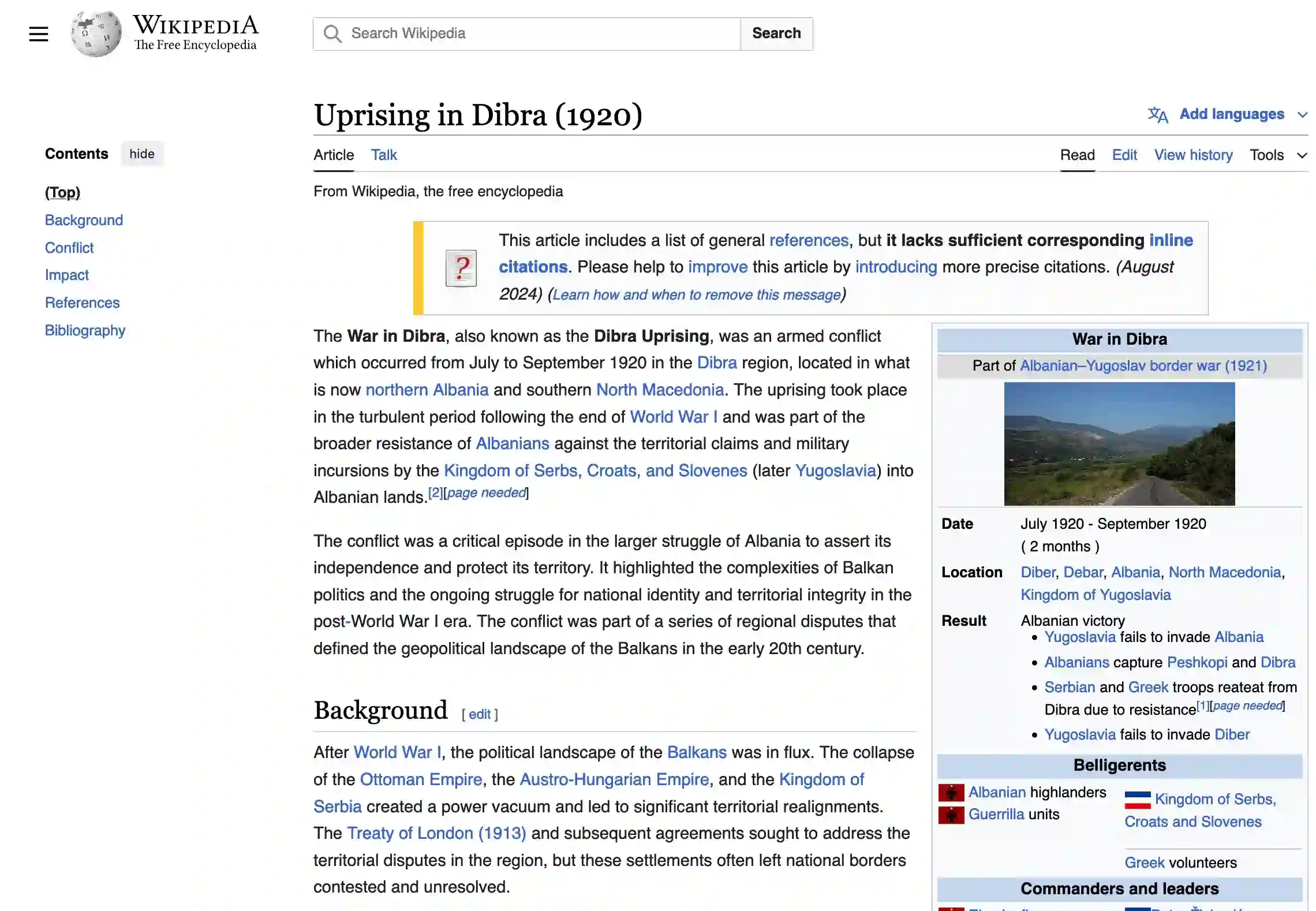
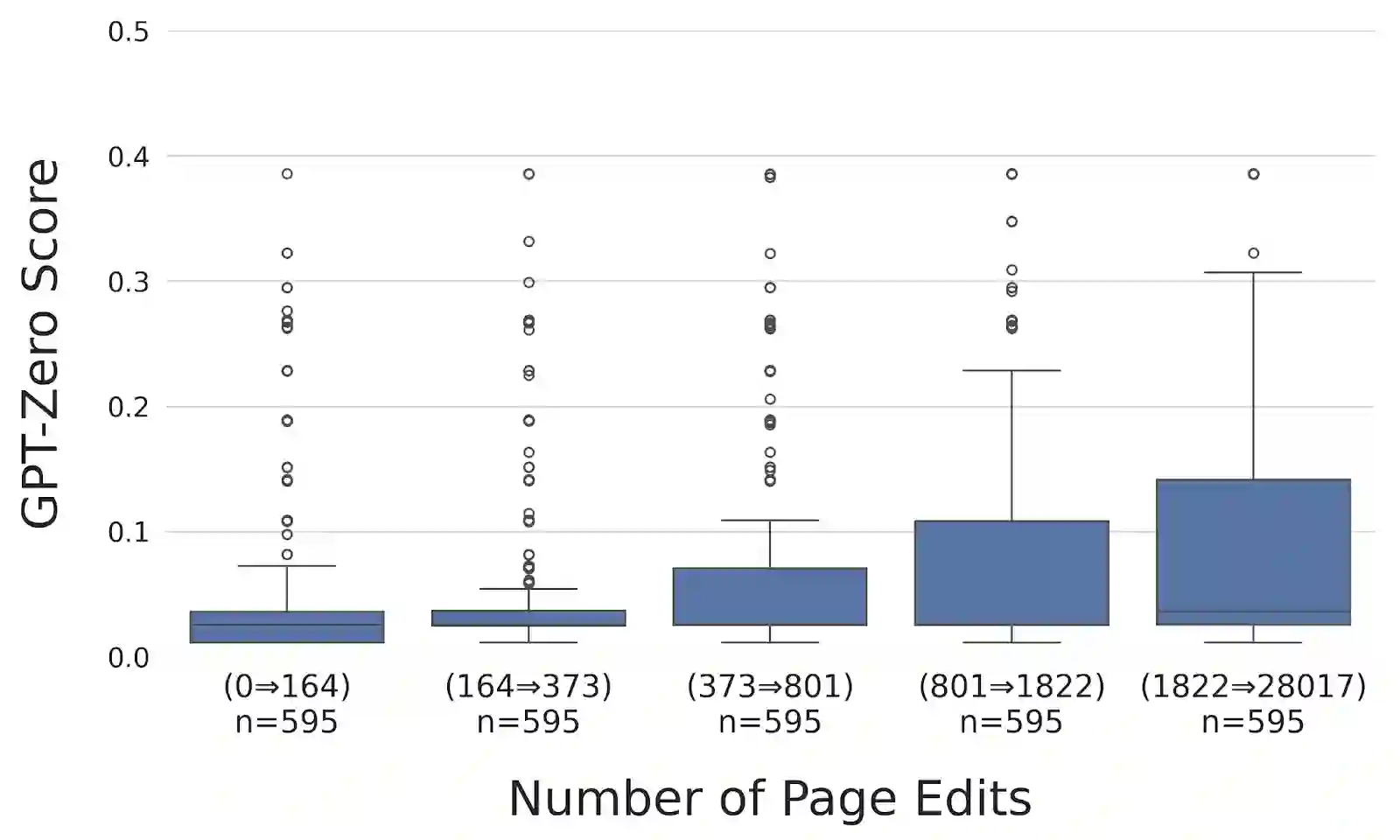
The rise of AI-generated content in popular information sources raises significant concerns about accountability, accuracy, and bias amplification. Beyond directly impacting consumers, the widespread presence of this content poses questions for the long-term viability of training language models on vast internet sweeps. We use GPTZero, a proprietary AI detector, and Binoculars, an open-source alternative, to establish lower bounds on the presence of AI-generated content in recently created Wikipedia pages. Both detectors reveal a marked increase in AI-generated content in recent pages compared to those from before the release of GPT-3.5. With thresholds calibrated to achieve a 1% false positive rate on pre-GPT-3.5 articles, detectors flag over 5% of newly created English Wikipedia articles as AI-generated, with lower percentages for German, French, and Italian articles. Flagged Wikipedia articles are typically of lower quality and are often self-promotional or partial towards a specific viewpoint on controversial topics.
翻译:AI生成内容在主流信息源中的兴起引发了关于问责制、准确性及偏见放大的重大关切。除了直接影响用户外,此类内容的广泛存在对基于大规模互联网数据训练语言模型的长期可行性提出了疑问。我们使用专有AI检测器GPTZero与开源替代方案Binoculars,对近期创建的维基百科页面中AI生成内容的存在比例建立了下限估计。两种检测器均显示,相较于GPT-3.5发布前的页面,近期页面中AI生成内容出现显著增长。通过在GPT-3.5前文章上校准至1%误报率的检测阈值,检测器将超过5%新创建的英文维基百科文章标记为AI生成,而德文、法文和意大利文文章的标记比例较低。被标记的维基百科文章通常质量较低,且常具有自我宣传性质或在争议性话题上偏向特定观点。




相关内容




 微信扫码咨询专知VIP会员