

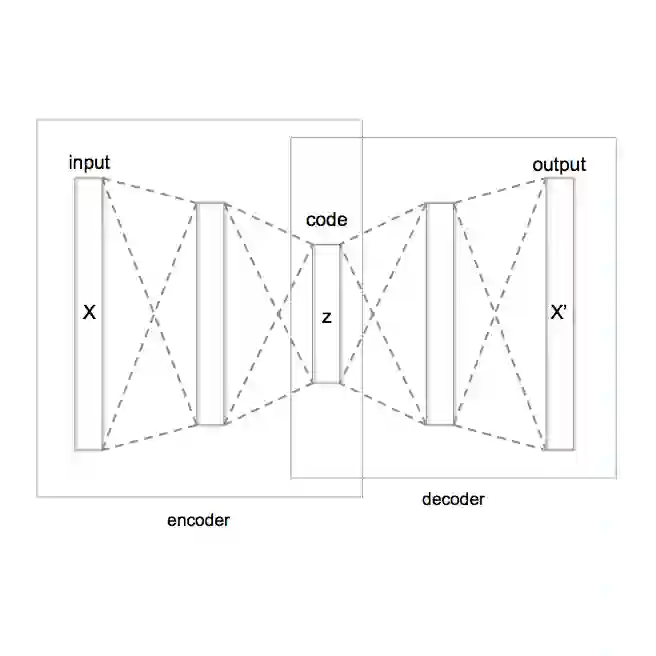
Counterfactual explanations (CEs) provide recourse recommendations for individuals affected by algorithmic decisions. A key challenge is generating CEs that are robust against various perturbation types (e.g. input and model perturbations) while simultaneously satisfying other desirable properties. These include plausibility, ensuring CEs reside on the data manifold, and diversity, providing multiple distinct recourse options for single inputs. Existing methods, however, mostly struggle to address these multifaceted requirements in a unified, model-agnostic manner. We address these limitations by proposing a novel generative framework. First, we introduce the Label-conditional Gaussian Mixture Variational Autoencoder (L-GMVAE), a model trained to learn a structured latent space where each class label is represented by a set of Gaussian components with diverse, prototypical centroids. Building on this, we present LAPACE (LAtent PAth Counterfactual Explanations), a model-agnostic algorithm that synthesises entire paths of CE points by interpolating from inputs' latent representations to those learned latent centroids. This approach inherently ensures robustness to input changes, as all paths for a given target class converge to the same fixed centroids. Furthermore, the generated paths provide a spectrum of recourse options, allowing users to navigate the trade-off between proximity and plausibility while also encouraging robustness against model changes. In addition, user-specified actionability constraints can also be easily incorporated via lightweight gradient optimisation through the L-GMVAE's decoder. Comprehensive experiments show that LAPACE is computationally efficient and achieves competitive performance across eight quantitative metrics.
翻译:反事实解释(CEs)为受算法决策影响的个体提供补救建议。一个关键挑战在于生成能够抵御多种扰动类型(例如输入扰动和模型扰动)的CEs,同时满足其他理想特性。这些特性包括合理性(确保CEs位于数据流形上)和多样性(为单一输入提供多个不同的补救选项)。然而,现有方法大多难以以统一、模型无关的方式应对这些多方面的要求。我们通过提出一种新颖的生成框架来解决这些局限性。首先,我们引入了标签条件高斯混合变分自编码器(L-GMVAE),该模型通过学习一个结构化的潜在空间进行训练,其中每个类别标签由一组具有多样化、原型质心的高斯分量表示。在此基础上,我们提出了LAPACE(潜在路径反事实解释),这是一种模型无关的算法,通过从输入的潜在表示向学习到的潜在质心进行插值,合成完整的CE点路径。这种方法本质上确保了对于输入变化的鲁棒性,因为给定目标类别的所有路径都收敛于相同的固定质心。此外,生成的路径提供了一系列补救选项,使用户能够在接近性与合理性之间进行权衡,同时也有助于增强对模型变化的鲁棒性。另外,用户指定的可操作性约束也可以通过L-GMVAE解码器的轻量级梯度优化轻松融入。综合实验表明,LAPACE计算效率高,并在八项量化指标上取得了具有竞争力的性能。




相关内容



 微信扫码咨询专知VIP会员