

Retrieval-Augmented Generation (RAG) systems represent a significant advancement over traditional Large Language Models (LLMs). RAG systems enhance their generation ability by incorporating external data retrieved through an Information Retrieval (IR) phase, overcoming the limitations of standard LLMs, which are restricted to their pre-trained knowledge and limited context window. Most research in this area has predominantly concentrated on the generative aspect of LLMs within RAG systems. Our study fills this gap by thoroughly and critically analyzing the influence of IR components on RAG systems. This paper analyzes which characteristics a retriever should possess for an effective RAG's prompt formulation, focusing on the type of documents that should be retrieved. We evaluate various elements, such as the relevance of the documents to the prompt, their position, and the number included in the context. Our findings reveal, among other insights, that including irrelevant documents can unexpectedly enhance performance by more than 30% in accuracy, contradicting our initial assumption of diminished quality. These results underscore the need for developing specialized strategies to integrate retrieval with language generation models, thereby laying the groundwork for future research in this field.
翻译:检索增强生成(RAG)系统相较于传统大语言模型(LLMs)实现了重大进步。RAG系统通过整合信息检索(IR)阶段获取的外部数据来增强生成能力,突破了标准LLMs仅依赖预训练知识与有限上下文窗口的局限性。现有研究大多聚焦于RAG系统中LLM的生成层面,而本研究通过系统批判地剖析IR组件对RAG系统的影响填补了这一空白。本文分析了检索器应具备哪些特性才能有效构建RAG提示,重点研究了应检索的文档类型。我们评估了多个要素,包括文档与提示的相关性、文档位置以及上下文包含的文档数量。研究发现(包括其他重要发现):引入不相关文档反能使准确率意外提升30%以上,这与我们最初关于质量下降的假设相悖。这些结果凸显了开发检索与语言生成模型协同策略的必要性,为该领域的未来研究奠定了基础。
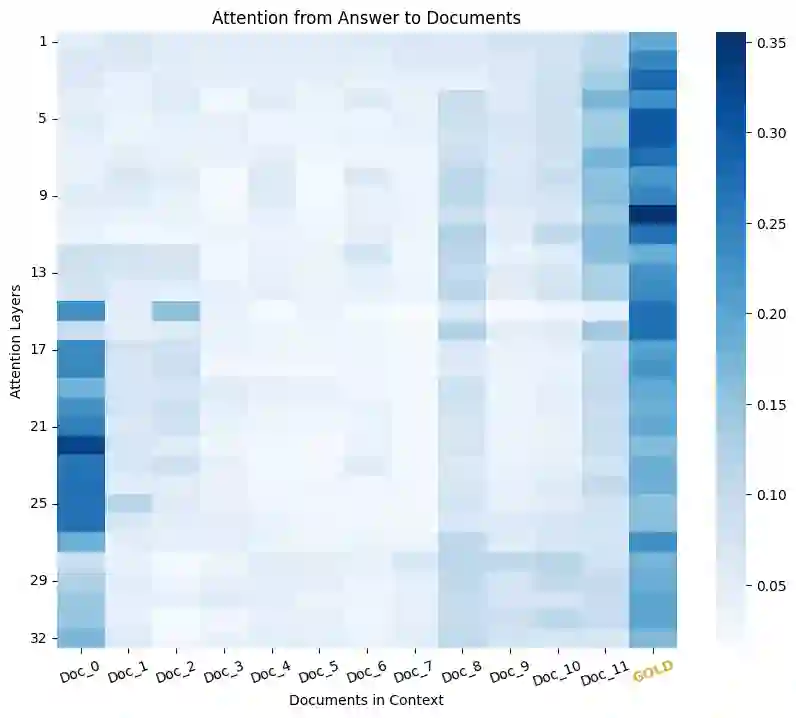




相关内容




 微信扫码咨询专知VIP会员