

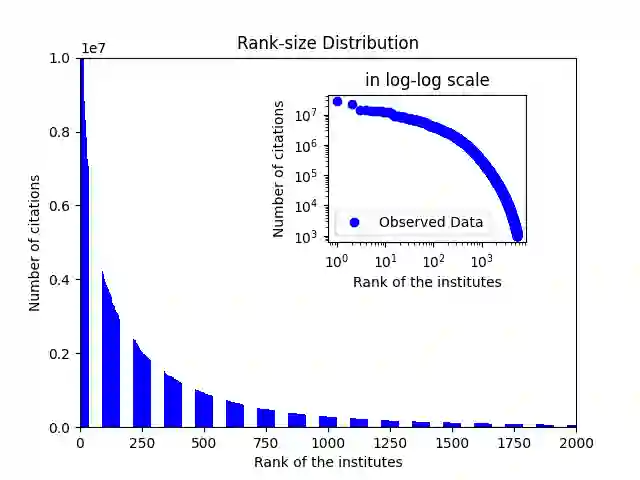
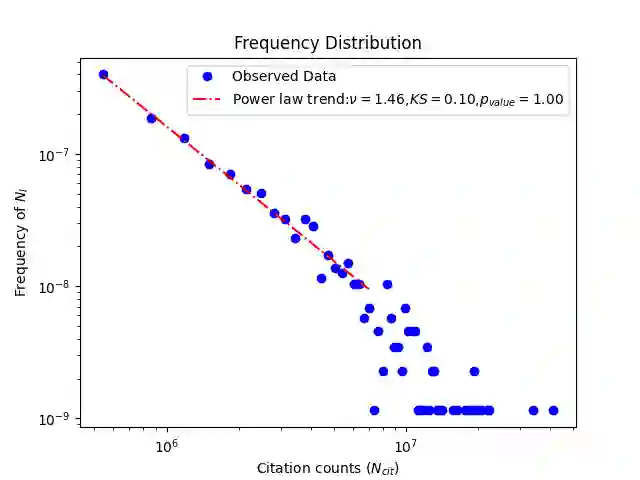
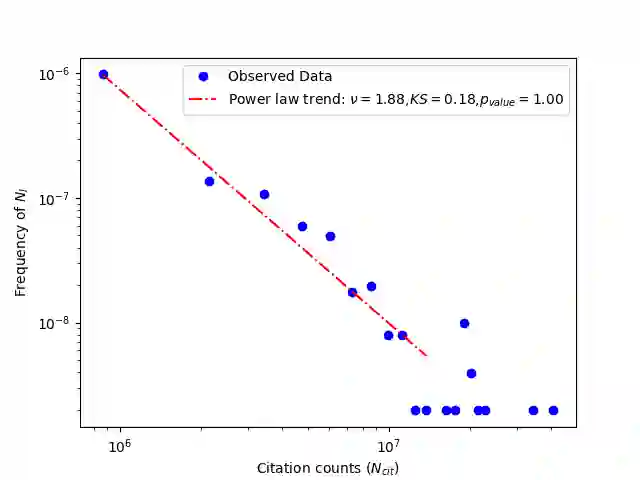
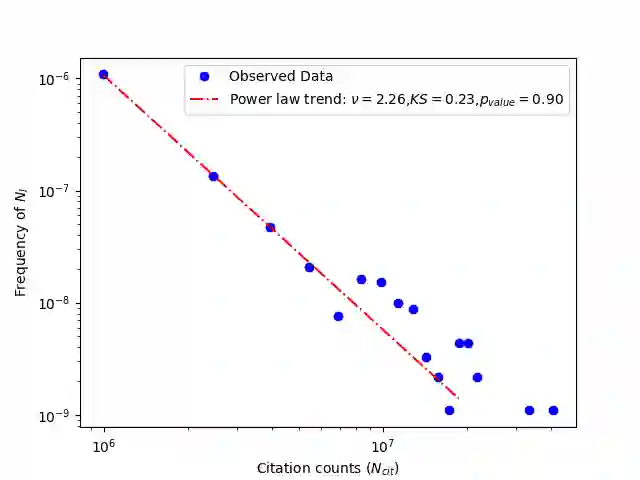
This study explores the citation diversity in scholarly literature, analyzing different patterns of citations observed within different countries and academic disciplines. We examine citation distributions across top institutions within certain countries and find that the higher end of the distribution follows a Power Law or Pareto Law pattern; the scaling exponent of the Pareto Law varies depending on the number of top institutions included in the analysis. By adopting a novel entropy-based diversity measure, our findings reveal that countries with both small and large economies tend to cluster similarly in terms of citation diversity. The composition of countries within each group changes as the number of top institutions considered in the analysis varies. Moreover, we analyze citation diversity among award-winning scientists across six scientific disciplines, finding significant variations. We also explore the evolution of citation diversity over the past century across multiple fields. A gender-based study in several disciplines confirms varying citation diversities among male and female scientists. Our innovative citation diversity measure stands out as a valuable tool for assessing the unevenness of citation distributions, providing deeper insights that go beyond what traditional citation counts alone can reveal. This comprehensive analysis enhances our understanding of global scientific contributions and fosters a more equitable view of academic achievements.
翻译:本研究探讨学术文献中的引用多样性,分析不同国家和学科领域中观察到的引用模式差异。我们考察了特定国家顶尖机构的引用分布情况,发现分布的高端遵循幂律或帕累托定律模式;帕累托定律的标度指数随分析中包含的顶尖机构数量而变化。通过采用一种新颖的基于熵的多样性度量方法,我们的研究结果表明,无论经济体量大小,各国在引用多样性方面往往呈现类似的聚集特征。随着分析中考虑的顶尖机构数量变化,各分组内的国家构成也会发生改变。此外,我们分析了六个科学领域中获奖科学家的引用多样性,发现了显著差异。我们还探讨了过去一个世纪以来多个领域引用多样性的演变过程。对若干学科开展的性别研究表明,男女科学家之间的引用多样性存在差异。我们创新的引用多样性度量方法成为评估引用分布不均衡性的有效工具,能够提供超越传统引用计数指标的深层见解。这项综合分析增强了我们对全球科学贡献的理解,并促进了更公平的学术成就观。





相关内容




 微信扫码咨询专知VIP会员