

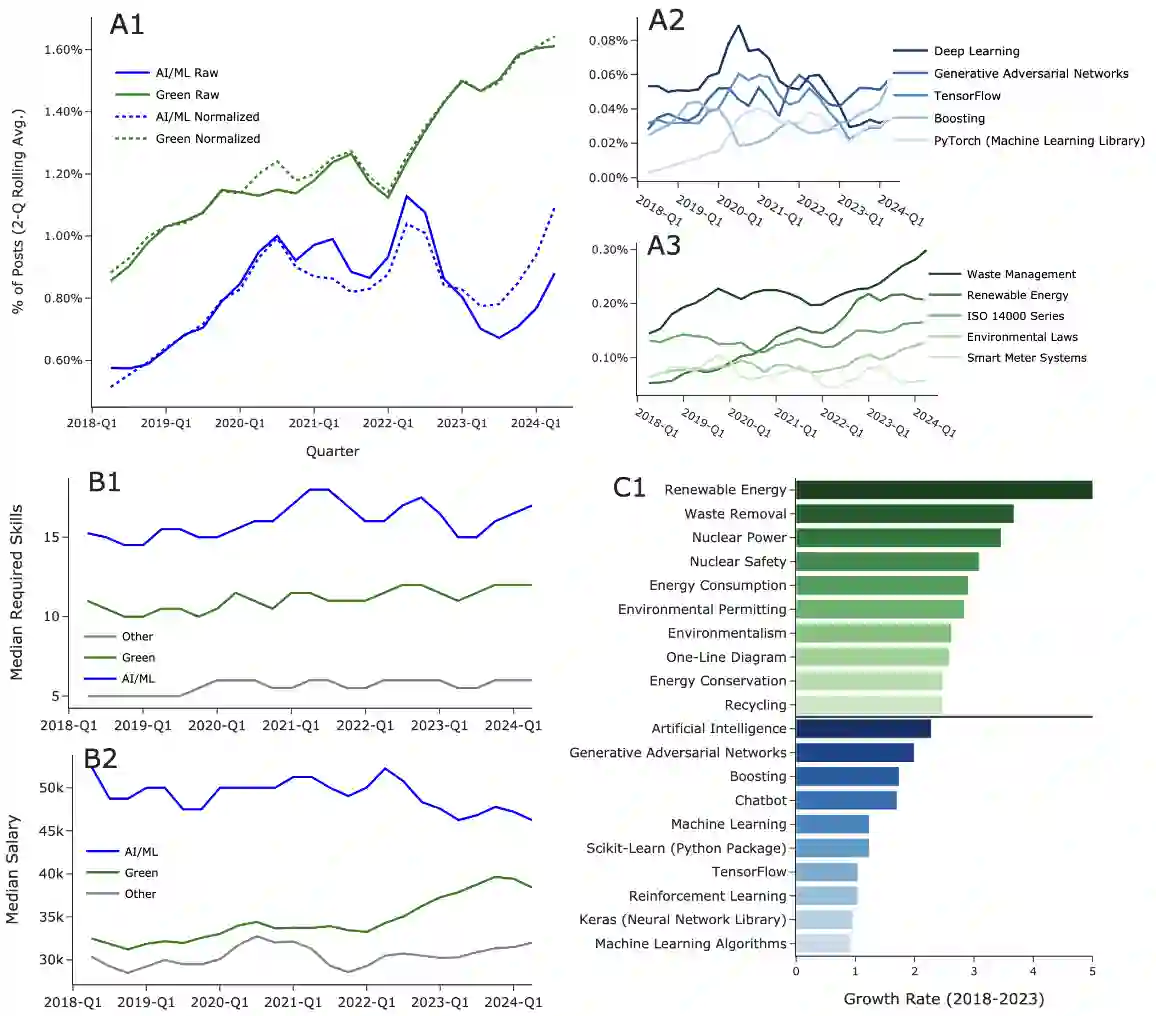
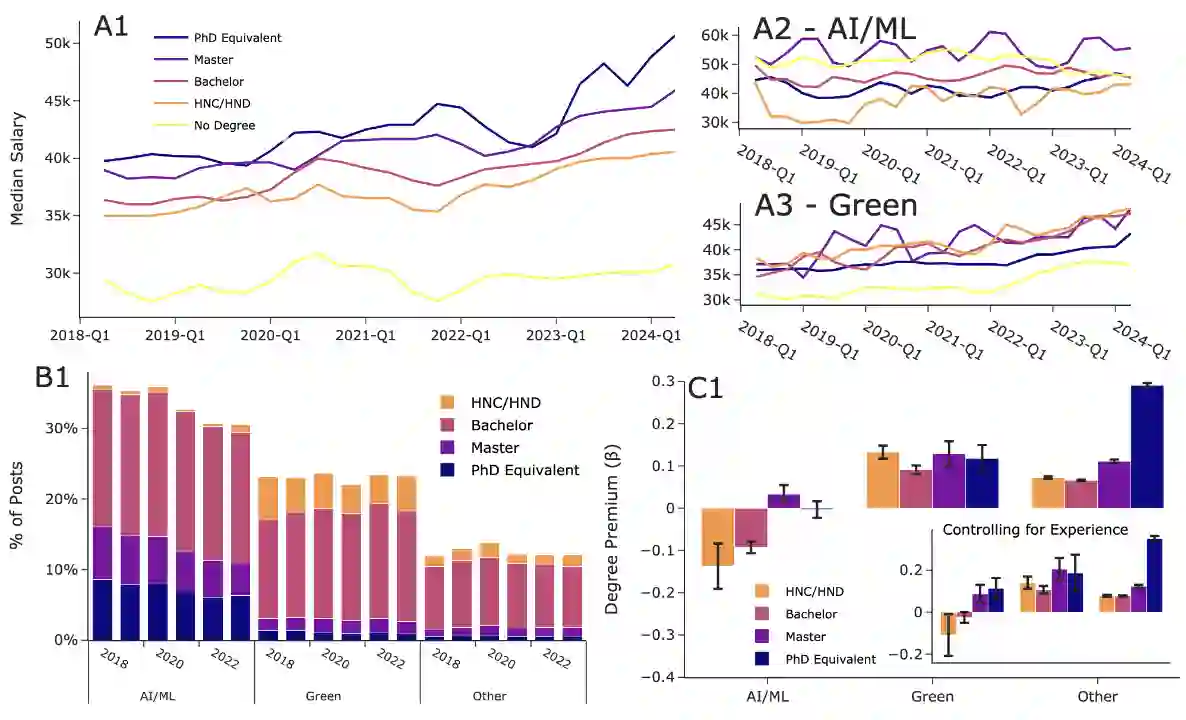
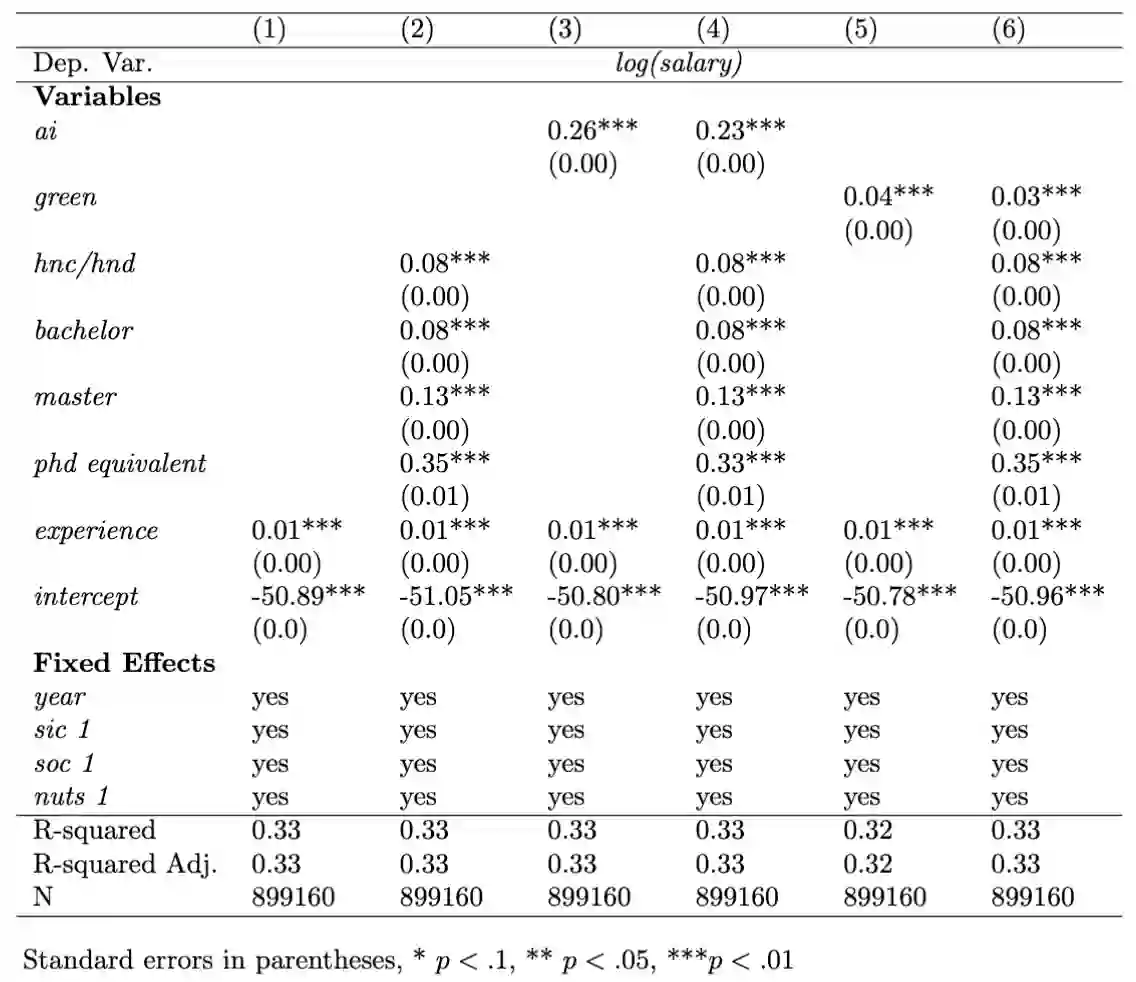
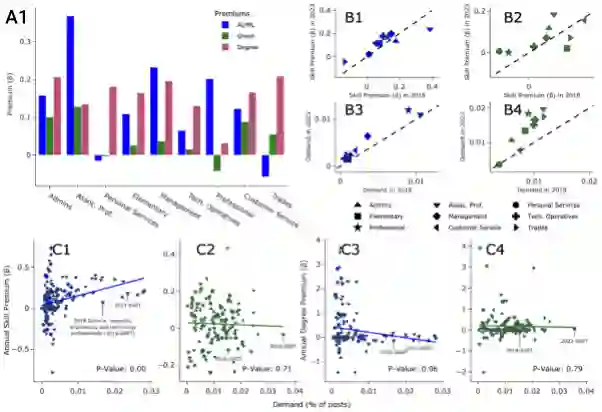
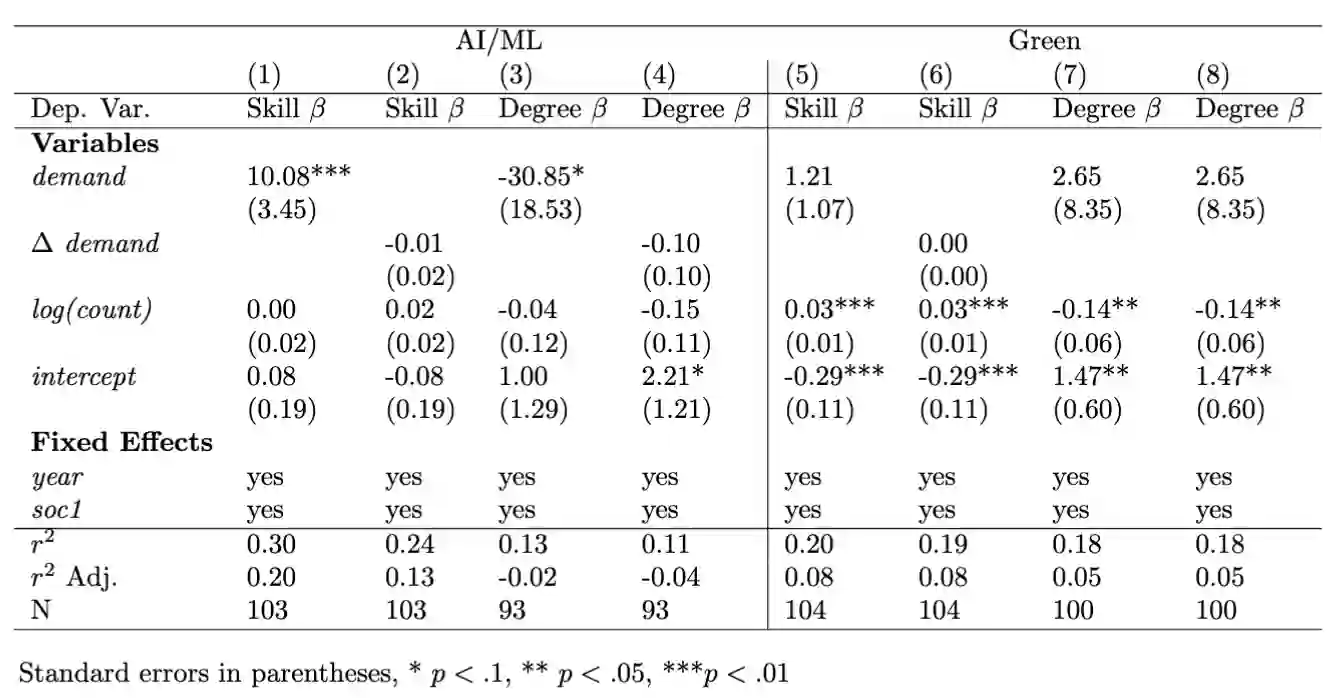
Emerging professions in fields like Artificial Intelligence (AI) and sustainability (green jobs) are experiencing labour shortages as industry demand outpaces labour supply. In this context, our study aims to understand whether employers have begun focusing more on individual skills rather than formal qualifications in their recruitment processes. We analysed a large time-series dataset of approximately eleven million online job vacancies in the UK from 2018 to mid-2024, drawing on diverse literature on technological change and labour market signalling. Our findings provide evidence that employers have initiated "skill-based hiring" for AI roles, adopting more flexible hiring practices to expand the available talent pool. From 2018-2023, demand for AI roles grew by 21% as a proportion of all postings (and accelerated into 2024). Simultaneously, mentions of university education requirements for AI roles declined by 15%. Our regression analysis shows that university degrees have a significantly lower wage premium for both AI and green roles. In contrast, AI skills command a wage premium of 23%, exceeding the value of degrees up until the PhD-level (33%). In occupations with high demand for AI skills, the premium for skills is high, and the reward for degrees is relatively low. We recommend leveraging alternative skill-building formats such as apprenticeships, on-the-job training, MOOCs, vocational education and training, micro-certificates, and online bootcamps to fully utilise human capital and address talent shortages.
翻译:人工智能(AI)与可持续性(绿色职位)等新兴领域的专业人才正面临劳动力短缺,行业需求已超过劳动力供给。在此背景下,本研究旨在探究雇主在招聘过程中是否已开始更关注个人技能而非正式学历资格。基于技术变革与劳动力市场信号传递的相关文献,我们分析了2018年至2024年中旬英国约1100万条在线职位空缺的大规模时间序列数据集。研究结果表明,雇主已对AI相关职位启动"技能导向招聘",通过采用更灵活的招聘实践以扩大可用人才库。2018至2023年间,AI职位需求占所有职位发布的比例增长21%(并在2024年加速增长)。与此同时,AI职位对大学学历要求的提及率下降15%。回归分析显示,大学学位在AI与绿色职位中的薪资溢价显著较低。相比之下,AI技能可带来23%的薪资溢价,其价值直至博士学历水平(33%)仍保持优势。在AI技能高需求的职业中,技能溢价较高,而学历回报相对较低。我们建议通过学徒制、在职培训、慕课、职业教育与培训、微证书及在线训练营等替代性技能培养模式,充分开发人力资本并应对人才短缺问题。




相关内容




 微信扫码咨询专知VIP会员