

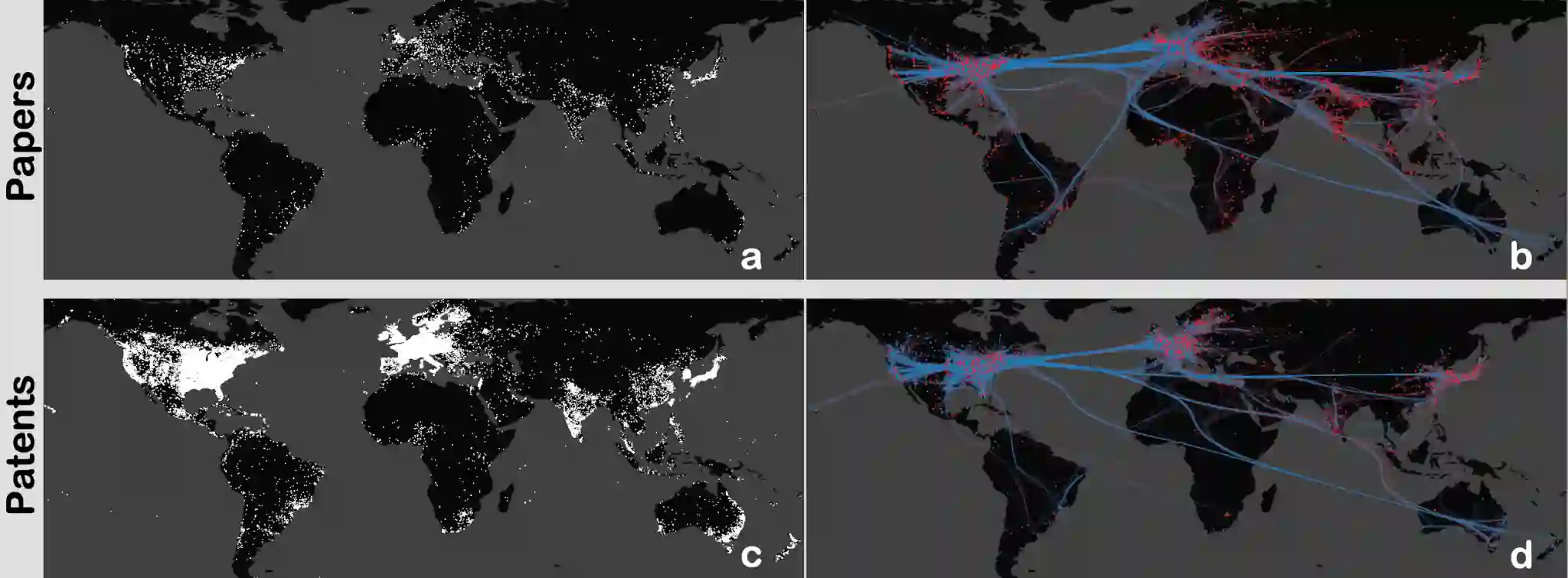
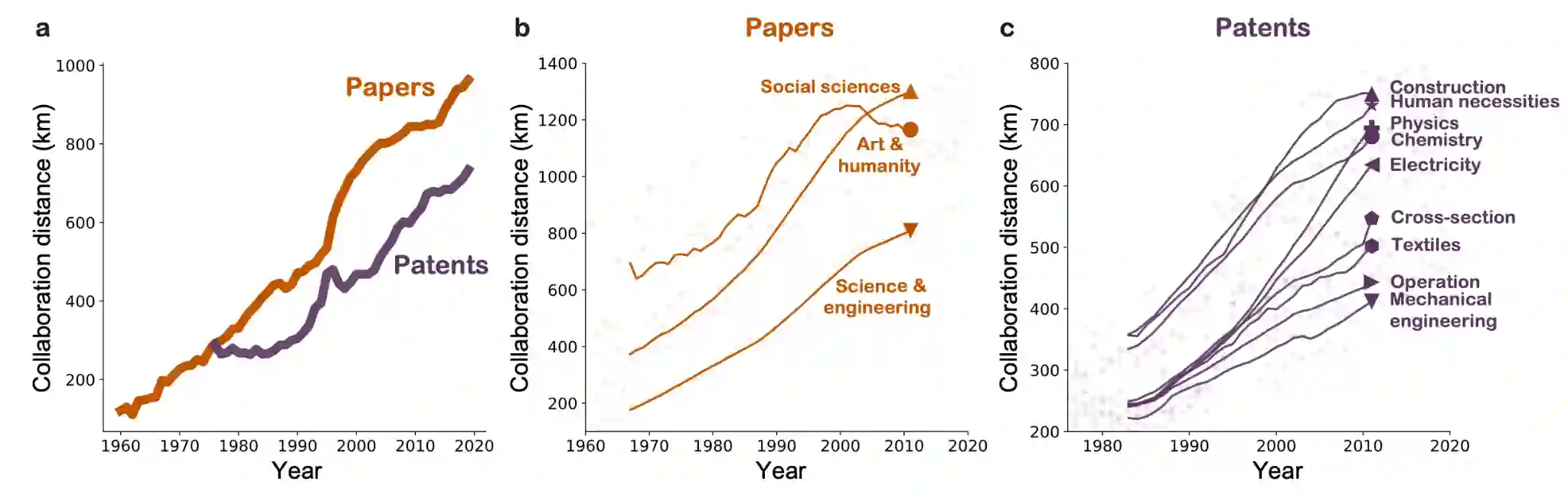
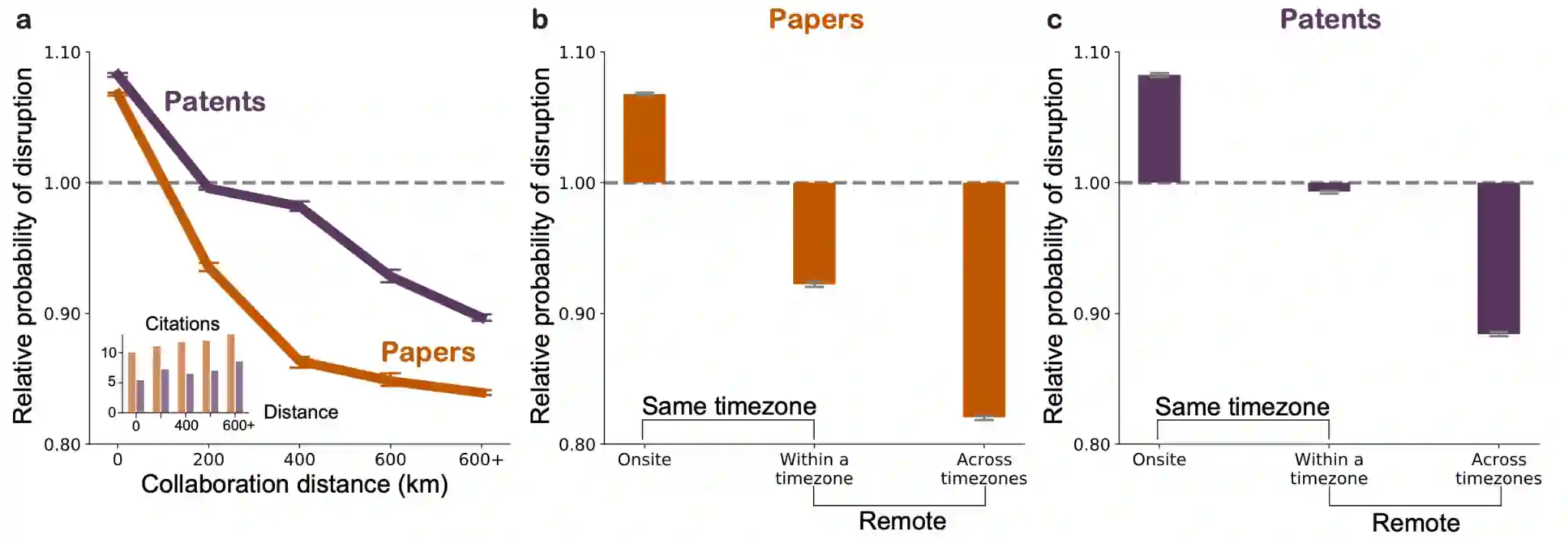
Theories of innovation emphasize the role of social networks and teams as facilitators of breakthrough discoveries. Around the world, scientists and inventors today are more plentiful and interconnected than ever before. But while there are more people making discoveries, and more ideas that can be reconfigured in novel ways, research suggests that new ideas are getting harder to find-contradicting recombinant growth theory. In this paper, we shed new light on this apparent puzzle. Analyzing 20 million research articles and 4 million patent applications across the globe over the past half-century, we begin by documenting the rise of remote collaboration across cities, underlining the growing interconnectedness of scientists and inventors globally. We further show that across all fields, periods, and team sizes, researchers in these remote teams are consistently less likely to make breakthrough discoveries relative to their onsite counterparts. Creating a dataset that allows us to explore the division of labor in knowledge production within teams and across space, we find that among distributed team members, collaboration centers on late-stage, technical tasks involving more codified knowledge. Yet they are less likely to join forces in conceptual tasks-such as conceiving new ideas and designing research-when knowledge is tacit. We conclude that despite striking improvements in digital technology in recent years, remote teams are less likely to integrate the knowledge of their members to produce new, disruptive ideas.
翻译:创新理论强调社会网络与团队作为突破性发现催化剂的作用。当今世界,科学家和发明家比以往任何时候都更加充裕且相互关联。然而,尽管从事发现的人更多,可重组为新方案的想法也更多,但研究表明新创意正变得愈发难以寻觅——这与重组增长理论相矛盾。本文揭示了这一看似矛盾的谜题。通过分析过去半个世纪全球2000万篇研究论文和400万项专利申请,我们首先记录了跨城市远程协作的兴起,凸显了全球科学家与发明家日益加深的互联性。进一步研究表明,无论学科领域、时期或团队规模如何,相较于现场团队,远程协作团队的成员取得突破性发现的可能性始终较低。通过构建可探索团队内及跨空间知识生产分工的数据集,我们发现分布式团队成员间的协作集中于涉及更明确知识的后期技术性任务。但当知识具有隐性特征时,他们却较少在构思新想法、设计研究等概念性任务中协同发力。我们得出结论:尽管近年来数字技术取得了显著进步,但远程团队整合成员知识以产生颠覆性新创意的可能性仍然较低。






相关内容




 微信扫码咨询专知VIP会员