

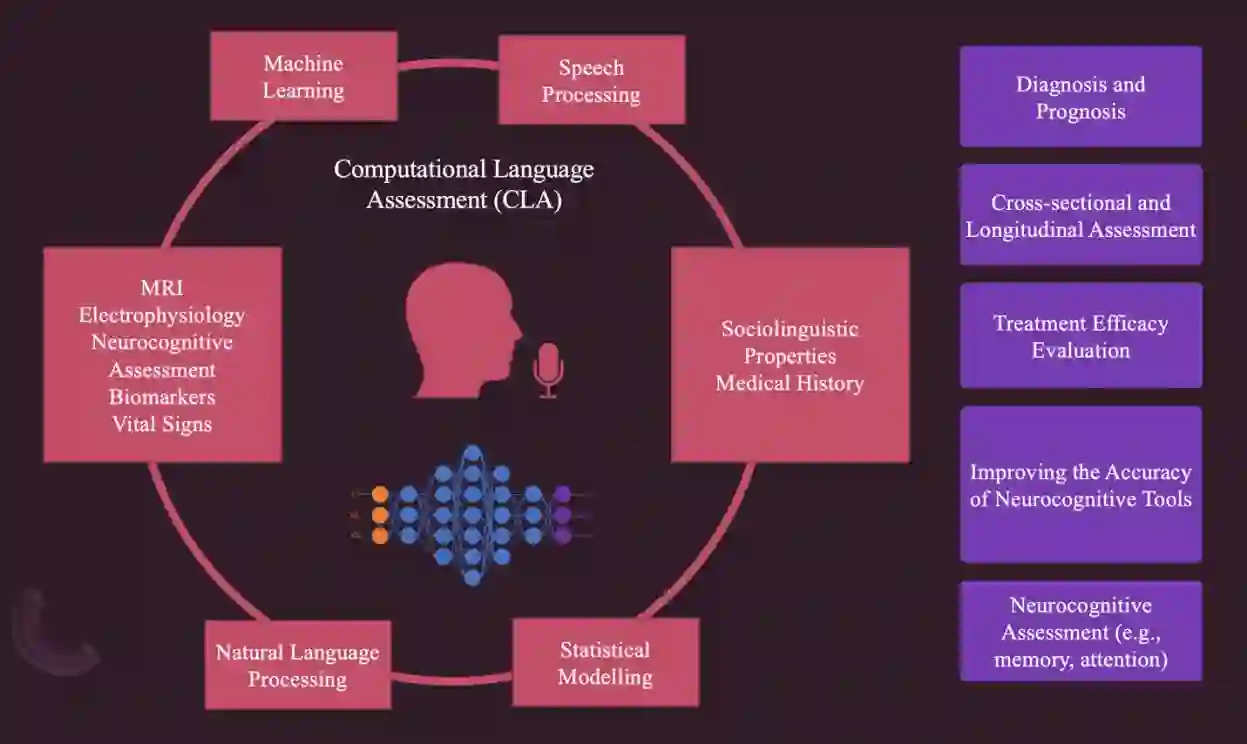
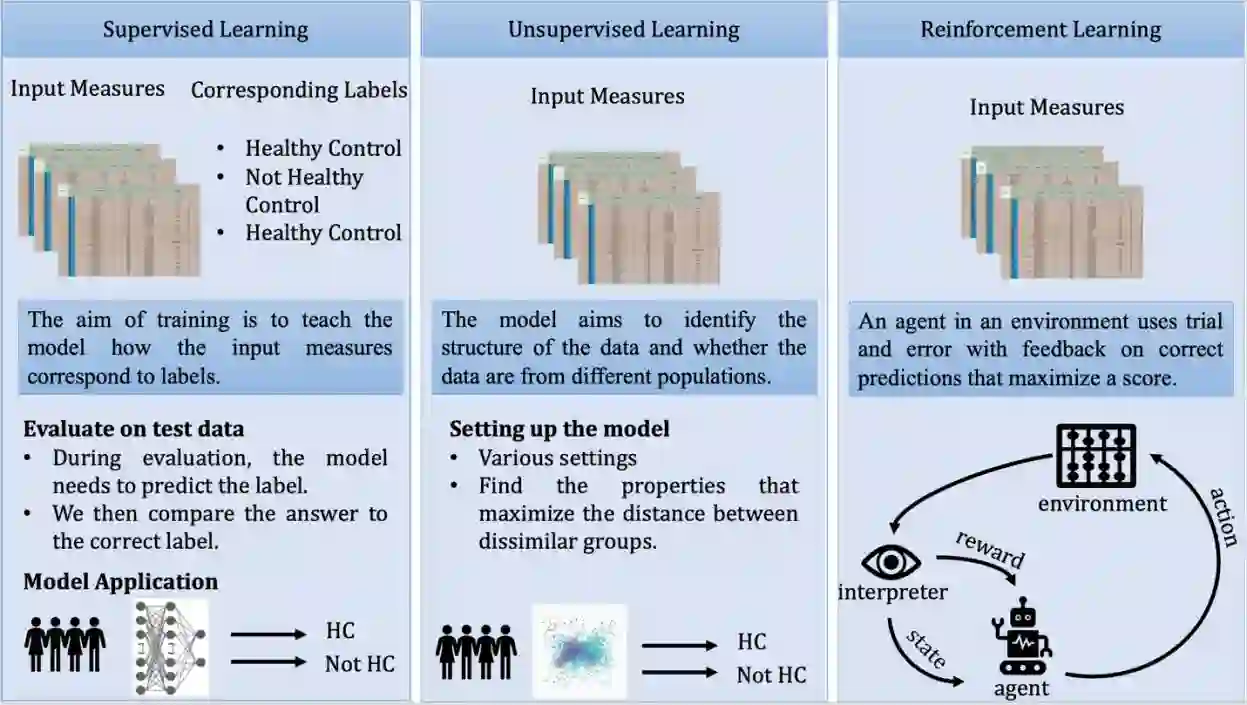
Speech, language, and communication symptoms enable the early detection, diagnosis, treatment planning, and monitoring of neurocognitive disease progression. Nevertheless, traditional manual neurologic assessment, the speech and language evaluation standard, is time-consuming and resource-intensive for clinicians. We argue that Computational Language Assessment (C.L.A.) is an improvement over conventional manual neurological assessment. Using machine learning, natural language processing, and signal processing, C.L.A. provides a neuro-cognitive evaluation of speech, language, and communication in elderly and high-risk individuals for dementia. ii. facilitates the diagnosis, prognosis, and therapy efficacy in at-risk and language-impaired populations; and iii. allows easier extensibility to assess patients from a wide range of languages. Also, C.L.A. employs Artificial Intelligence models to inform theory on the relationship between language symptoms and their neural bases. It significantly advances our ability to optimize the prevention and treatment of elderly individuals with communication disorders, allowing them to age gracefully with social engagement.
翻译:言语、语言及沟通症状有助于神经认知疾病的早期检测、诊断、治疗规划及病程监测。然而,作为言语与语言评估标准的传统人工神经评估对临床医生而言既耗时又耗资源。我们认为计算语言评估(C.L.A.)是对传统人工神经评估的改进。通过机器学习、自然语言处理与信号处理技术,C.L.A.可:i. 对老年及痴呆高风险人群的言语、语言及沟通能力进行神经认知评估;ii. 促进高风险及语言障碍人群的诊断、预后判断及疗效监测;iii. 易于扩展至评估使用多种语言的患者群体。此外,C.L.A.运用人工智能模型揭示语言症状与其神经基础之间的理论关联。该方法显著提升我们优化沟通障碍老年人群预防与治疗的能力,使其能够保持社交参与并优雅地老去。




相关内容




 微信扫码咨询专知VIP会员