

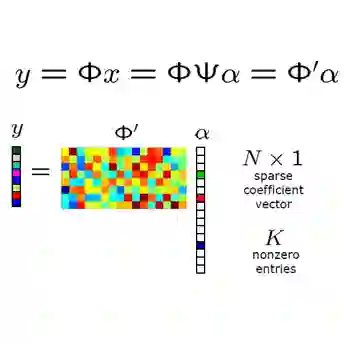
We study an auto-calibration problem in which a transform-sparse signal is acquired via compressive sensing by multiple sensors in parallel, but with unknown calibration parameters of the sensors. This inverse problem has an important application in pMRI reconstruction, where the calibration parameters of the receiver coils are often difficult and costly to obtain explicitly, but nonetheless are a fundamental requirement for high-precision reconstructions. Most auto-calibration strategies for this problem involve solving a challenging biconvex optimization problem, which lacks reconstruction guarantees. In this work, we transform the auto-calibrated parallel compressive sensing problem to a convex optimization problem using the idea of `lifting'. By exploiting sparsity structures in the signal and the redundancy introduced by multiple sensors, we solve a mixed-norm minimization problem to recover the underlying signal and the sensing parameters simultaneously. Our method provides robust and stable recovery guarantees that take into account the presence of noise and sparsity deficiencies in the signals. As such, it offers a theoretically guaranteed approach to auto-calibrated parallel imaging in MRI under appropriate assumptions. Applications in compressive sensing pMRI are discussed, and numerical experiments using real and simulated MRI data are presented to support our theoretical results.
翻译:我们研究了一个自动校准问题,其中变换稀疏信号通过多个传感器并行采集,但传感器的校准参数未知。这一逆问题在并行磁共振成像重建中具有重要应用,因为接收线圈的校准参数通常难以且成本高昂地显式获取,但却是高精度重建的基本要求。针对该问题的大多数自动校准策略涉及求解一个缺乏重建保证的挑战性双凸优化问题。在本工作中,我们利用“提升”思想将自动校准并行压缩感知问题转化为凸优化问题。通过利用信号中的稀疏结构以及多传感器引入的冗余性,我们求解混合范数最小化问题以同时恢复底层信号和传感参数。我们的方法提供了鲁棒且稳定的恢复保证,考虑了信号中噪声和稀疏性不足的存在。因此,在适当假设下,它为磁共振成像中的自动校准并行成像提供了一种理论保证的方法。文中讨论了压缩感知并行磁共振成像的应用,并通过真实与模拟磁共振成像数据的数值实验验证了理论结果。




相关内容

 微信扫码咨询专知VIP会员