

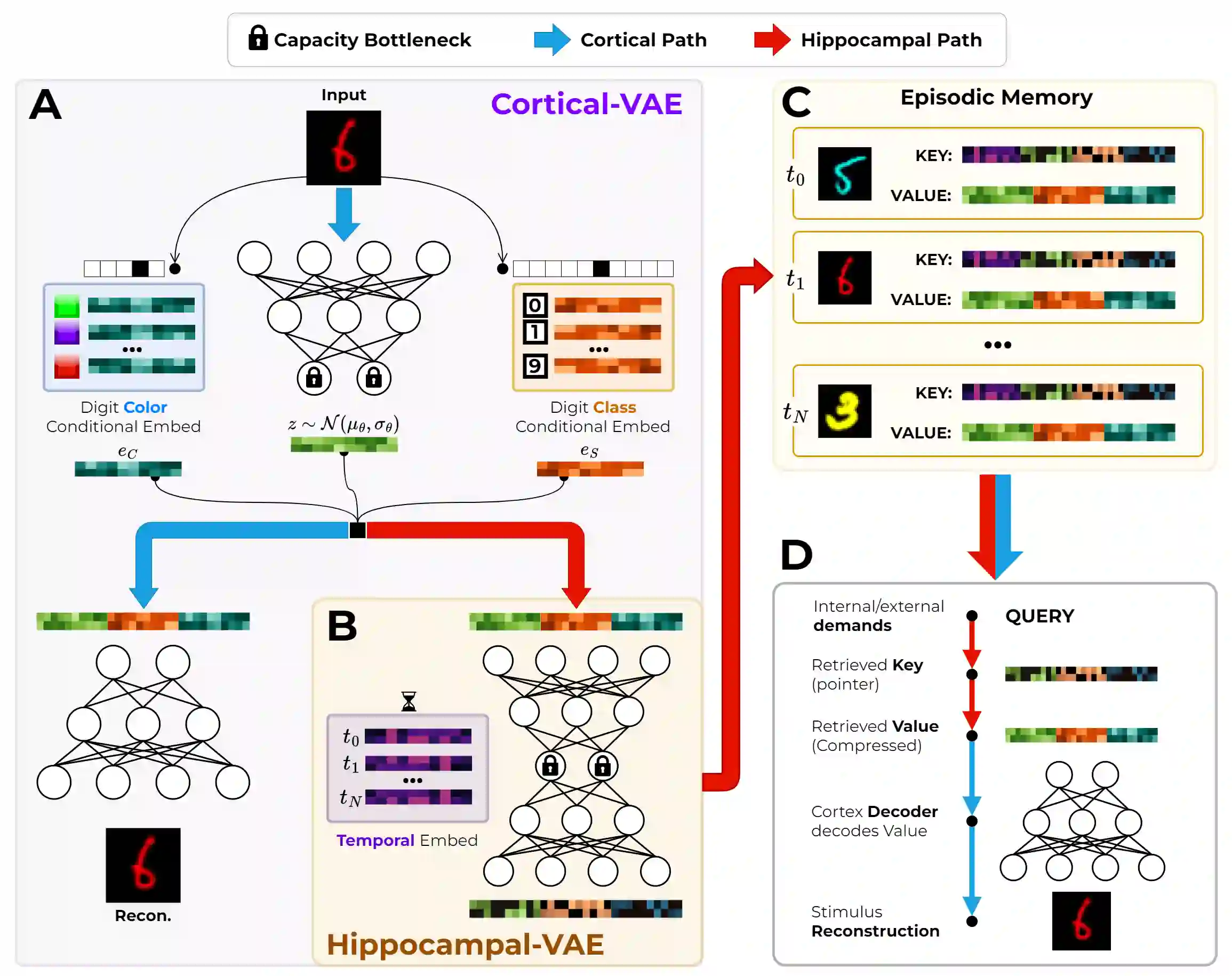
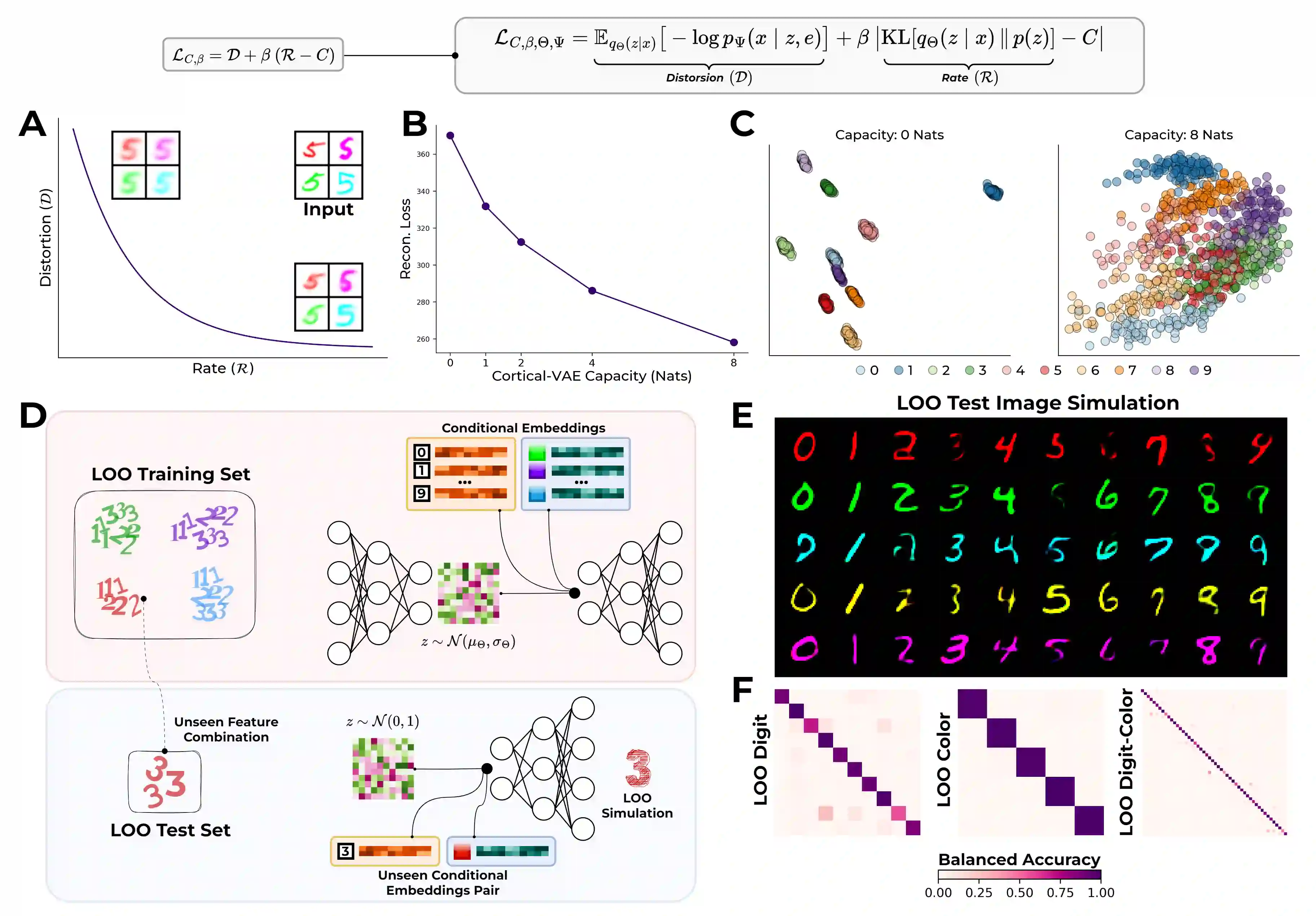
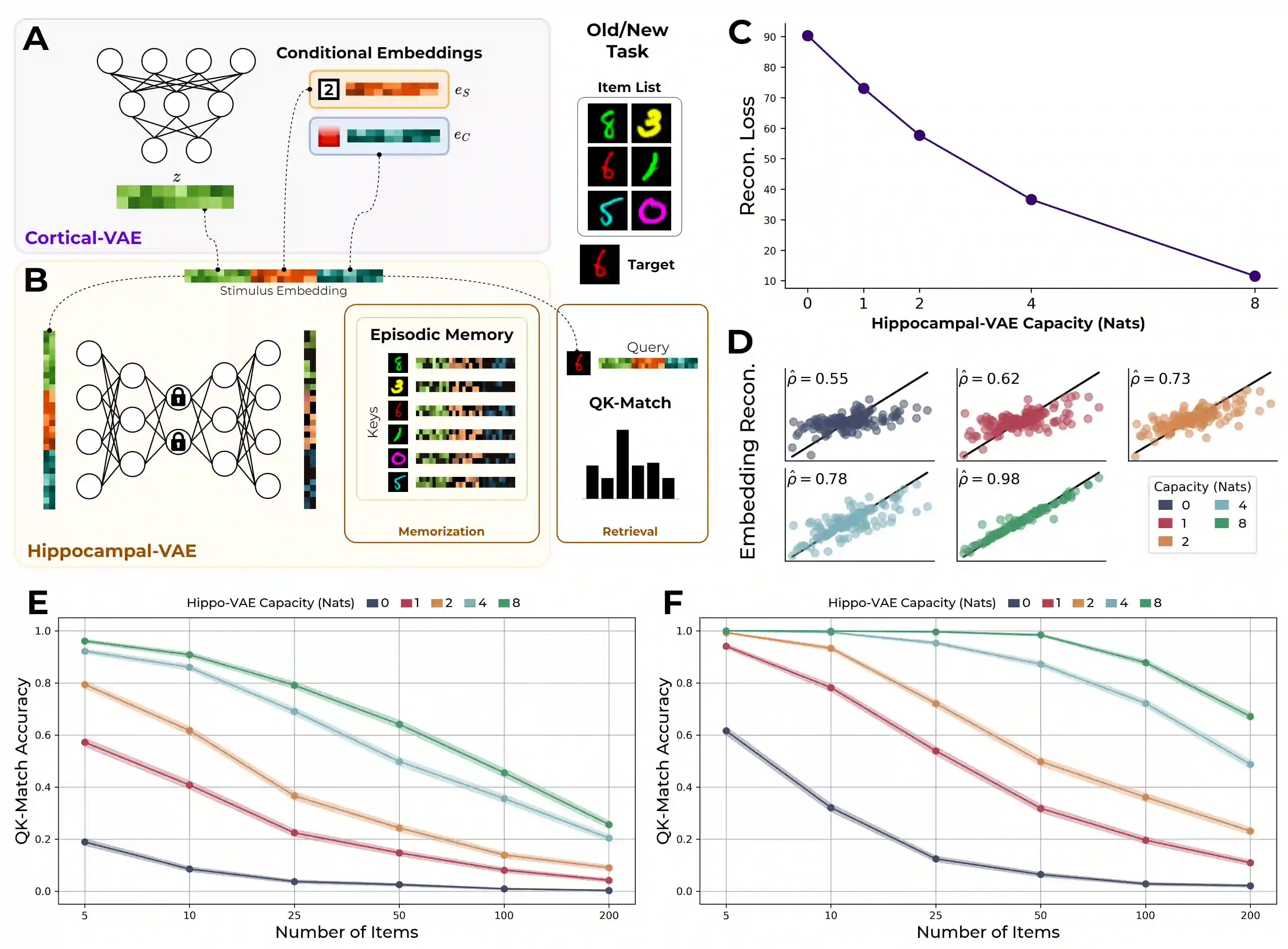
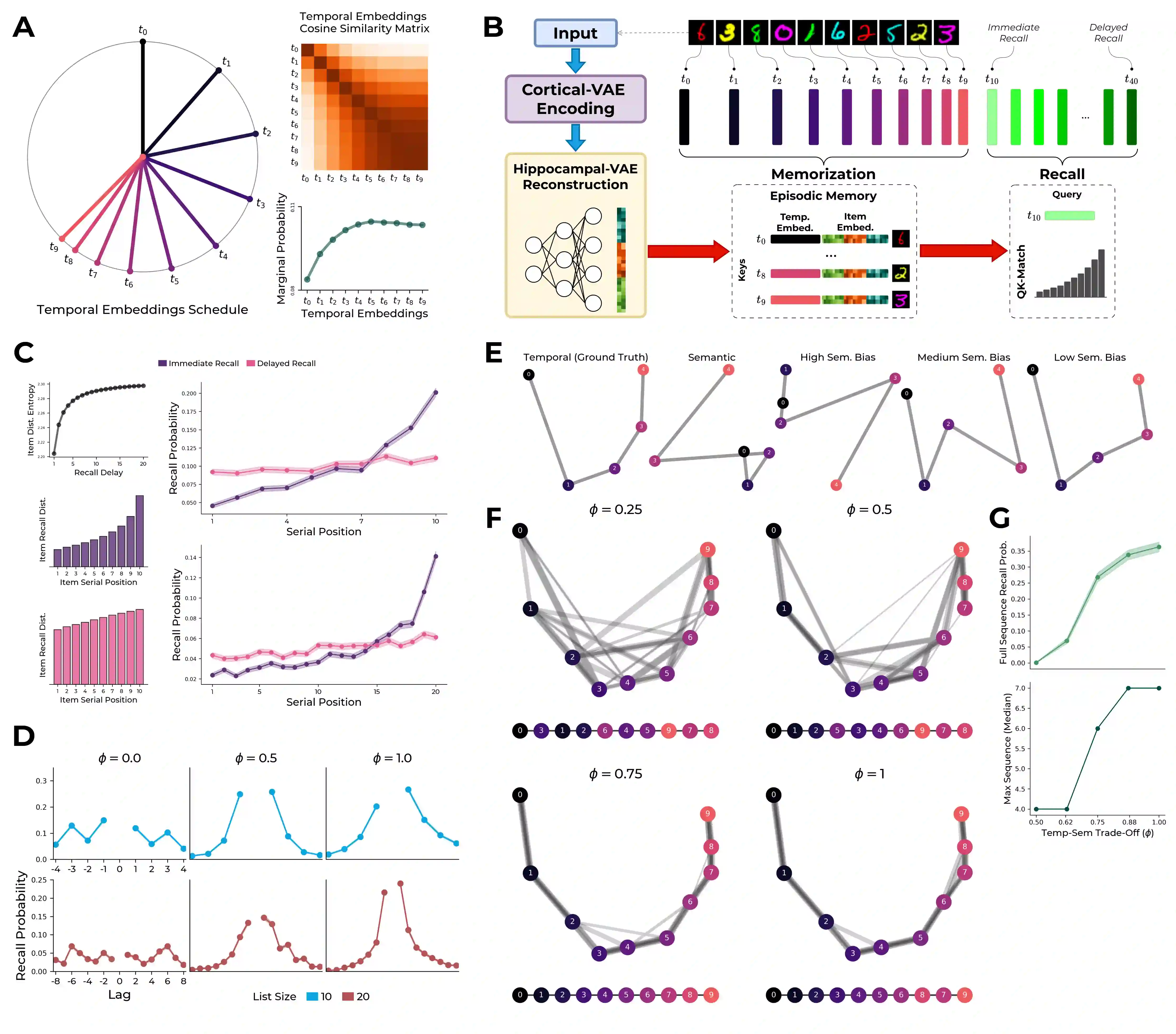
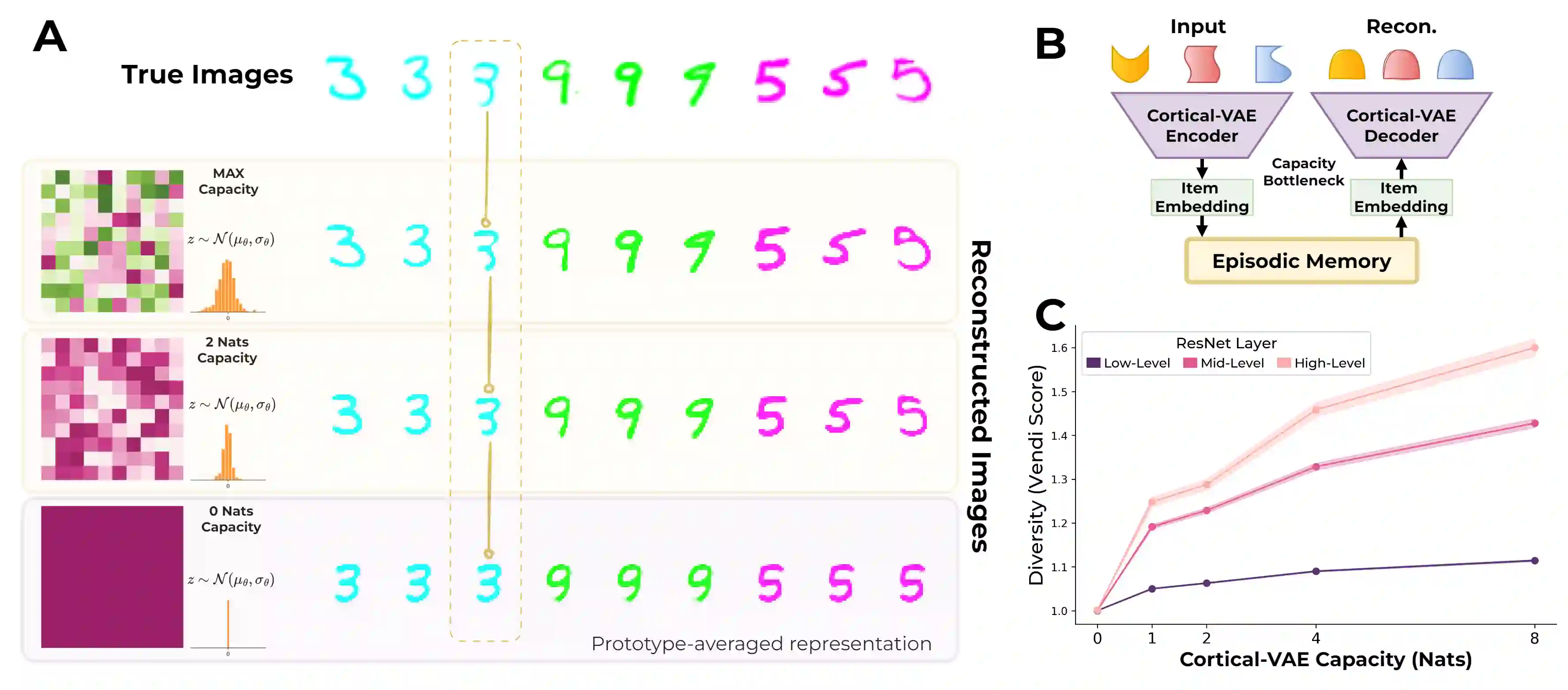
A central challenge in cognitive neuroscience is to explain how semantic and episodic memory, two major forms of declarative memory, typically associated with cortical and hippocampal processing, interact to support learning, recall, and imagination. Despite significant advances, we still lack a unified computational framework that jointly accounts for core empirical phenomena across both semantic and episodic processing domains. Here, we introduce the Generative Episodic-Semantic Integration System (GENESIS), a computational model that formalizes memory as the interaction between two limited-capacity generative systems: a Cortical-VAE, supporting semantic learning and generalization, and a Hippocampal-VAE, supporting episodic encoding and retrieval within a retrieval-augmented generation (RAG) architecture. GENESIS reproduces hallmark behavioral findings, including generalization in semantic memory, recognition, serial recall effects and gist-based distortions in episodic memory, and constructive episodic simulation, while capturing their dynamic interactions. The model elucidates how capacity constraints shape the fidelity and memorability of experiences, how semantic processing introduces systematic distortions in episodic recall, and how episodic replay can recombine previous experiences. Together, these results provide a principled account of memory as an active, constructive, and resource-bounded process. GENESIS thus advances a unified theoretical framework that bridges semantic and episodic memory, offering new insights into the generative foundations of human cognition.
翻译:认知神经科学的一个核心挑战在于解释陈述性记忆的两种主要形式——通常分别与皮层和海马体处理相关的语义记忆和情景记忆——如何相互作用以支持学习、回忆和想象。尽管取得了显著进展,我们仍然缺乏一个统一的计算框架来共同解释语义和情景处理领域的核心经验现象。本文介绍了生成式情景-语义整合系统(GENESIS),这是一个计算模型,它将记忆形式化为两个有限容量的生成系统之间的交互:一个支持语义学习和泛化的皮层变分自编码器(Cortical-VAE),以及一个在检索增强生成(RAG)架构内支持情景编码和检索的海马变分自编码器(Hippocampal-VAE)。GENESIS复现了标志性的行为发现,包括语义记忆中的泛化、识别、序列回忆效应以及情景记忆中基于要旨的扭曲和建设性的情景模拟,同时捕捉了它们之间的动态交互。该模型阐明了容量限制如何塑造经验的保真度和可记忆性,语义处理如何引入情景回忆中的系统性扭曲,以及情景回放如何重组先前的经验。总之,这些结果为将记忆理解为一个主动的、建设性的、资源受限的过程提供了原理性解释。因此,GENESIS推进了一个统一的理论框架,桥接了语义记忆和情景记忆,为人类认知的生成基础提供了新的见解。




相关内容





 微信扫码咨询专知VIP会员