

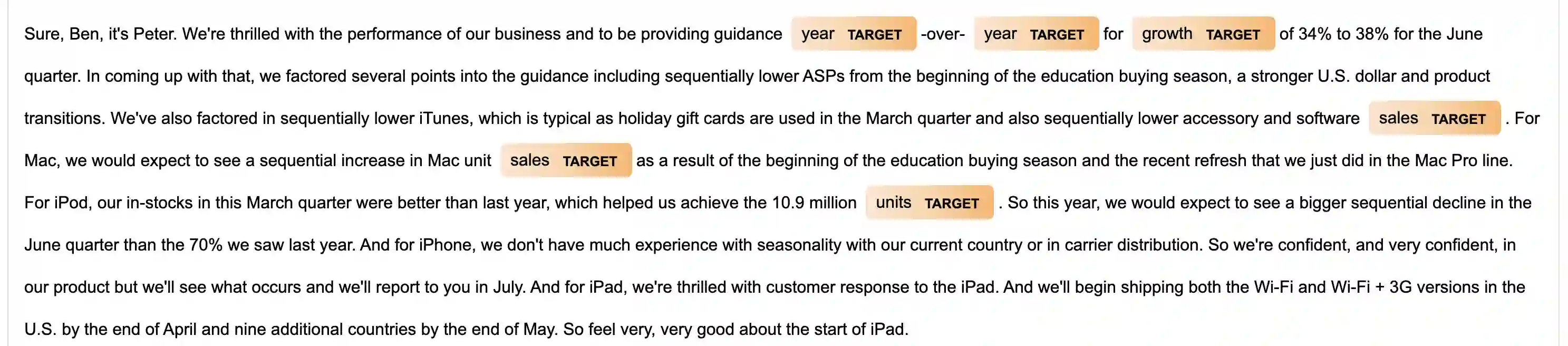
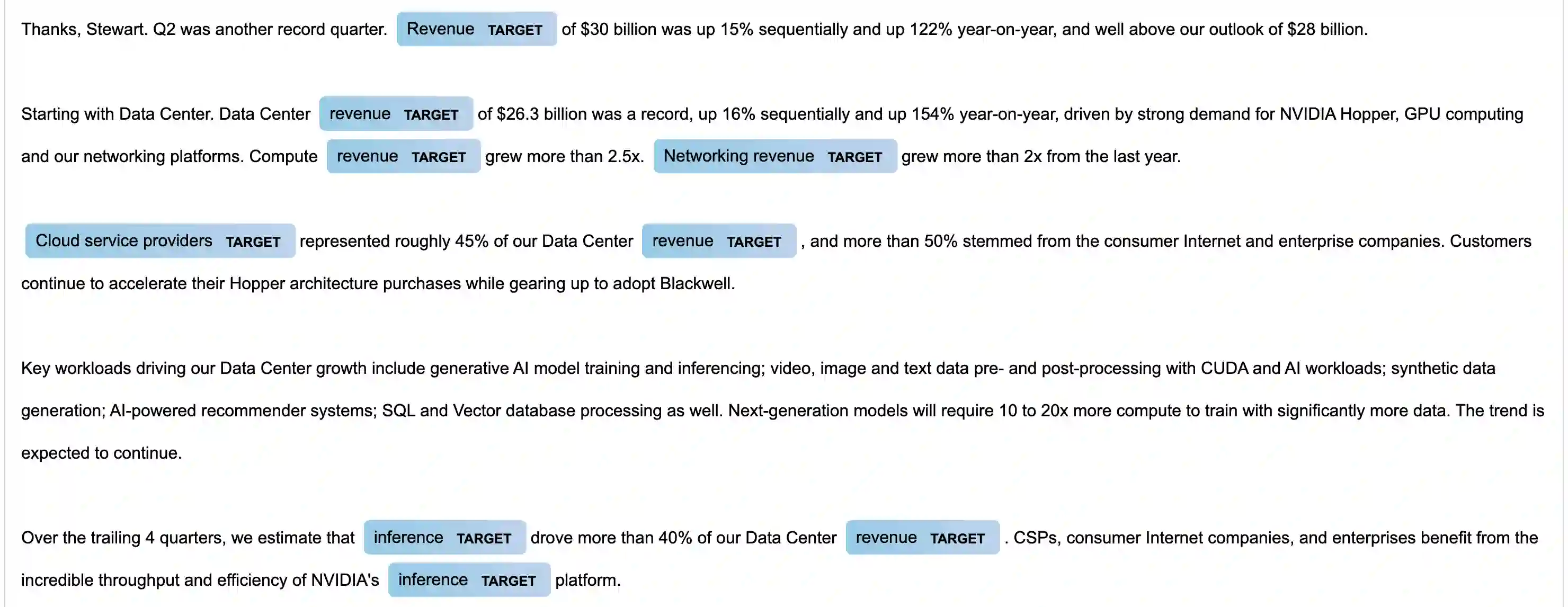
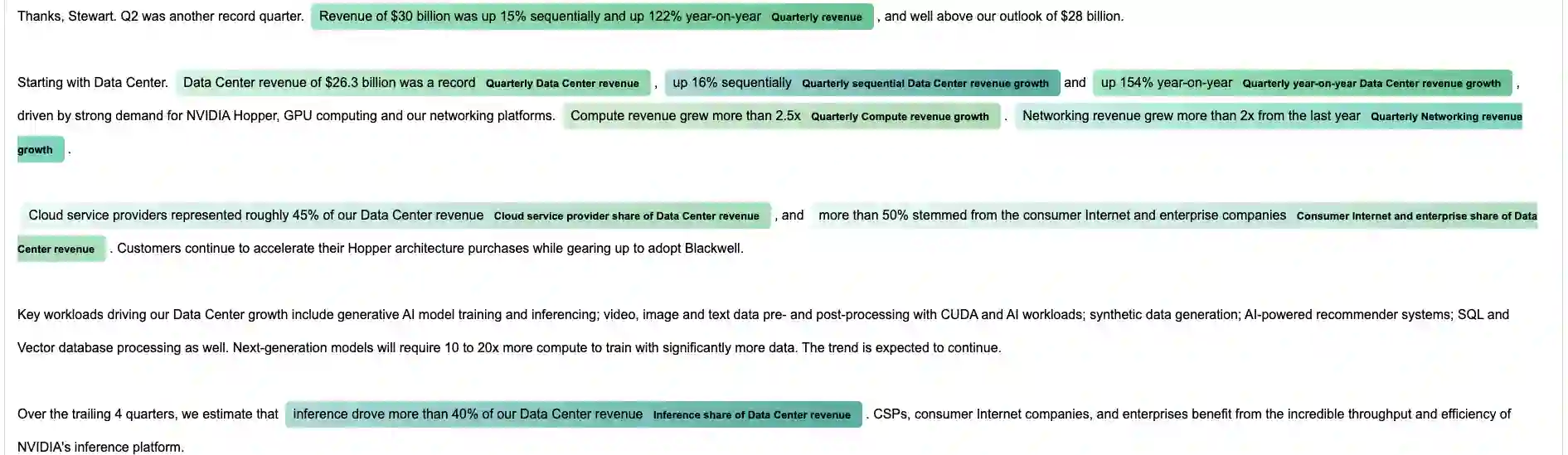
Moving targets -- managers' strategic shifting of key performance metrics when the original targets become difficult to achieve -- have been shown to predict subsequent stock underperformance. However, our work reveals that the method employed in that study exhibits two key limitations that hinder the accuracy -- noise in the extracted targets and loss of contextual information -- both of which stem primarily from the use of a named entity recognition (NER). To address these two limitations, we propose an LLM-based target extraction method with a newly defined metric that better captures semantic context. This approach preserves semantic context beyond simple entity recognition and yields consistently higher predictive power than the original approach. Overall, our approach enhances the granularity and accuracy of financial text-based performance prediction.
翻译:动态目标——即管理者在原始目标难以达成时战略性调整关键绩效指标——已被证明能够预测后续股票表现不佳。然而,我们的研究发现,该研究所采用的方法存在两个关键局限,影响了预测准确性:提取目标中的噪声和上下文信息的丢失。这两个问题主要源于使用了命名实体识别(NER)技术。为克服这些局限,我们提出了一种基于LLM的目标提取方法,并定义了一种能更好捕捉语义上下文的新指标。该方法超越了简单的实体识别,保留了语义上下文,相比原始方法展现出持续更强的预测能力。总体而言,我们的方法提升了基于金融文本的绩效预测的精细度和准确性。





相关内容




 微信扫码咨询专知VIP会员