

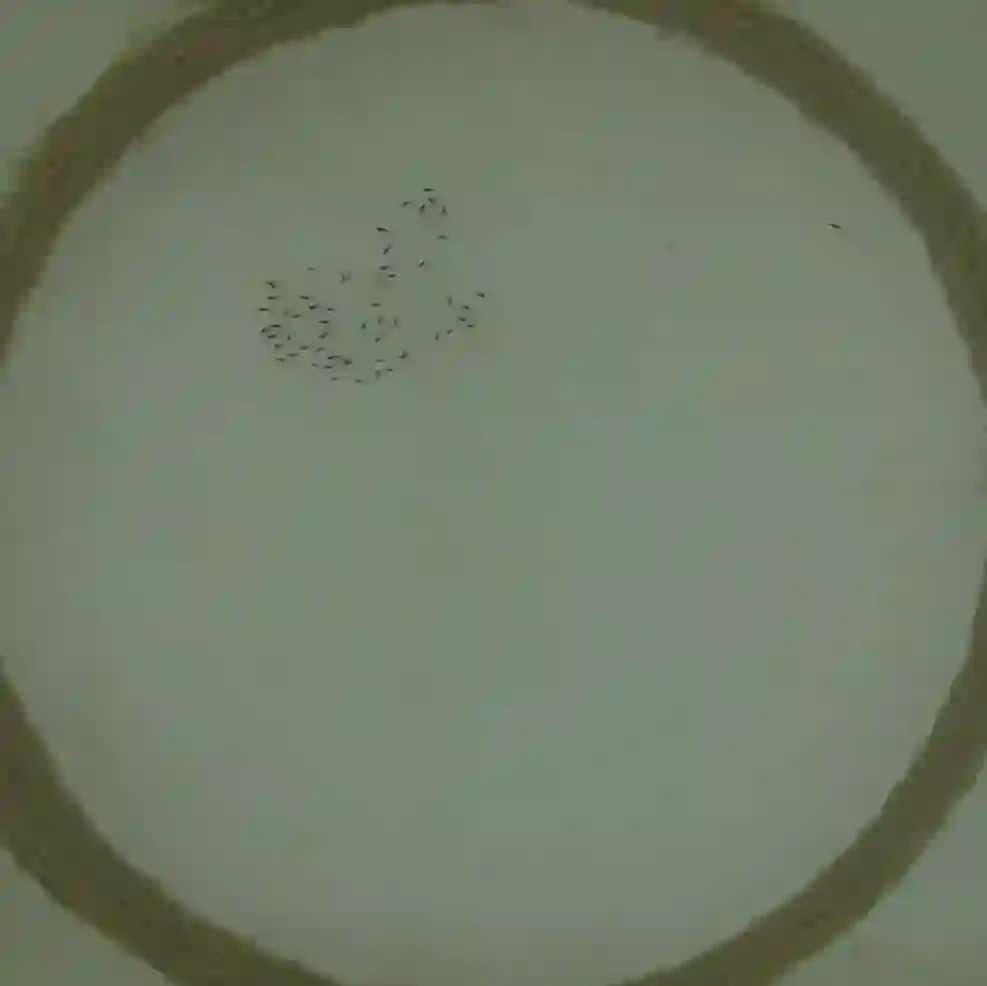
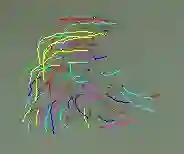
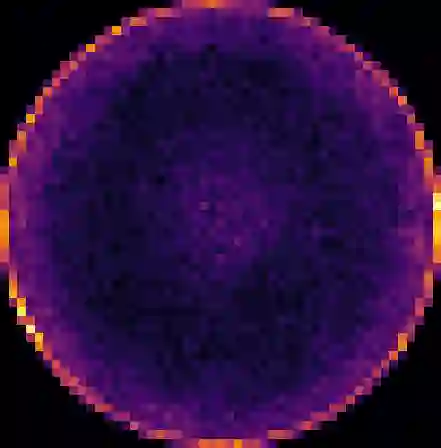
Stochastic differential equations (SDEs) are an important framework to model dynamics with randomness, as is common in most biological systems. The inverse problem of integrating these models with empirical data remains a major challenge. Here, we present a software package, PyDaDDy (Python Library for Data Driven Dynamics) that takes time series data as an input and outputs an interpretable SDE. We achieve this by combining traditional approaches from stochastic calculus literature with state-of-the-art equation discovery techniques. We validate our approach on synthetic datasets, and demonstrate the generality and applicability of the method on two real-world datasets of vastly different spatiotemporal scales: (i) collective movement of fish school where stochasticity plays a crucial role, and (ii) confined migration of a single cell, primarily following a relaxed oscillation. We make the method available as an easy-to-use, open-source Python package, PyDaddy (Python Library for Data Driven Dynamics).
翻译:随机微分方程(SDEs)是模拟具有随机性动力学的关键框架,这在大多数生物系统中普遍存在。如何将这些模型与经验数据相结合的反问题仍是重大挑战。本文提出了一套软件包PyDaDDy(基于数据驱动动力学的Python库),该软件以时间序列数据为输入,输出可解释的随机微分方程。我们通过将随机微积分文献中的传统方法与最先进的方程发现技术相结合来实现这一目标。在合成数据集上验证了该方法的有效性,并在两个时空尺度差异显著的真实世界数据集上展示了其通用性与适用性:(i)随机性起关键作用的鱼群集体运动现象,以及(ii)主要遵循弛豫振荡的单细胞受限迁移过程。我们已将该方法封装成易用的开源Python软件包PyDaddy(基于数据驱动动力学的Python库),供学界使用。






相关内容




 微信扫码咨询专知VIP会员