

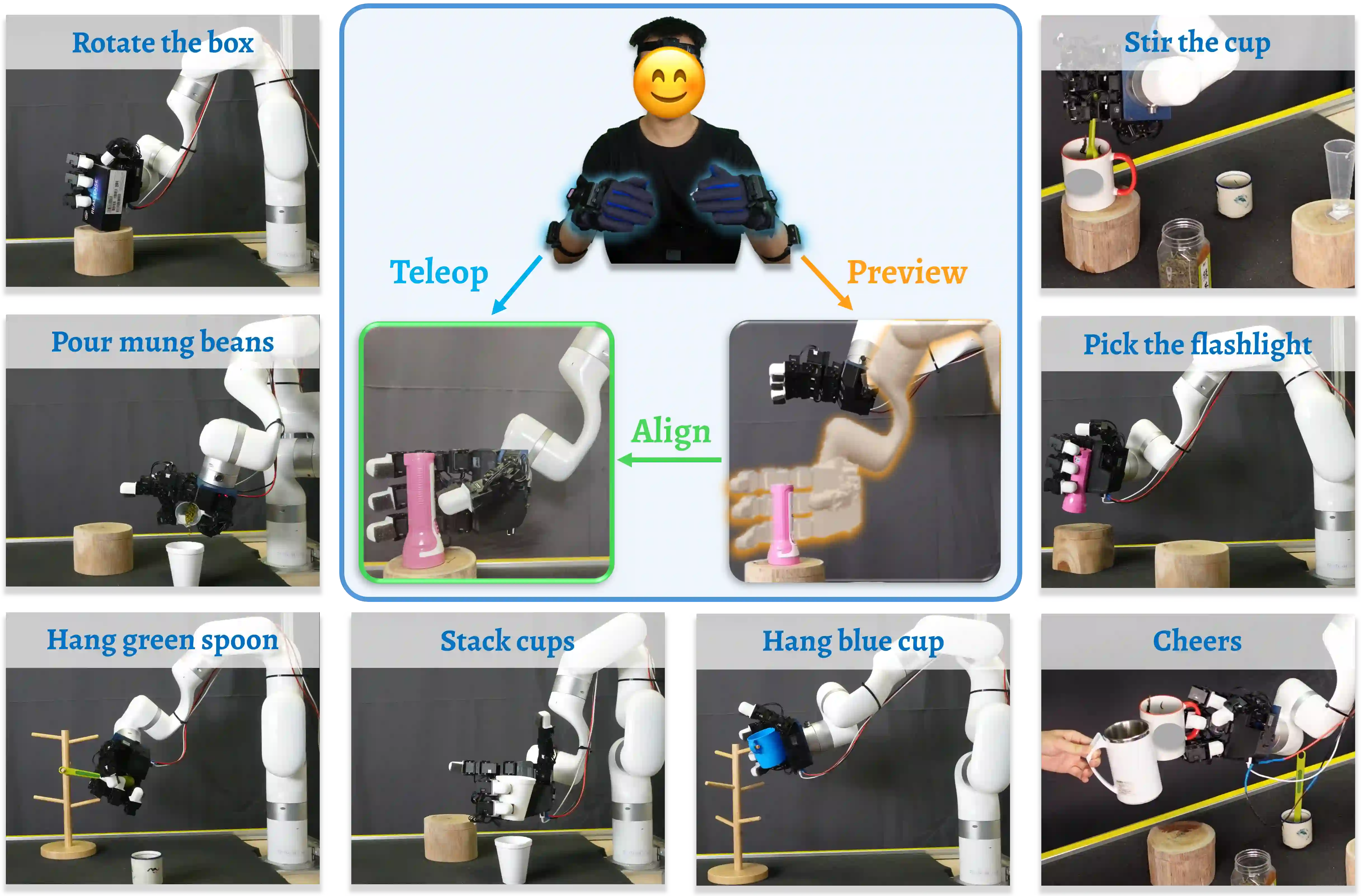
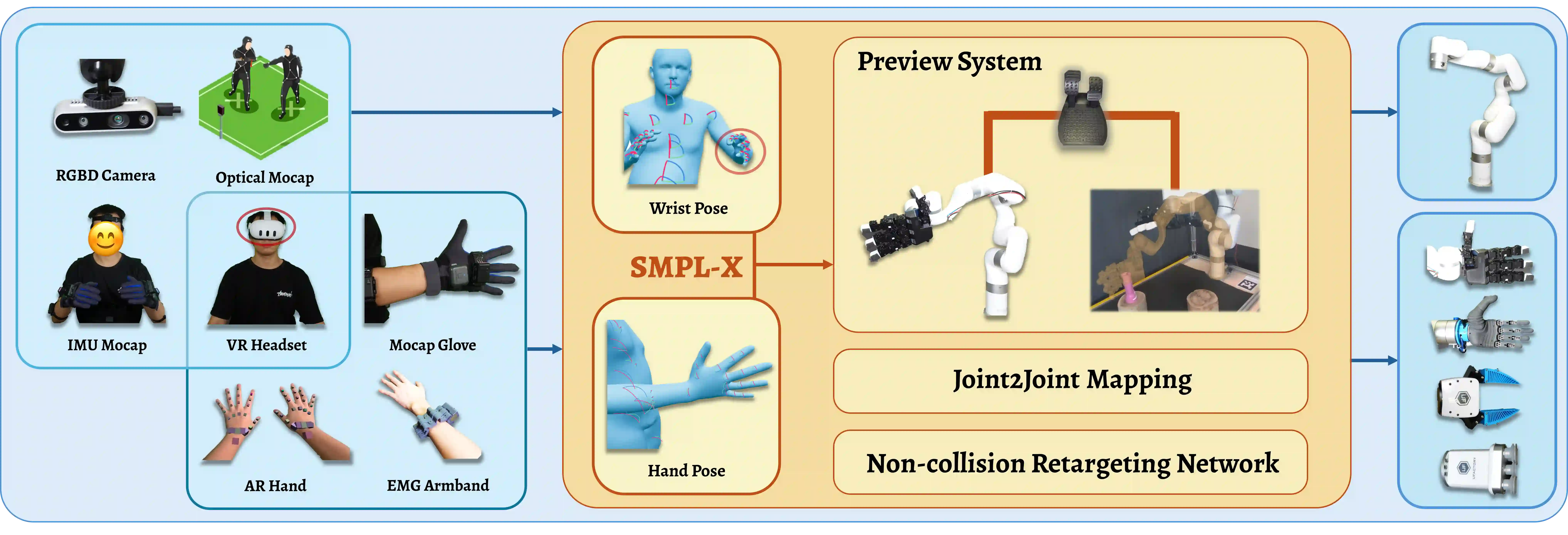
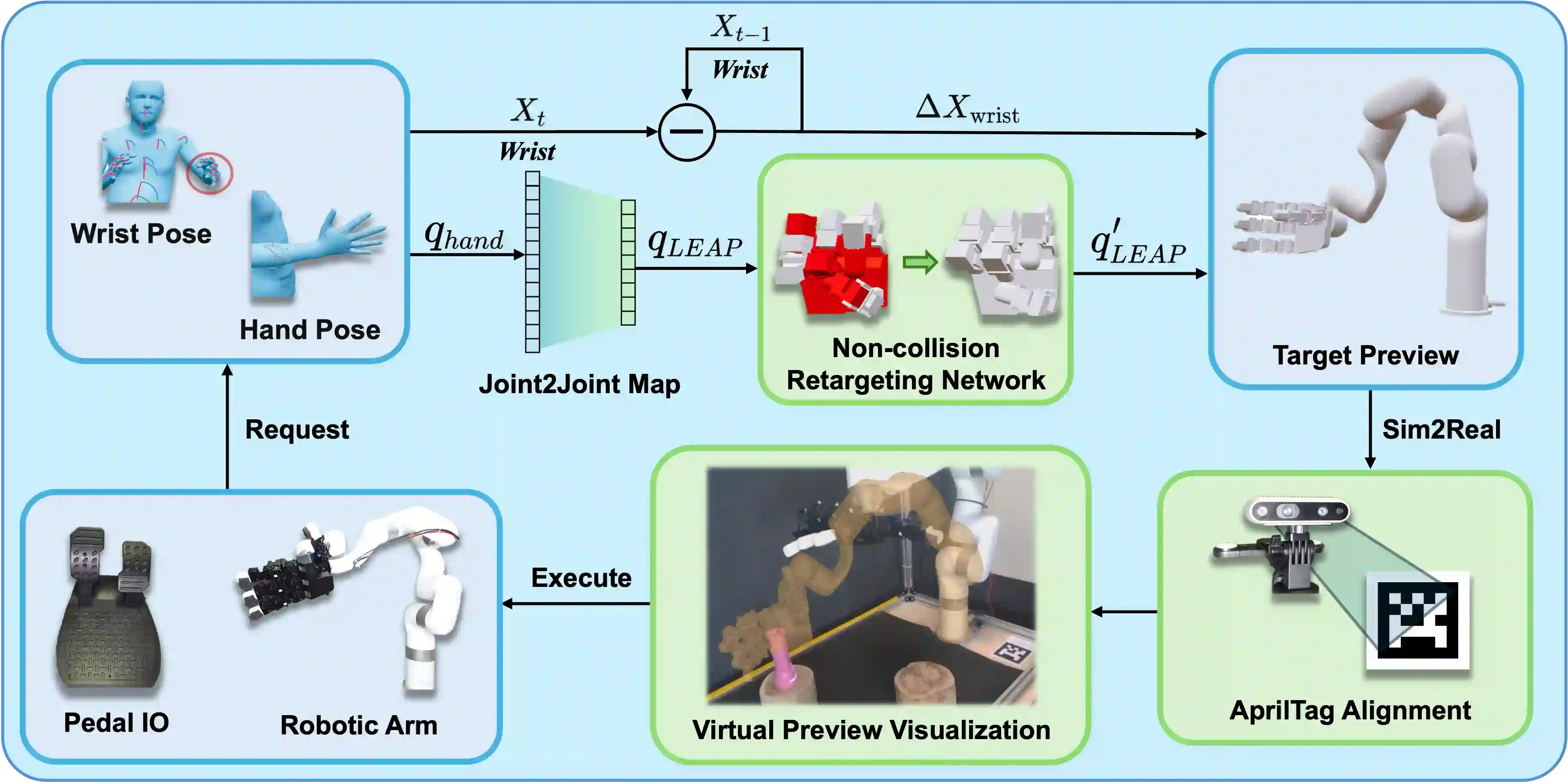
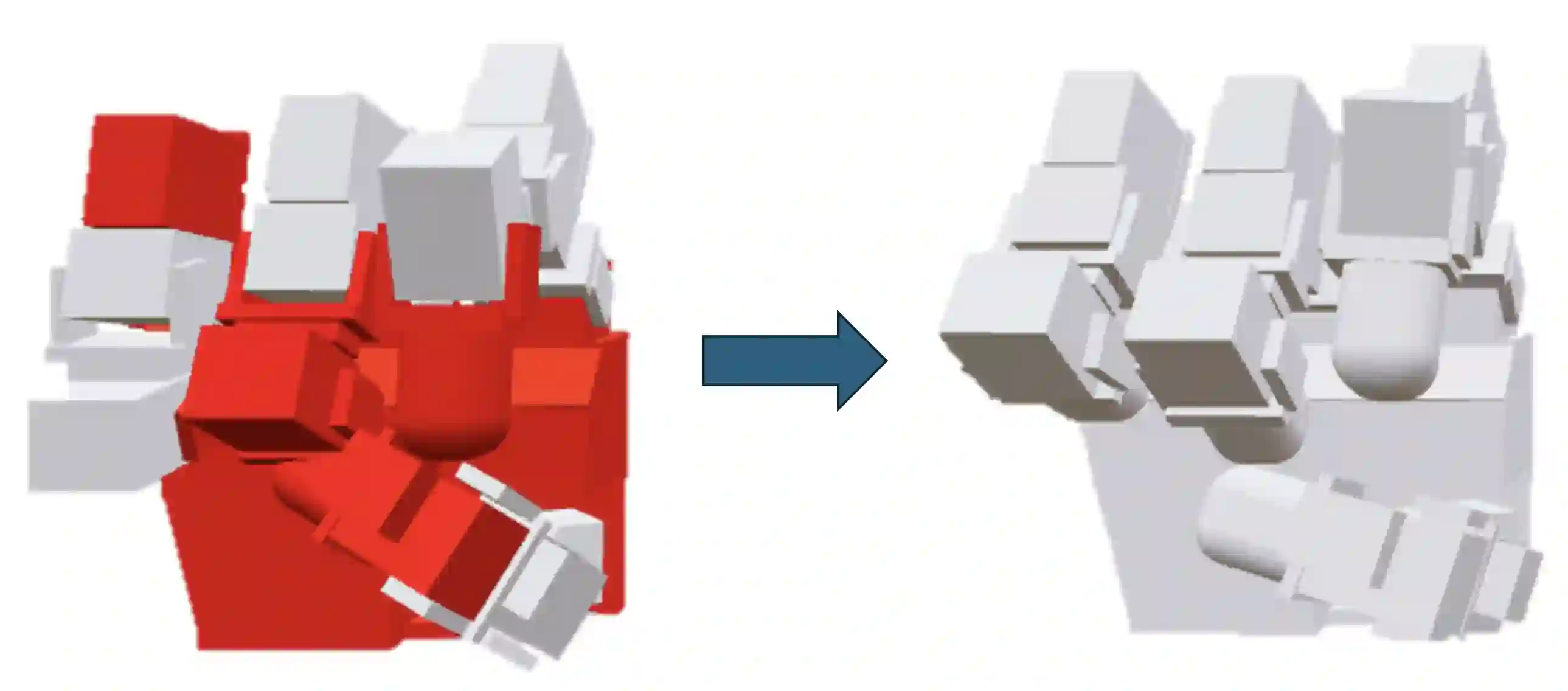
Teleoperation provides an effective way to collect robot data, which is crucial for learning from demonstrations. In this field, teleoperation faces several key challenges: user-friendliness for new users, safety assurance, and transferability across different platforms. While collecting real robot dexterous manipulation data by teleoperation to train robots has shown impressive results on diverse tasks, due to the morphological differences between human and robot hands, it is not only hard for new users to understand the action mapping but also raises potential safety concerns during operation. To address these limitations, we introduce TelePreview. This teleoperation system offers real-time visual feedback on robot actions based on human user inputs, with a total hardware cost of less than $1,000. TelePreview allows the user to see a virtual robot that represents the outcome of the user's next movement. By enabling flexible switching between command visualization and actual execution, this system helps new users learn how to demonstrate quickly and safely. We demonstrate that it outperforms other teleoperation systems across five tasks, emphasize its ease of use, and highlight its straightforward deployment across diverse robotic platforms. We release our code and a deployment document on our website https://nus-lins-lab.github.io/telepreview-web/.
翻译:遥操作为收集机器人数据提供了一种有效途径,这对于通过演示进行学习至关重要。在该领域中,遥操作面临若干关键挑战:对新用户的友好性、安全性保障以及跨平台的可迁移性。虽然通过遥操作收集真实机器人灵巧操作数据来训练机器人已在多种任务上展现出令人印象深刻的结果,但由于人手与机器人手部在形态上存在差异,新用户不仅难以理解动作映射关系,而且在操作过程中还可能引发安全隐患。为应对这些局限性,我们提出了TelePreview。该遥操作系统基于人类用户输入提供机器人动作的实时视觉反馈,其硬件总成本低于1,000美元。TelePreview允许用户观察一个虚拟机器人,该虚拟机器人呈现用户下一步移动的预期结果。通过支持在指令可视化与实际执行之间灵活切换,该系统帮助新用户快速、安全地学习如何进行演示。我们通过五项任务验证了其性能优于其他遥操作系统,强调了其易用性,并突出了其在多样化机器人平台上部署的简便性。我们已在项目网站https://nus-lins-lab.github.io/telepreview-web/上公开了代码及部署文档。




相关内容





 微信扫码咨询专知VIP会员