

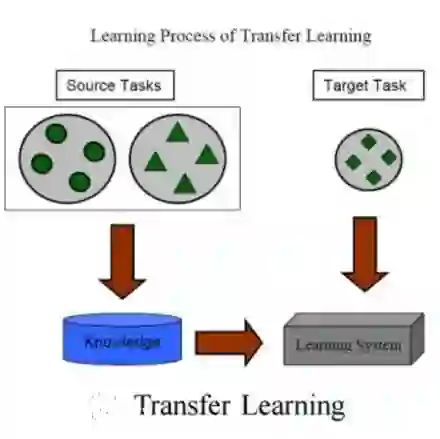
Deep learning-based surrogate models have been extensively developed for efficiently approximating multiscale systems with random input fields. However, most existing approaches require retraining neural networks from scratch when source terms, boundary conditions, or differential operators change, resulting in significant computational costs and limited adaptability. To address this challenge, we integrate our previous CNN-based reduced-order model (ROM) framework with the multiscale finite element method (MsFEM) and propose an MsFEM-inspired transfer learning strategy, termed MITL. The CNN-based ROM consists of two components: Basis CNNs, which learn reduced basis functions, and Coef CNNs, which predict the corresponding linear combination coefficients. To enhance the transferability of learned multiscale representations, global MsFEM basis problems are employed as source tasks during pretraining. For new target problems, MITL requires training only lightweight adaptation networks to construct task-specific reduced bases and coefficients, thereby substantially reducing the computational burden. Numerical experiments demonstrate that MITL achieves accurate and efficient predictions across a range of target tasks, with particularly significant advantages in data-scarce scenarios.
翻译:基于深度学习的代理模型已广泛用于高效逼近具有随机输入场的多尺度系统。然而,当源项、边界条件或微分算子发生变化时,现有方法大多需要从头重新训练神经网络,导致计算成本高昂且适应性有限。为解决这一挑战,我们将先前基于CNN的降阶模型(ROM)框架与多尺度有限元方法(MsFEM)相结合,提出了一种受MsFEM启发的迁移学习策略,称为MITL。基于CNN的降阶模型由两个组件构成:学习降阶基函数的基函数CNN(Basis CNNs)和预测对应线性组合系数的系数CNN(Coef CNNs)。为增强所学多尺度表征的可迁移性,在预训练阶段采用全局MsFEM基函数问题作为源任务。对于新的目标任务,MITL仅需训练轻量级自适应网络即可构建特定于任务的降阶基函数和系数,从而大幅降低计算负担。数值实验表明,MITL在一系列目标任务上实现了准确高效的预测,在数据稀缺场景下优势尤为显著。




相关内容




 微信扫码咨询专知VIP会员