

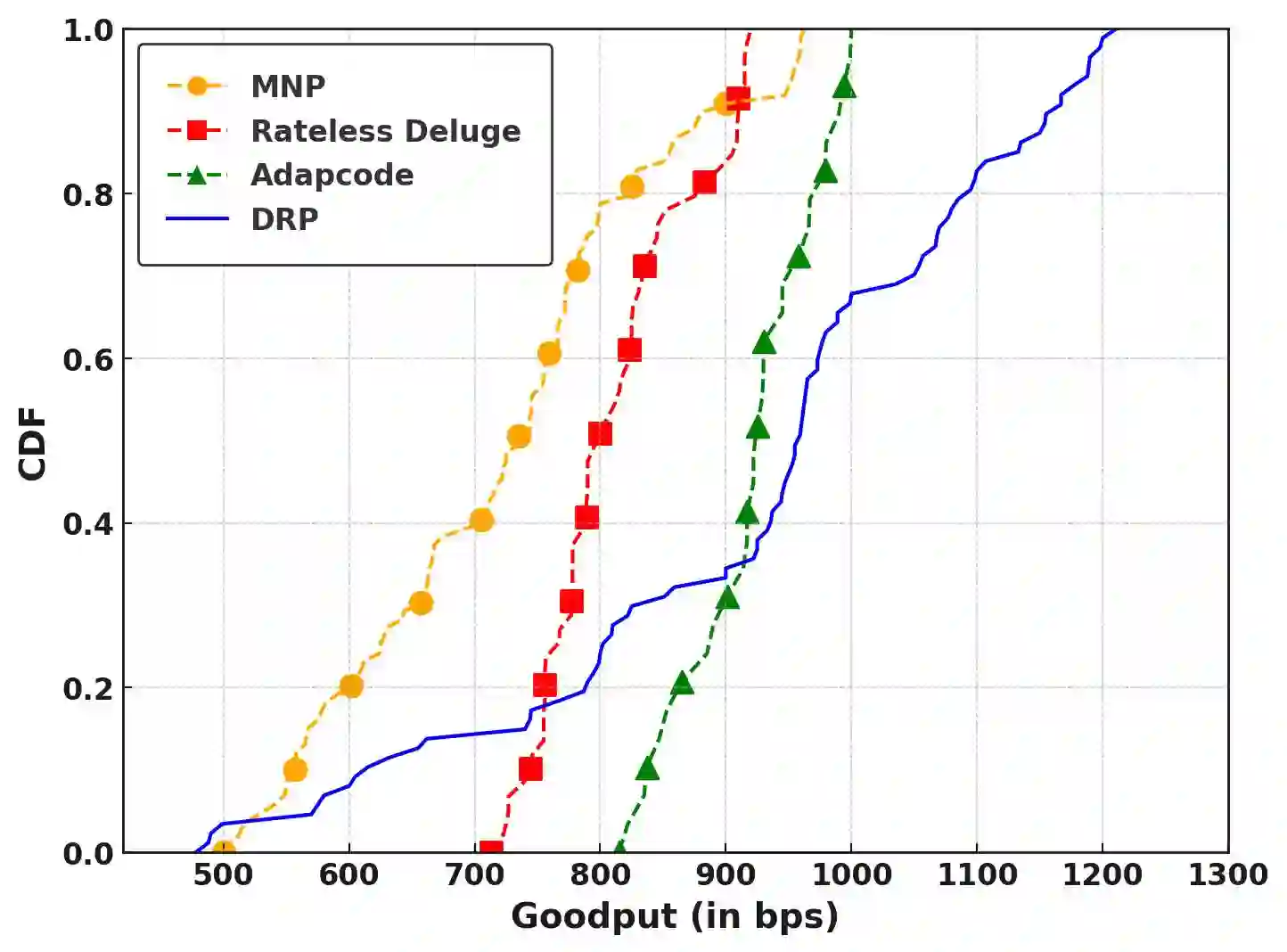
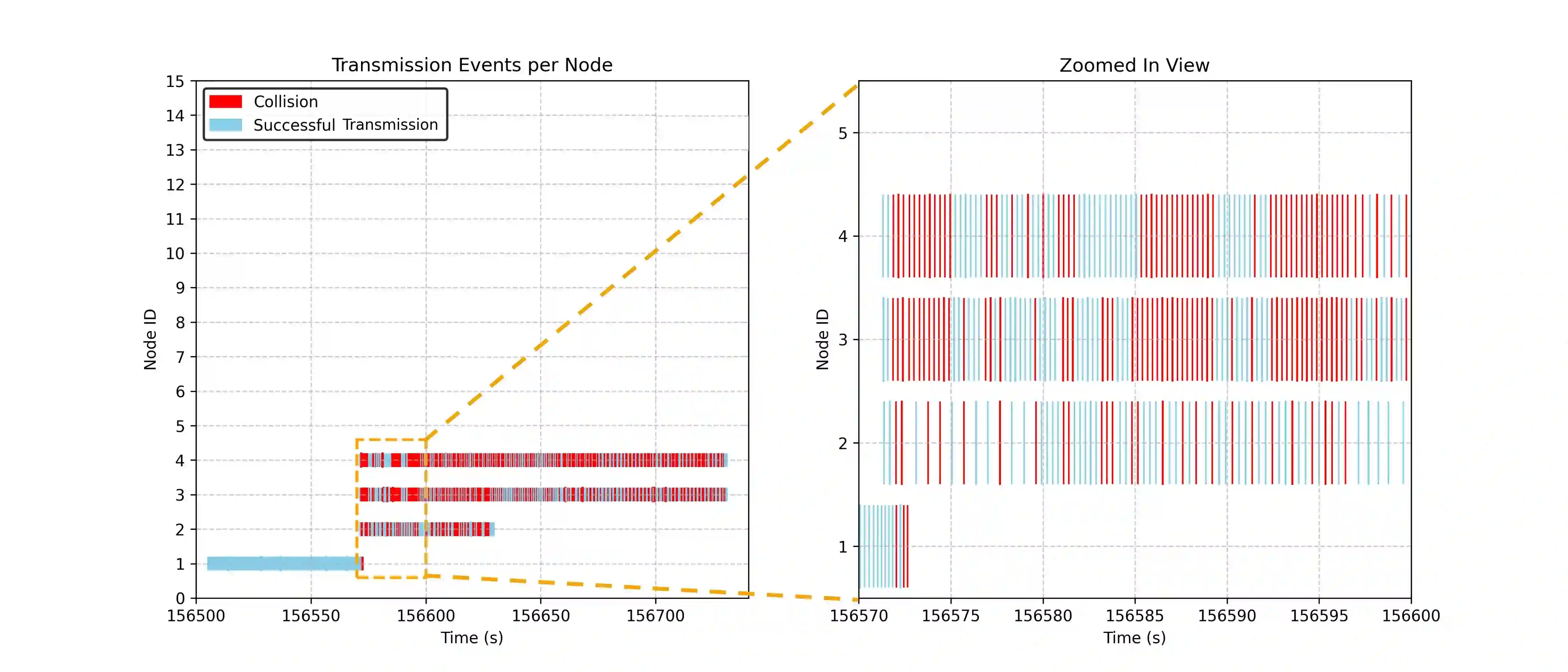
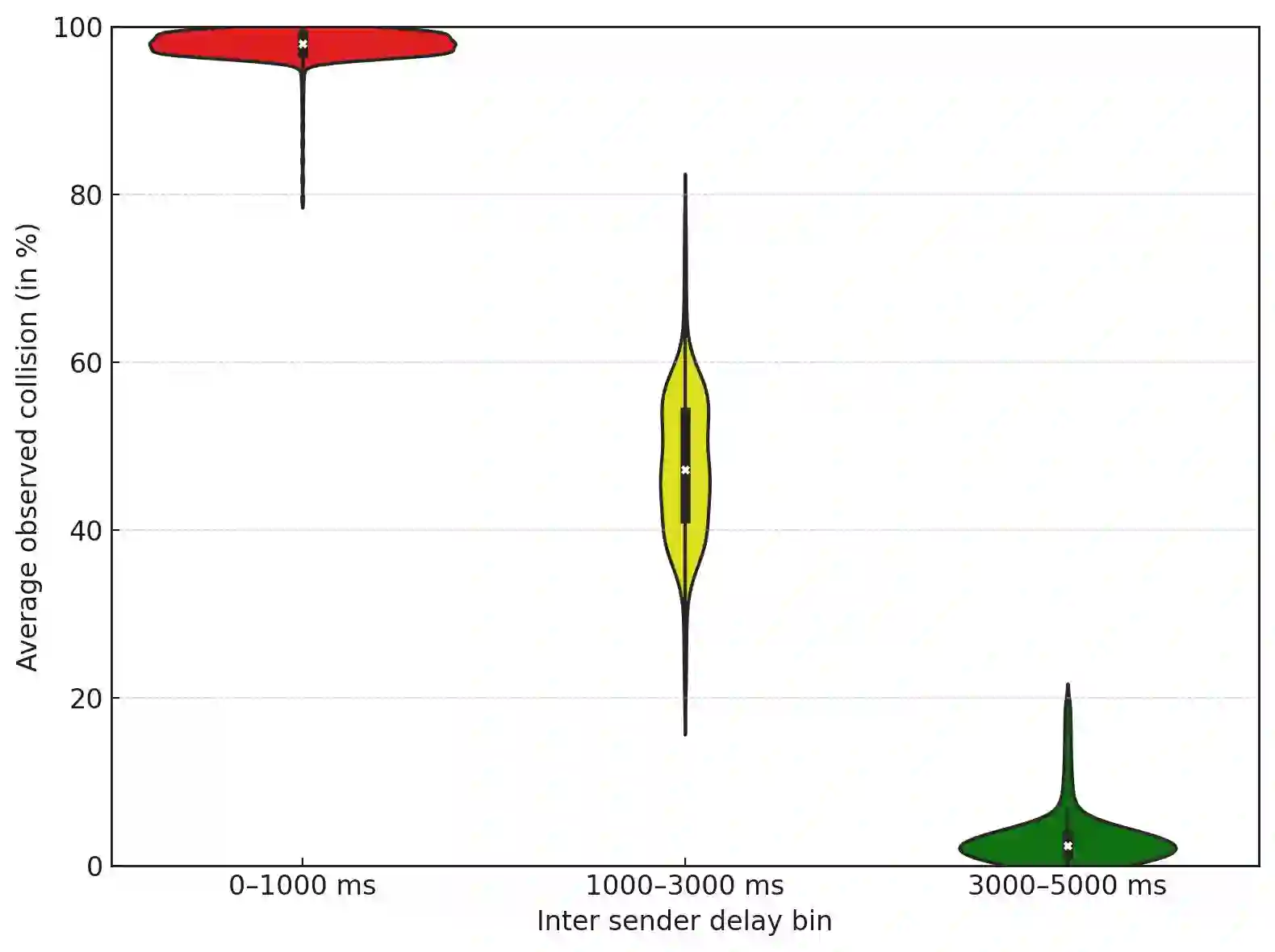
Emerging IoT applications are transitioning from battery-powered to grid-powered nodes. DRP, a contention-based data dissemination protocol, was developed for these applications. Traditional contention-based protocols resolve collisions through control packet exchanges, significantly reducing goodput. DRP mitigates this issue by employing a distributed delay timer mechanism that assigns transmission-start delays based on the average link quality between a sender and its children, prioritizing highly connected nodes for early transmission. However, our in-field experiments reveal that DRP is unable to accommodate real-world link quality fluctuations, leading to overlapping transmissions from multiple senders. This overlap triggers CSMA's random back-off delays, ultimately degrading the goodput performance. To address these shortcomings, we first conduct a theoretical analysis that characterizes the design requirements induced by real-world link quality fluctuations and DRP's passive acknowledgments. Guided by this analysis, we design EDRP, which integrates two novel components: (i) Link-Quality Aware CSMA (LQ-CSMA) and (ii) a Machine Learning-based Block Size Selection (ML-BSS) algorithm for rateless codes. LQ-CSMA dynamically restricts the back-off delay range based on real-time link quality estimates, ensuring that nodes with stronger connectivity experience shorter delays. ML-BSS algorithm predicts future link quality conditions and optimally adjusts the block size for rateless coding, reducing overhead and enhancing goodput. In-field evaluations of EDRP demonstrate an average goodput improvement of 39.43\% than the competing protocols.
翻译:新兴物联网应用正从电池供电节点向电网供电节点过渡。DRP是一种基于竞争的数据分发协议,专为此类应用而设计。传统基于竞争的协议通过控制包交换解决冲突,这显著降低了有效吞吐量。DRP通过采用分布式延迟计时器机制来缓解此问题,该机制根据发送方与其子节点间的平均链路质量分配传输起始延迟,优先让高连通性节点进行早期传输。然而,我们的实地实验表明,DRP无法适应实际链路质量波动,导致多个发送方传输重叠。这种重叠会触发CSMA的随机退避延迟,最终降低有效吞吐量性能。为克服这些缺陷,我们首先进行了理论分析,明确了由实际链路质量波动和DRP的被动确认机制所引发的设计要求。在此分析指导下,我们设计了EDRP,它集成了两个新颖组件:(i) 链路质量感知CSMA(LQ-CSMA)与(ii) 基于机器学习的无速率码块大小选择(ML-BSS)算法。LQ-CSMA基于实时链路质量估计动态限制退避延迟范围,确保连通性更强的节点经历更短延迟;ML-BSS算法预测未来链路质量状况并优化调整无速率编码的块大小,从而减少开销并提升有效吞吐量。EDRP的实地评估表明,其平均有效吞吐量较对比协议提升了39.43%。




相关内容


 微信扫码咨询专知VIP会员