

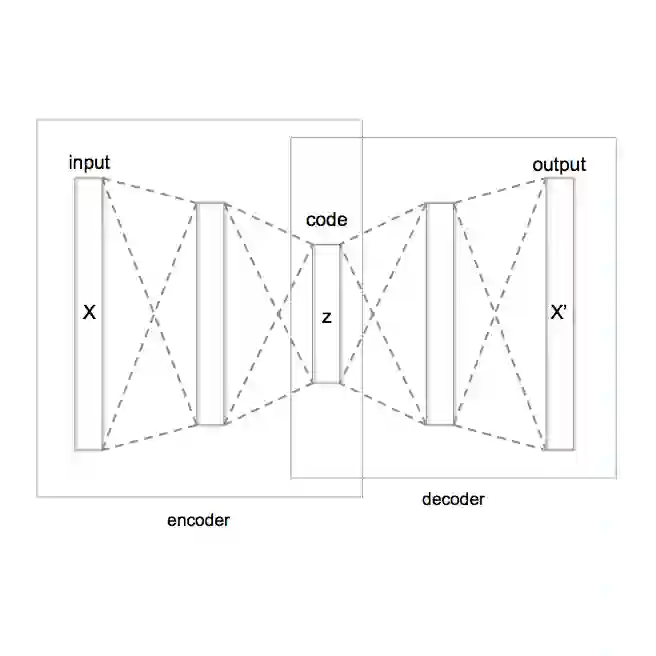
We propose a new strategy to improve the accuracy and robustness of image classification. First, we train a baseline CNN model. Then, we identify challenging regions in the feature space by identifying all misclassified samples, and correctly classified samples with low confidence values. These samples are then used to train a Variational AutoEncoder (VAE). Next, the VAE is used to generate synthetic images. Finally, the generated synthetic images are used in conjunction with the original labeled images to train a new model in a semi-supervised fashion. Empirical results on benchmark datasets such as STL10 and CIFAR-100 show that the synthetically generated samples can further diversify the training data, leading to improvement in image classification in comparison with the fully supervised baseline approaches using only the available data.
翻译:我们提出了一种新策略,用于提升图像分类的准确性和鲁棒性。首先,训练一个基线CNN模型。随后,通过识别所有误分类样本以及置信度较低的正确分类样本,定位特征空间中的困难区域。利用这些样本训练一个变分自编码器(VAE)。接着,使用该VAE生成合成图像。最后,将生成的合成图像与原始标注图像结合,以半监督方式训练新模型。在STL10和CIFAR-100等基准数据集上的实验结果表明,合成生成的样本能够进一步丰富训练数据的多样性,与仅使用现有数据的全监督基线方法相比,图像分类性能得到提升。




相关内容




 微信扫码咨询专知VIP会员