

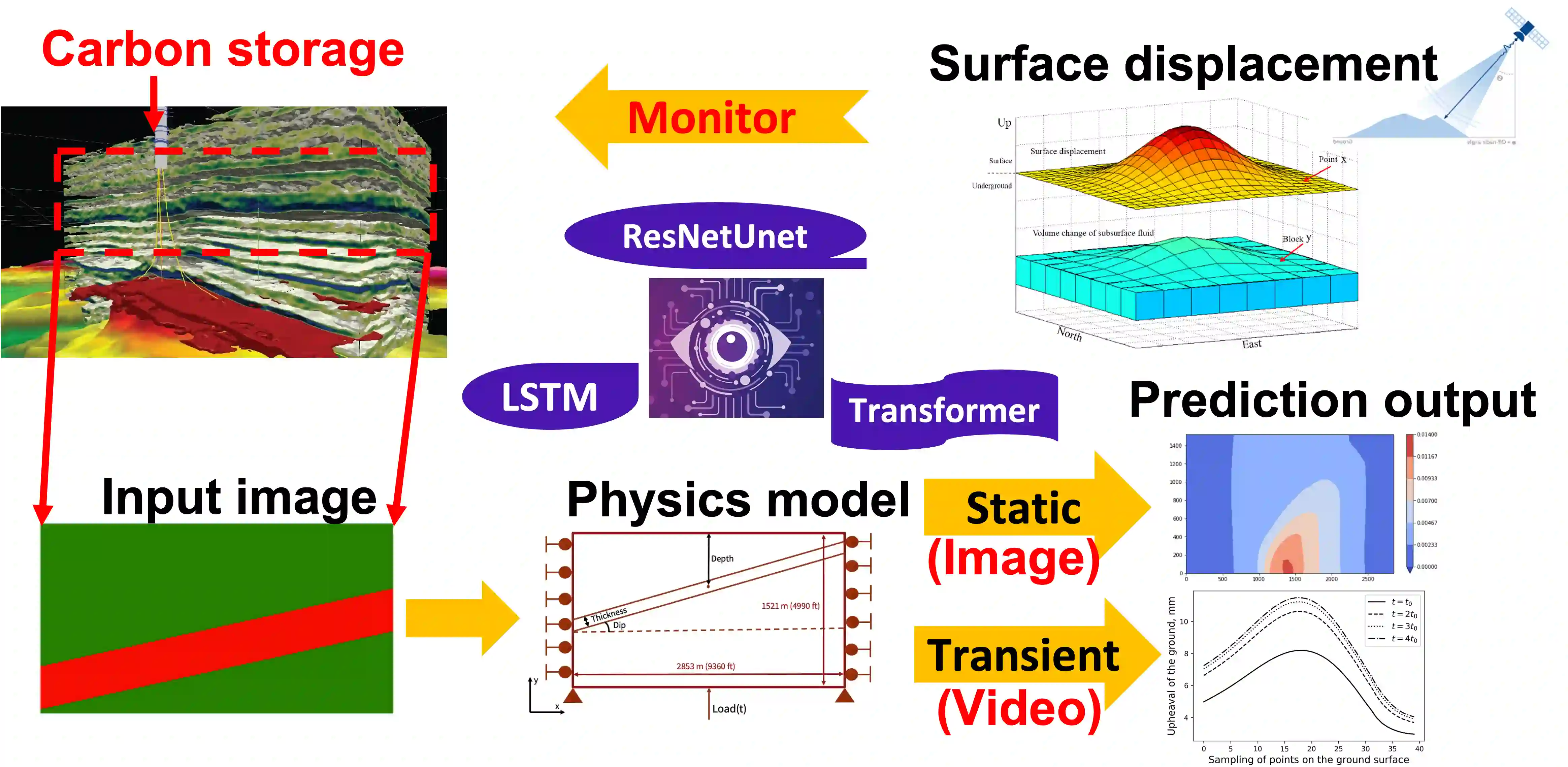
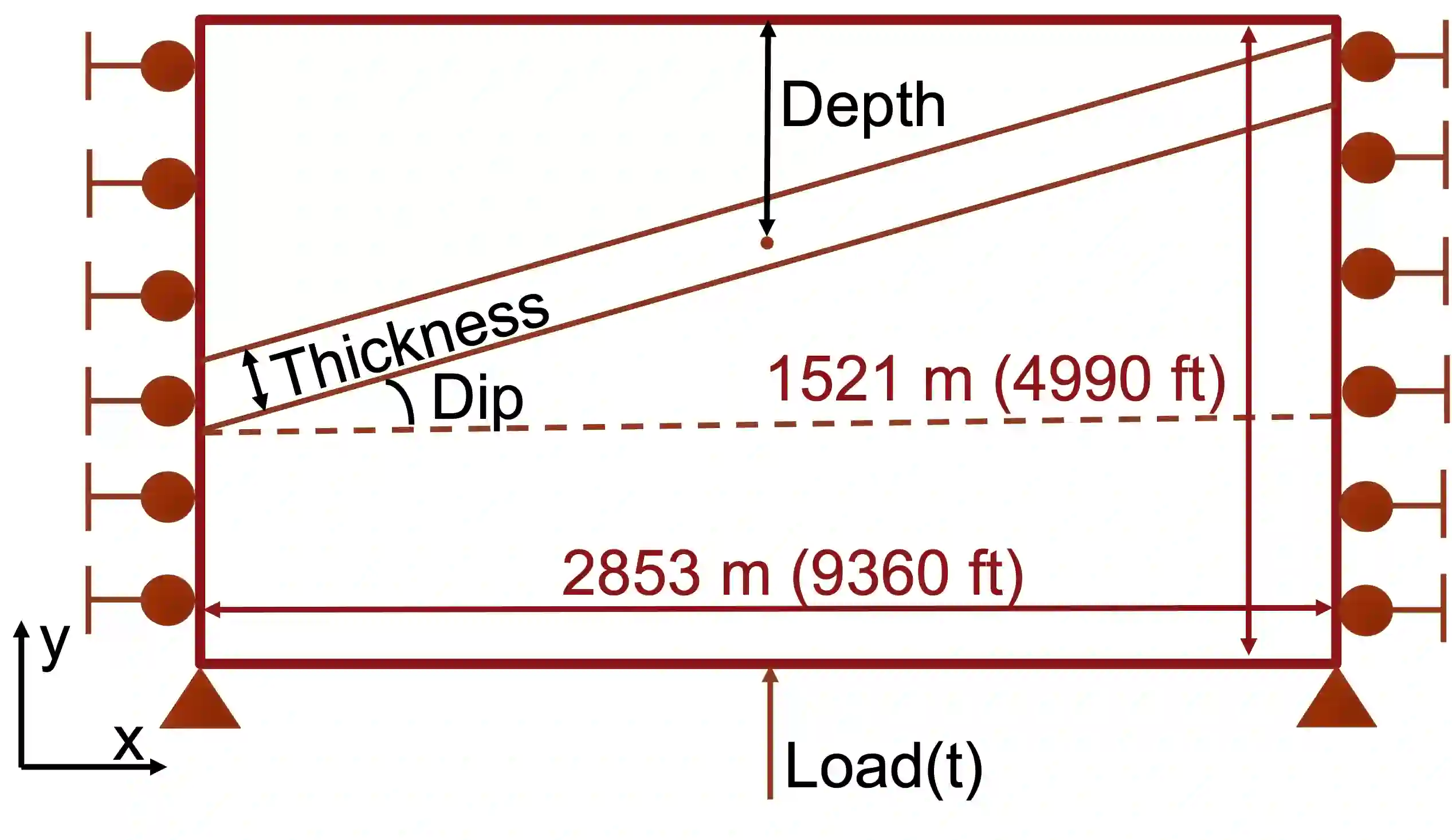
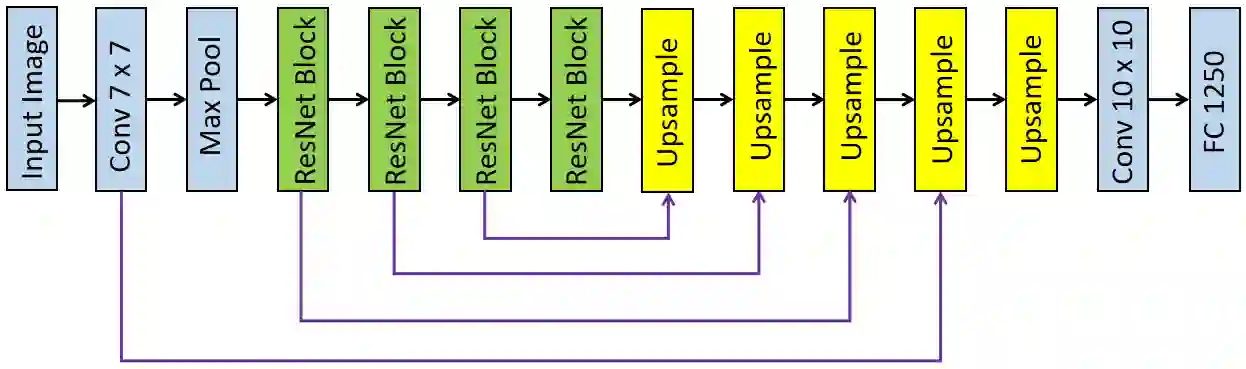
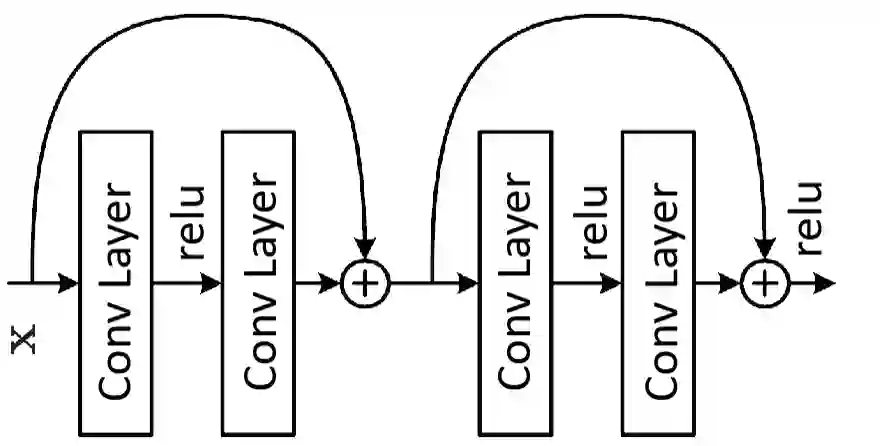
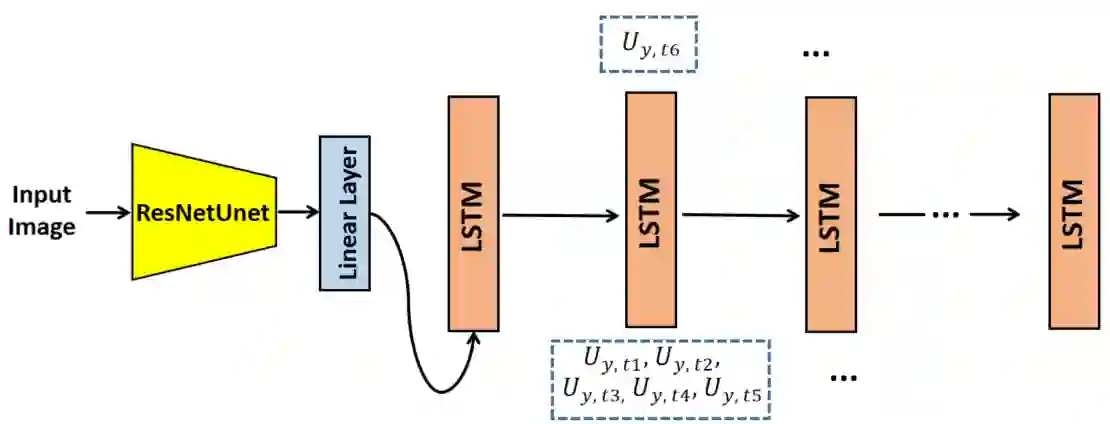
We introduce a new approach using computer vision to predict the land surface displacement from subsurface geometry images for Carbon Capture and Sequestration (CCS). CCS has been proved to be a key component for a carbon neutral society. However, scientists see there are challenges along the way including the high computational cost due to the large model scale and limitations to generalize a pre-trained model with complex physics. We tackle those challenges by training models directly from the subsurface geometry images. The goal is to understand the respons of land surface displacement due to carbon injection and utilize our trained models to inform decision making in CCS projects. We implement multiple models (CNN, ResNet, and ResNetUNet) for static mechanics problem, which is a image prediction problem. Next, we use the LSTM and transformer for transient mechanics scenario, which is a video prediction problem. It shows ResNetUNet outperforms the others thanks to its architecture in static mechanics problem, and LSTM shows comparable performance to transformer in transient problem. This report proceeds by outlining our dataset in detail followed by model descriptions in method section. Result and discussion state the key learning, observations, and conclusion with future work rounds out the paper.
翻译:我们提出了一种新方法,利用计算机视觉从地下几何图像预测地表位移,以支持碳捕集与封存(CCS)。CCS已被证明是实现碳中和社会的关键组成部分。然而,科学家们认为,CCS仍面临诸多挑战,包括因模型规模庞大导致的高计算成本,以及难以泛化基于复杂物理过程的预训练模型。我们通过直接从地下几何图像训练模型来解决这些挑战,目标是理解碳注入引起的地表位移响应,并利用训练好的模型为CCS项目的决策提供依据。针对静态力学问题(即图像预测问题),我们实现了多种模型(CNN、ResNet和ResNetUNet);针对瞬态力学场景(即视频预测问题),我们采用了LSTM和Transformer。结果表明,ResNetUNet凭借其架构优势在静态力学问题中表现最佳,而LSTM在瞬态问题中表现出与Transformer相当的性能。本文首先详细介绍了数据集,随后在方法部分描述了模型。结果与讨论部分阐述了关键学习成果与观察结论,最后以未来工作作为总结。




相关内容





 微信扫码咨询专知VIP会员