

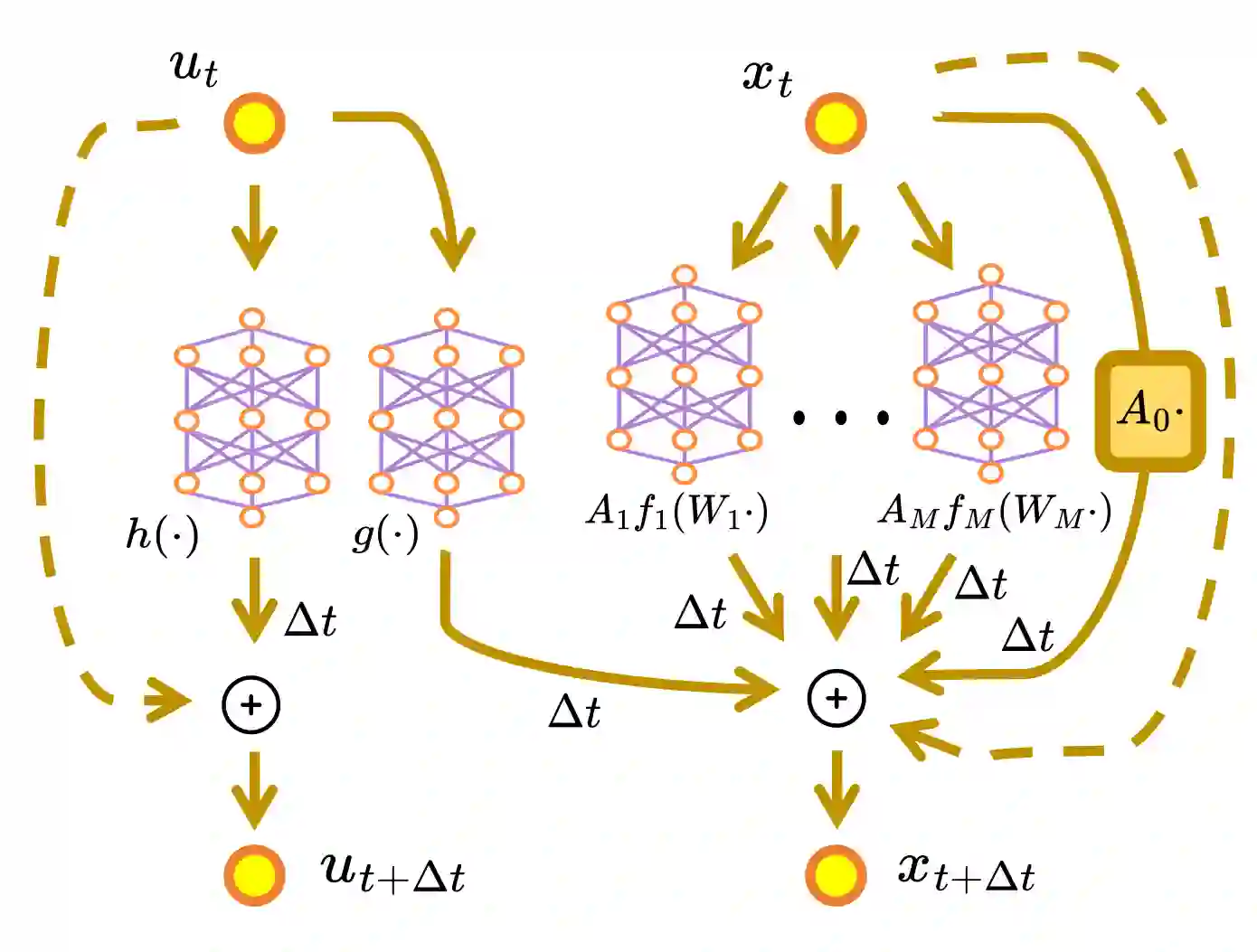
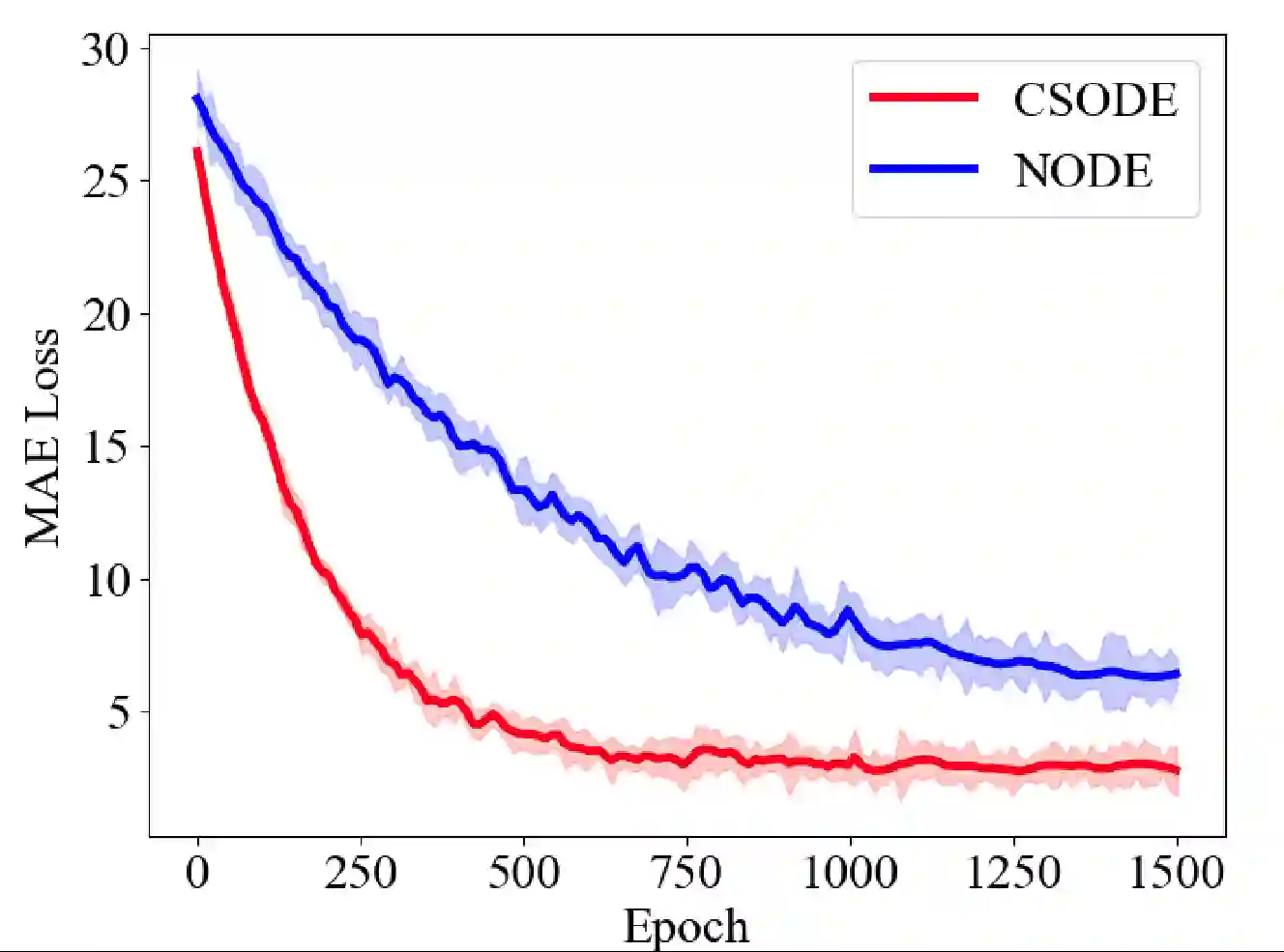
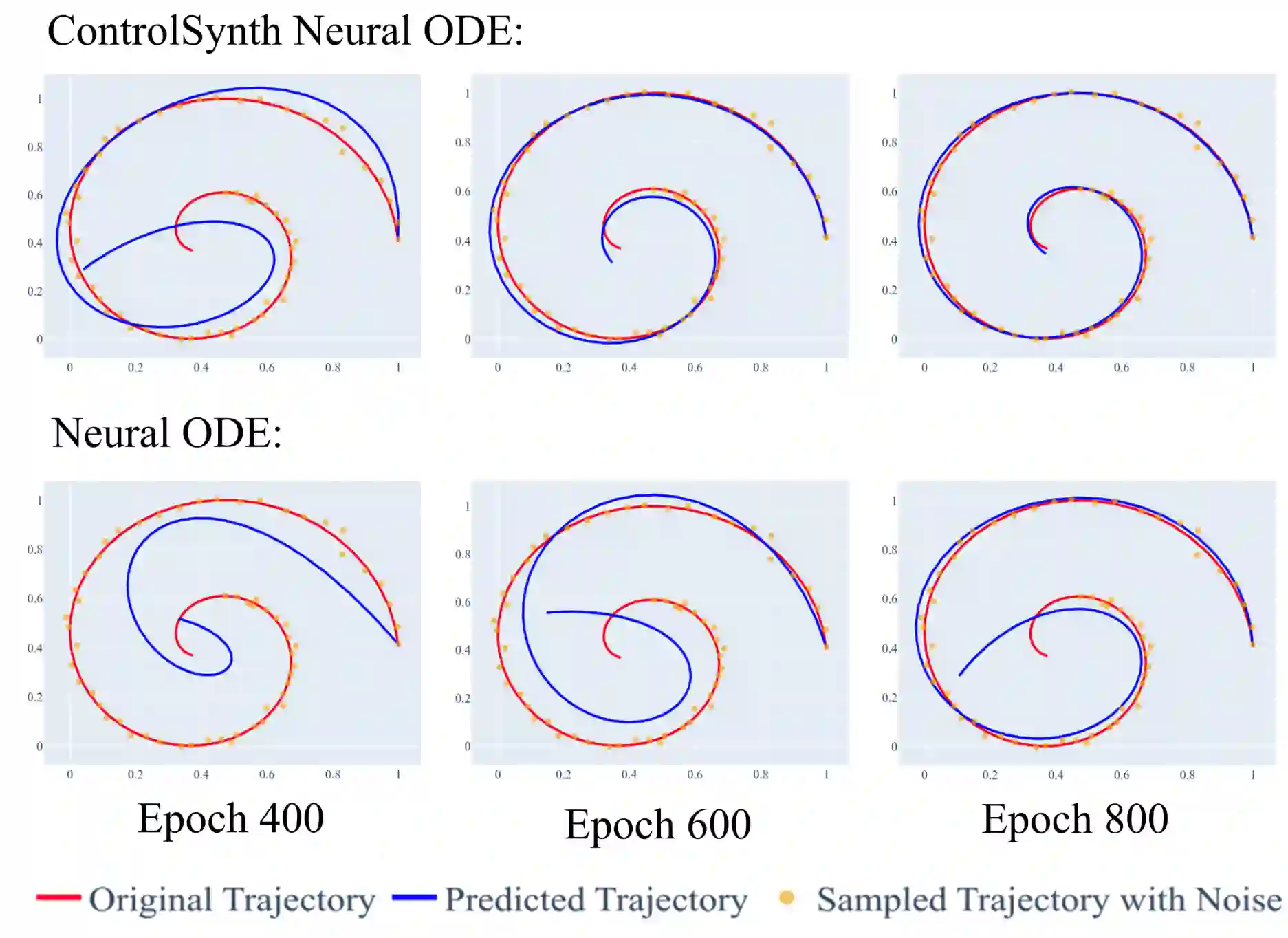
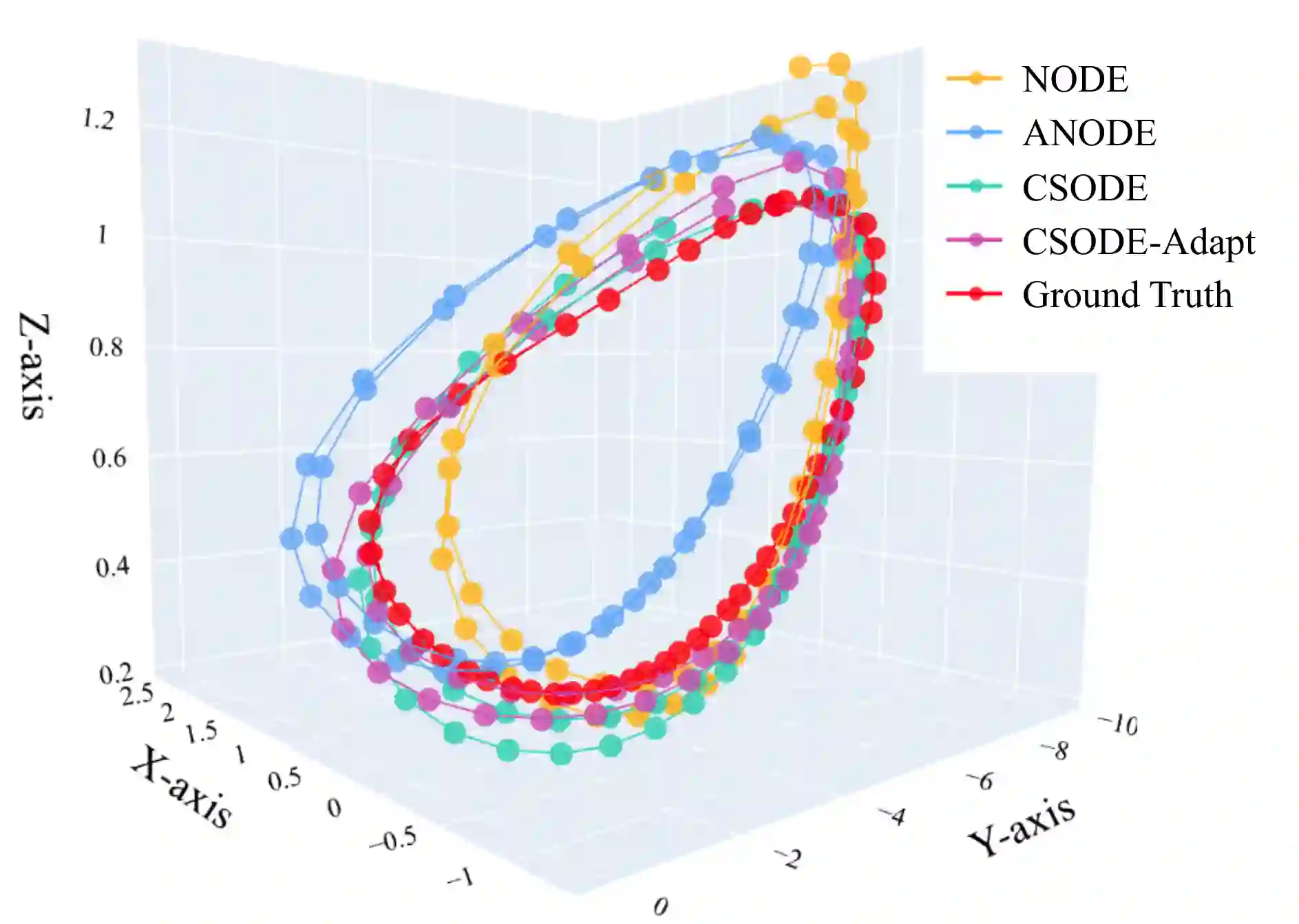
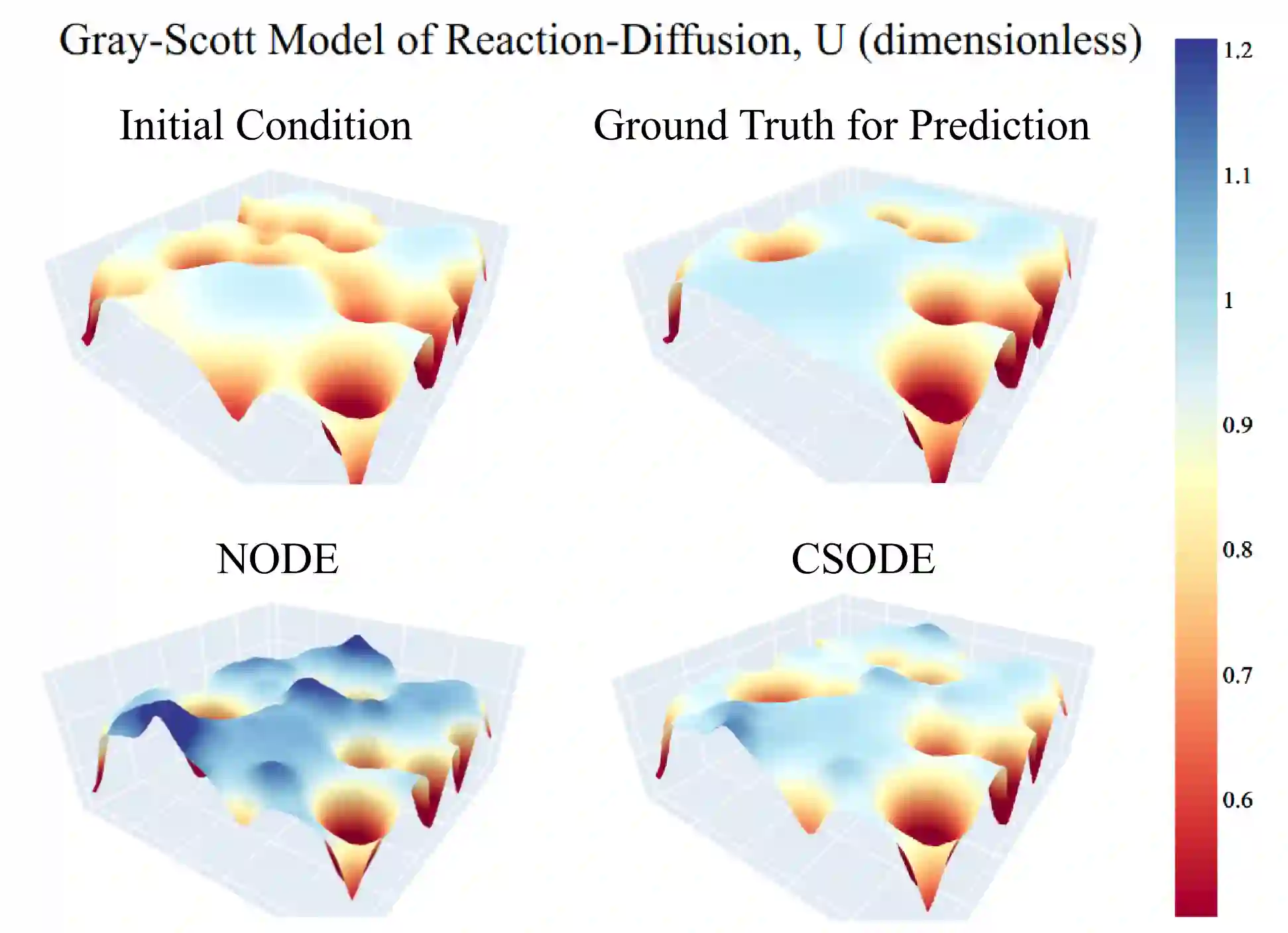
Neural ODEs (NODEs) are continuous-time neural networks (NNs) that can process data without the limitation of time intervals. They have advantages in learning and understanding the evolution of complex real dynamics. Many previous works have focused on NODEs in concise forms, while numerous physical systems taking straightforward forms, in fact, belong to their more complex quasi-classes, thus appealing to a class of general NODEs with high scalability and flexibility to model those systems. This, however, may result in intricate nonlinear properties. In this paper, we introduce ControlSynth Neural ODEs (CSODEs). We show that despite their highly nonlinear nature, convergence can be guaranteed via tractable linear inequalities. In the composition of CSODEs, we introduce an extra control term for learning the potential simultaneous capture of dynamics at different scales, which could be particularly useful for partial differential equation-formulated systems. Finally, we compare several representative NNs with CSODEs on important physical dynamics under the inductive biases of CSODEs, and illustrate that CSODEs have better learning and predictive abilities in these settings.
翻译:神经ODE(NODEs)是一种连续时间神经网络(NNs),能够不受时间间隔限制地处理数据。它们在学习和理解复杂真实动态演化方面具有优势。先前许多研究集中于简洁形式的神经ODE,而大量形式直观的物理系统实际上属于更复杂的准类别,因此需要一类具有高可扩展性和灵活性的通用神经ODE来建模这些系统。然而,这可能导致复杂的非线性特性。本文提出控制合成神经ODE(CSODEs)。我们证明尽管其具有高度非线性特征,但收敛性可通过可处理的线性不等式予以保证。在CSODEs的构建中,我们引入了一个额外的控制项,用于学习对不同尺度动态的潜在同步捕捉,这对于偏微分方程描述的系统尤为有用。最后,我们在CSODEs的归纳偏置下,将多种代表性神经网络与CSODEs在重要物理动态上进行对比,结果表明CSODEs在这些场景中具有更优异的学习和预测能力。




相关内容





 微信扫码咨询专知VIP会员