

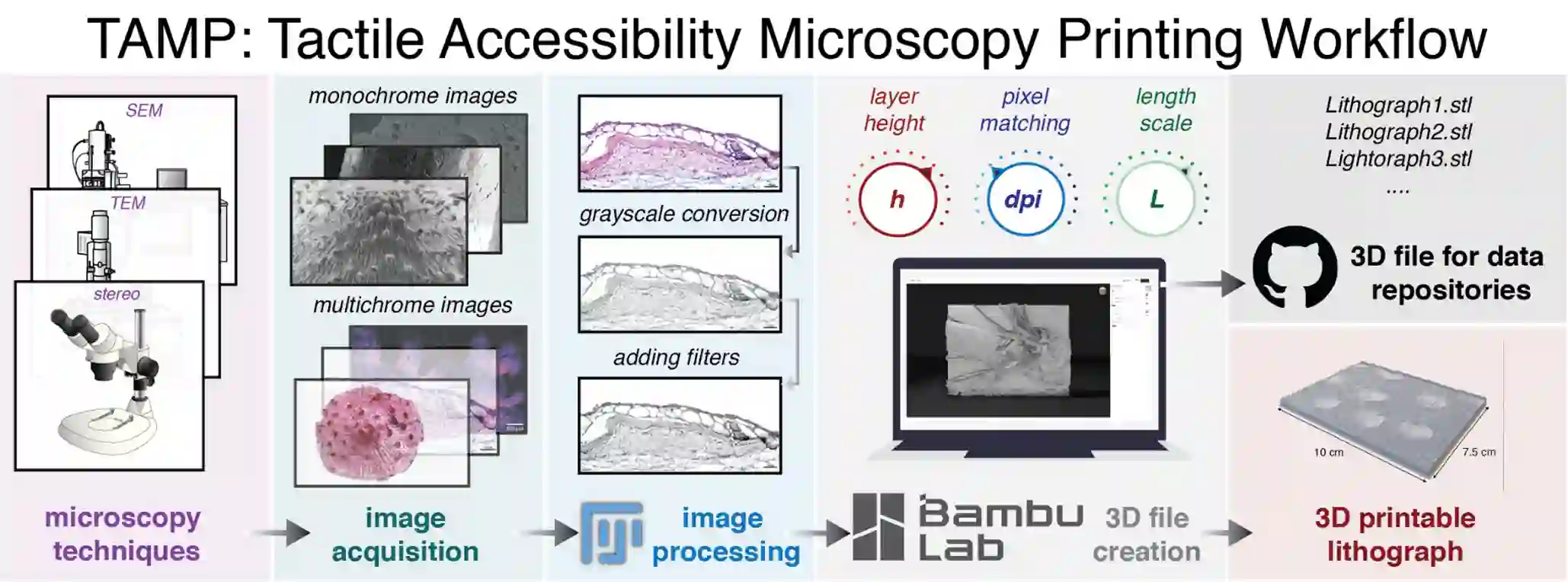
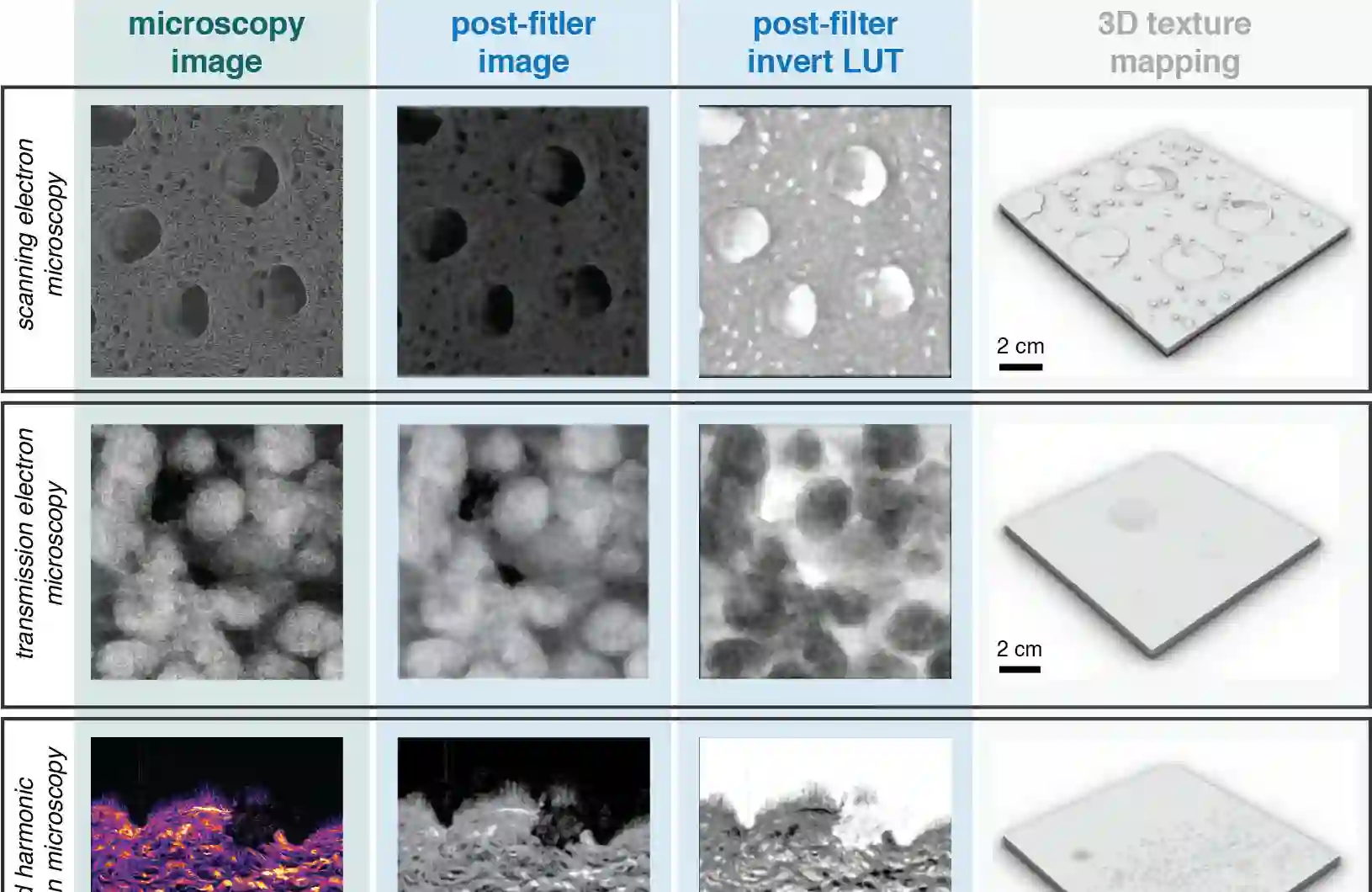
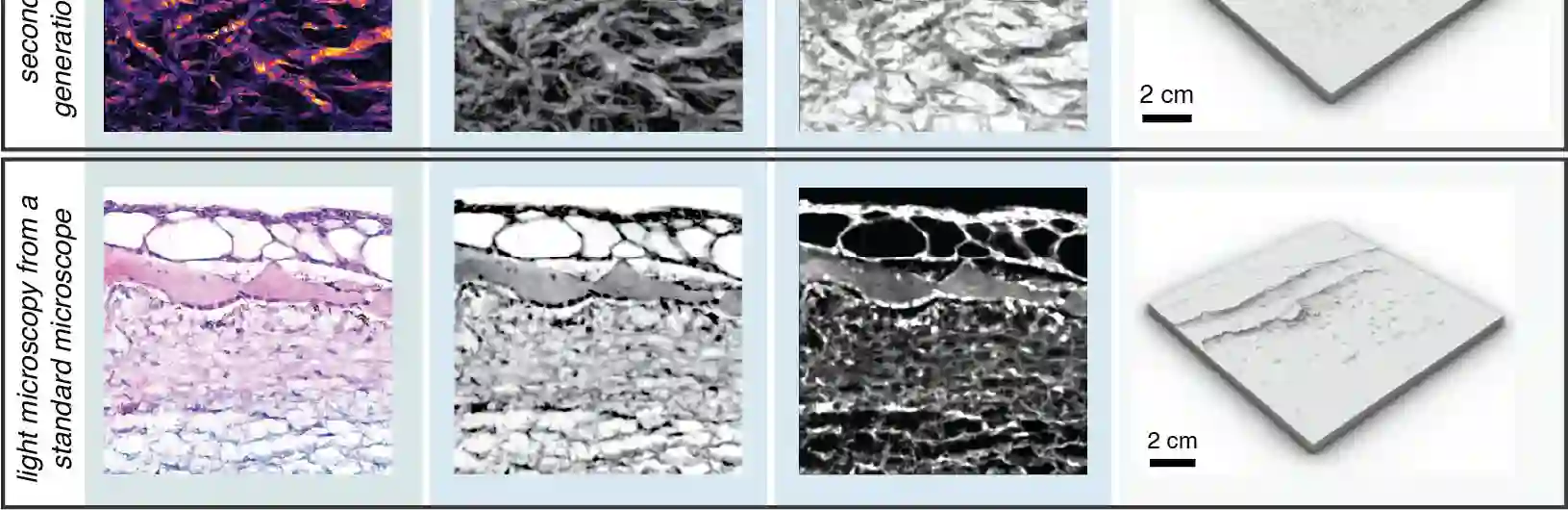
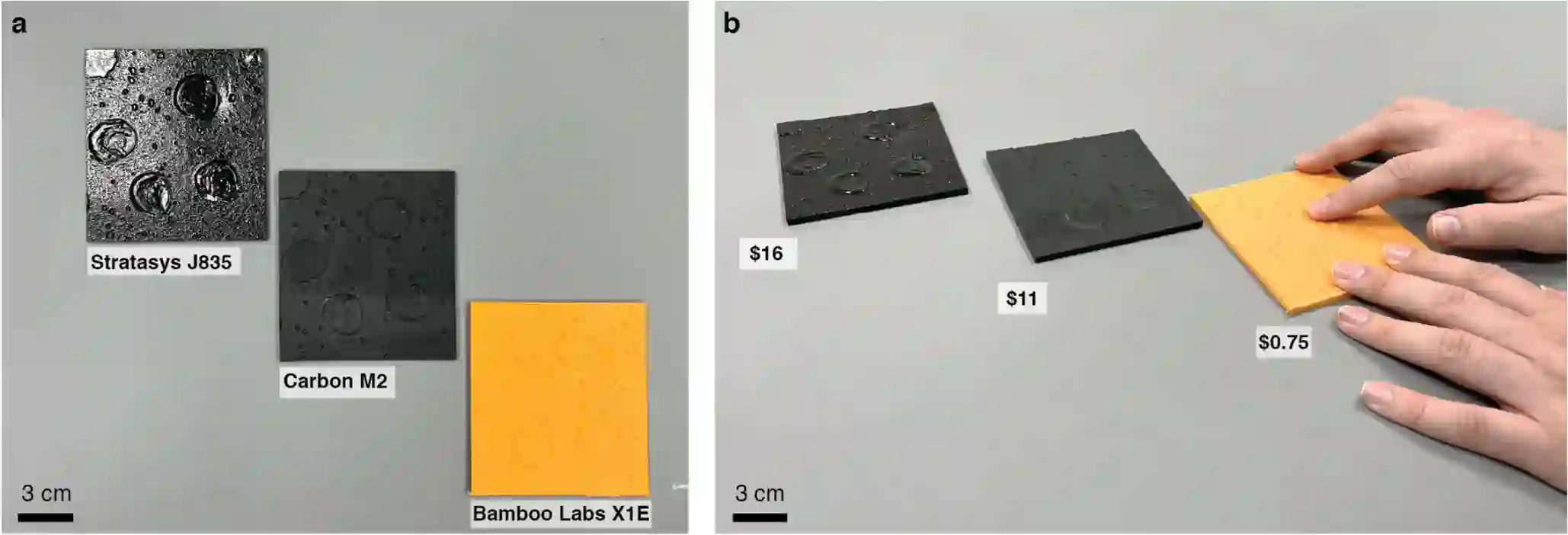
Describe an animal without using the verb look. Can you effectively provide an alternative method for interpreting complex microscopy images while preserving the length scale? The world is filled with features too small for our eyes to see: the setae on a gecko's feet, the cuticles covering a rat's whisker, or the fuzziness of a bat's wing. Furthermore, these structures are non-homogeneous, often shifting from stiff to soft. We provide a workflow for producing low-data, low-cost, and open-source lithograph files, allowing tactile accessibility in microscopy images. The lithographs made with this workflow can be printed on a 350 USD 3D printer using 3D files under 100 Mb, for a total cost per print of 0.75 USD. This work seeks to leverage advanced 3D printing to create tactile graphics and art that make science more accessible and enable tactile exploration of biological structures. This framework in this text is aligned with a GitHub repository that will be constantly updated, allowing tactile media to be created as 3D printing and lithography become more streamlined in the years to come.
翻译:在不使用"观察"这一动词的前提下描述动物。我们能否在保持长度尺度的同时,为复杂显微镜图像提供有效的替代解读方法?世界充满了肉眼无法辨识的微观特征:壁虎脚掌的刚毛、覆盖大鼠触须的角质层,或是蝙蝠翅膀的绒毛结构。此外,这些结构具有非均质性,常呈现从刚性到柔性的渐变特性。本文提出一种生成低数据量、低成本开源光刻文件的工作流程,可实现显微镜图像的触觉可及性。通过该流程制作的光刻模型可在350美元的三维打印机上实现打印,所需三维文件小于100Mb,单次打印成本仅为0.75美元。本研究旨在利用先进三维打印技术创建触觉图形与艺术装置,既提升科学普及的包容性,又支持对生物结构的触觉探索。本文所述框架已与GitHub代码库同步,将随三维打印与光刻技术的持续发展而不断更新,为未来触觉媒体的创作提供标准化工具。




相关内容

 微信扫码咨询专知VIP会员