

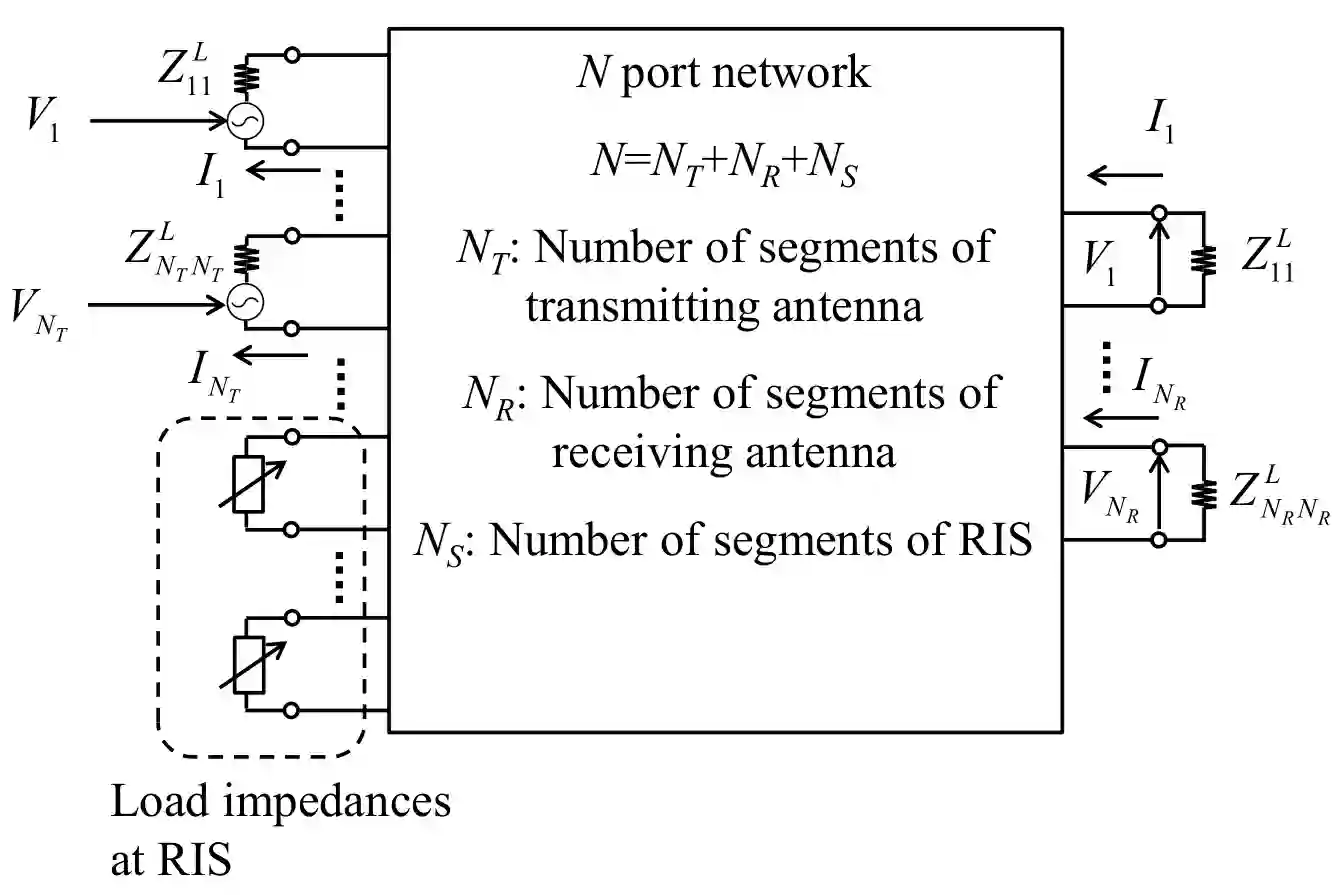
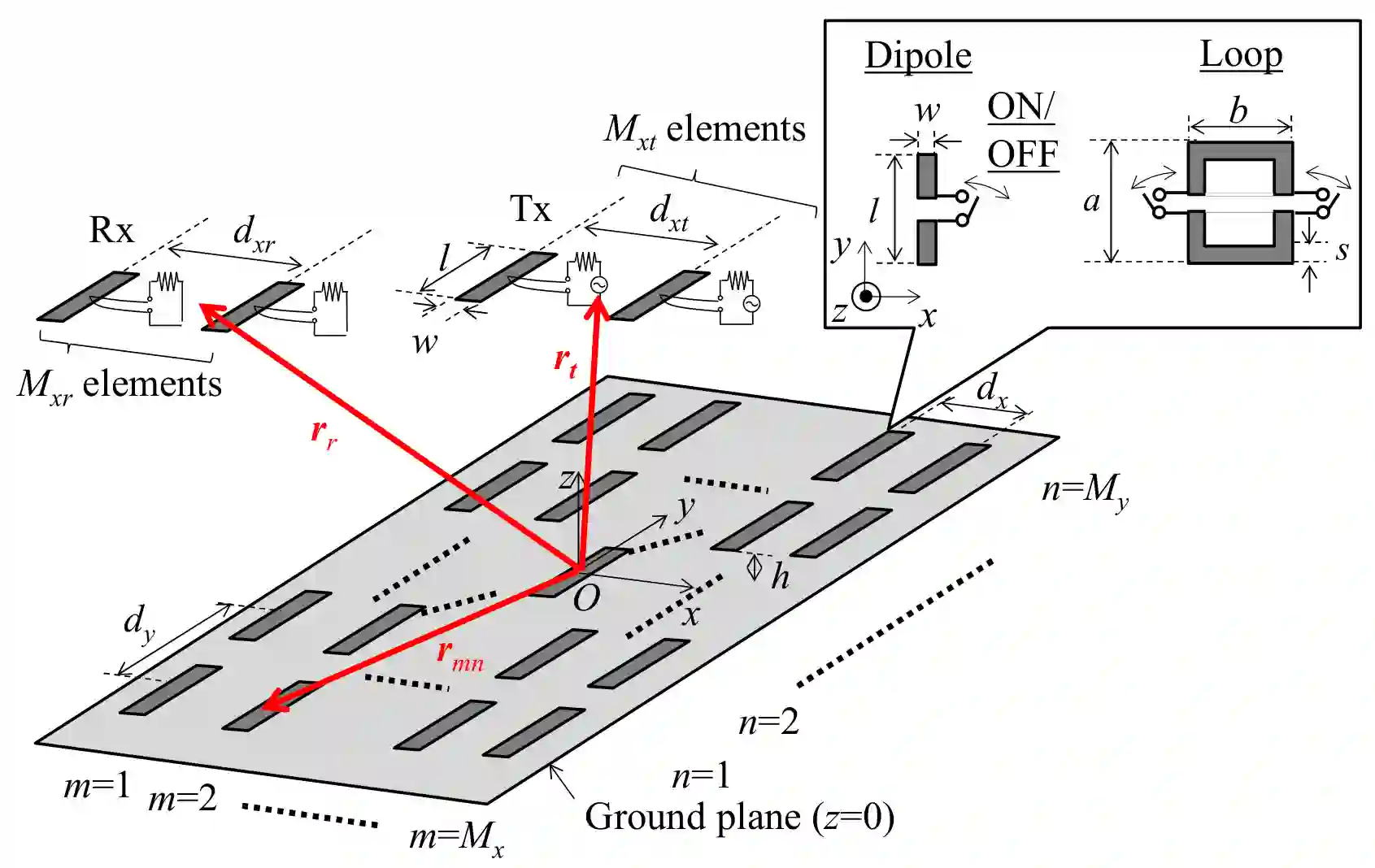
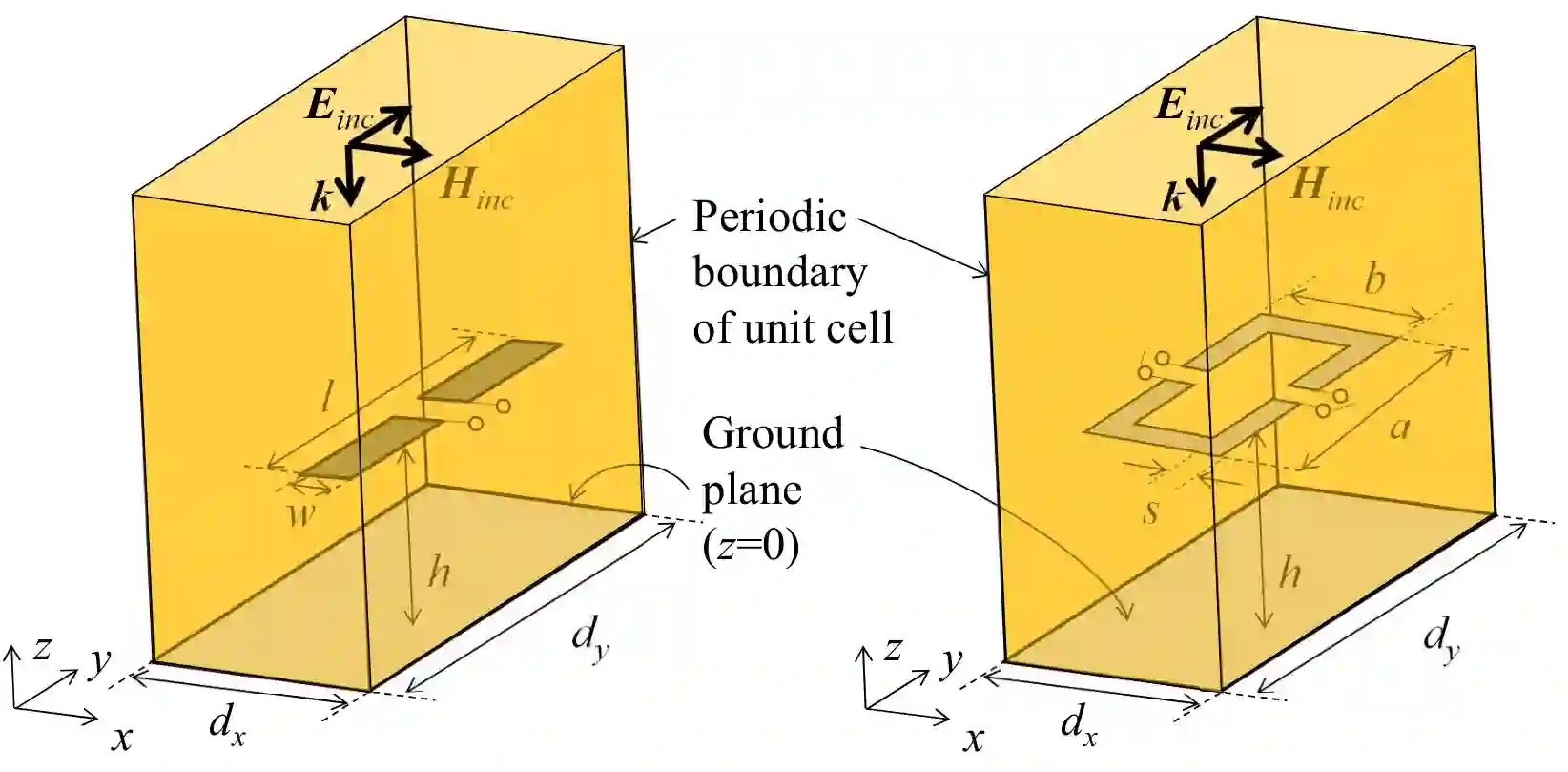
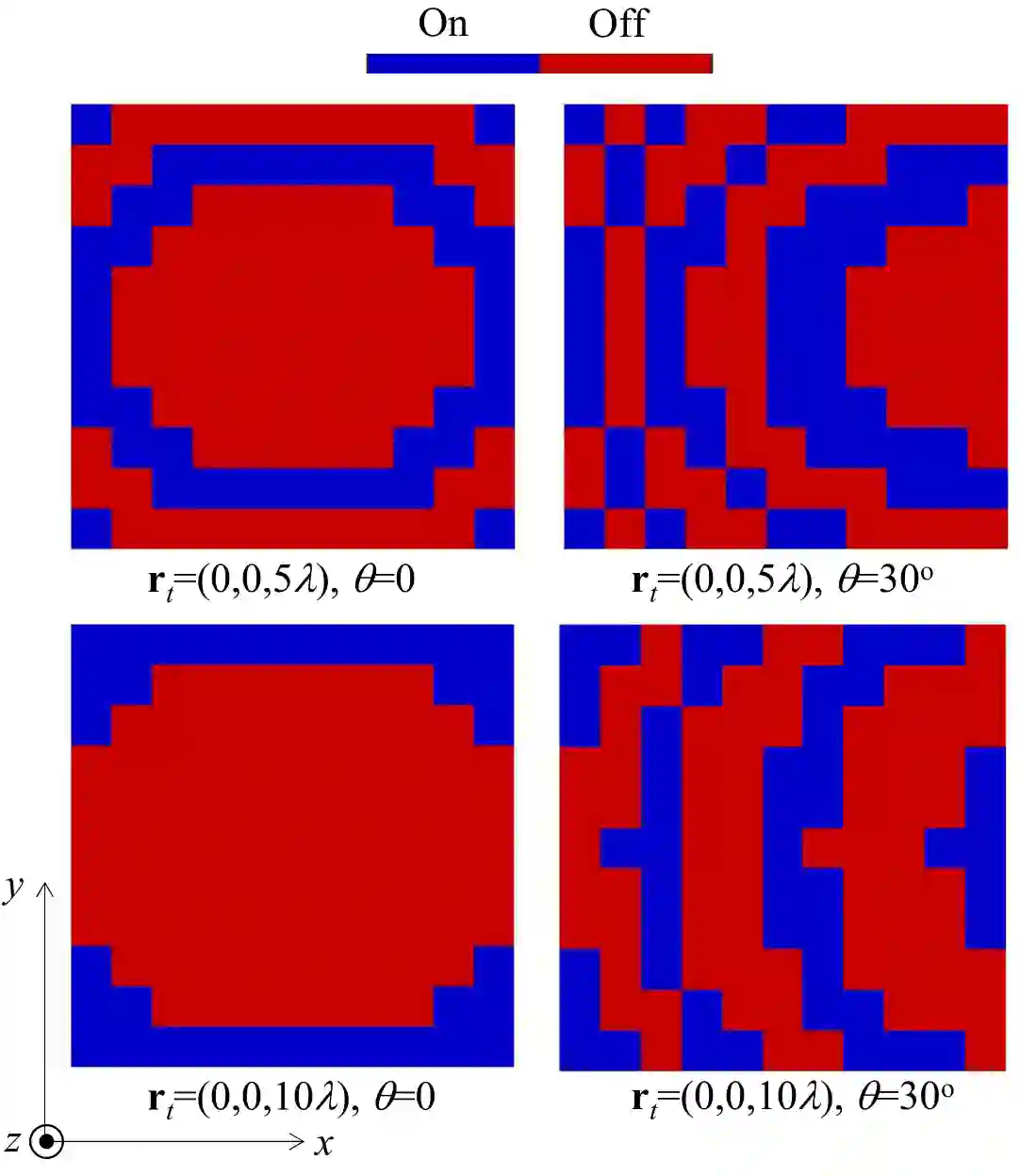
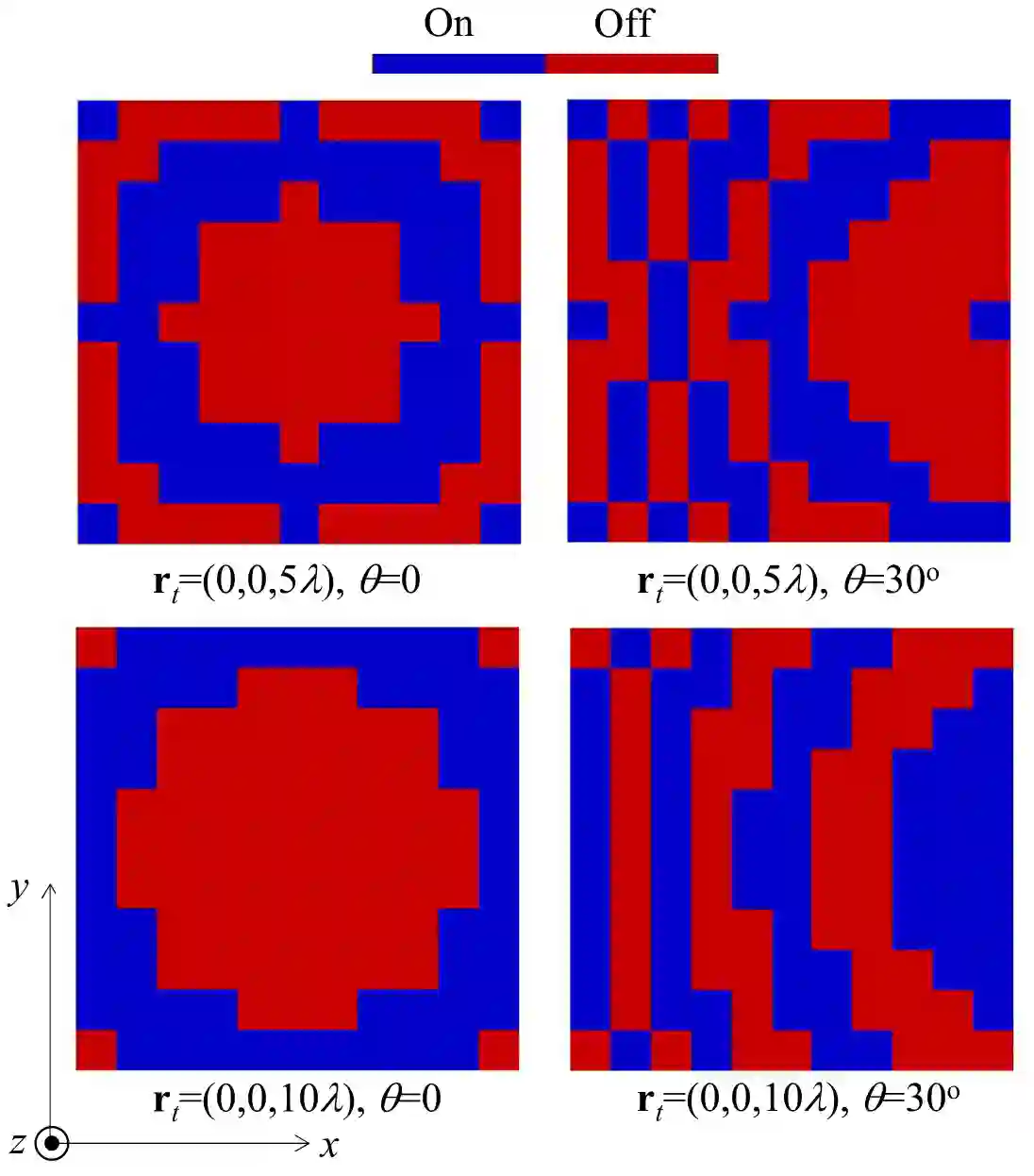
We devise an end-to-end communication channel model that describes the performance of RIS-assisted MIMO wireless links. The model borrows the impedance (interaction) matrix formalism from the Method of Moments and provides a physics-based communication model. In configurations where the transmit and receive antenna arrays are distant from the RIS beyond a wavelength, a reduced model provides accurate results for arbitrary RIS unit cell geometry. Importantly, the simplified model configures as a cascaded channel transfer matrix whose mathematical structure is compliant with widely accepted, but less accurate, system level RIS models. A numerical validation of the communication model is presented for the design of binary RIS structures with scatterers of canonical geometry. Attained results are consistent with path-loss models: For obstructed line-of-sight between transmitter and receiver, the channel capacity of the (optimised) RIS-assisted link scales as $R^{-2}$, with $R$ RIS-receiver distance at fixed transmitter position. Our results shows that the applicability of communication models based on mutual impedance matrices is not restricted to canonical minimum scattering RIS unit cells.
翻译:我们提出了一种描述RIS辅助MIMO无线链路性能的端到端通信信道模型。该模型借鉴矩量法中的阻抗(相互作用)矩阵形式,构建了基于物理机制的通信模型。当收发天线阵列与RIS间距超过波长时,简化模型可针对任意RIS单元几何结构提供精确结果。重要地,简化模型可配置为级联信道传输矩阵,其数学结构与广泛采用但精度较低的系统级RIS模型兼容。针对采用典型几何结构散射体的二元RIS结构设计,我们给出了通信模型的数值验证。所得结果与路径损耗模型一致:当收发端直视路径受阻时,(优化后)RIS辅助链路的信道容量随$R^{-2}$衰减($R$为固定发射位置下RIS与接收端距离)。研究结果表明,基于互阻抗矩阵的通信模型适用性并不局限于标准最小散射RIS单元。




相关内容




 微信扫码咨询专知VIP会员