

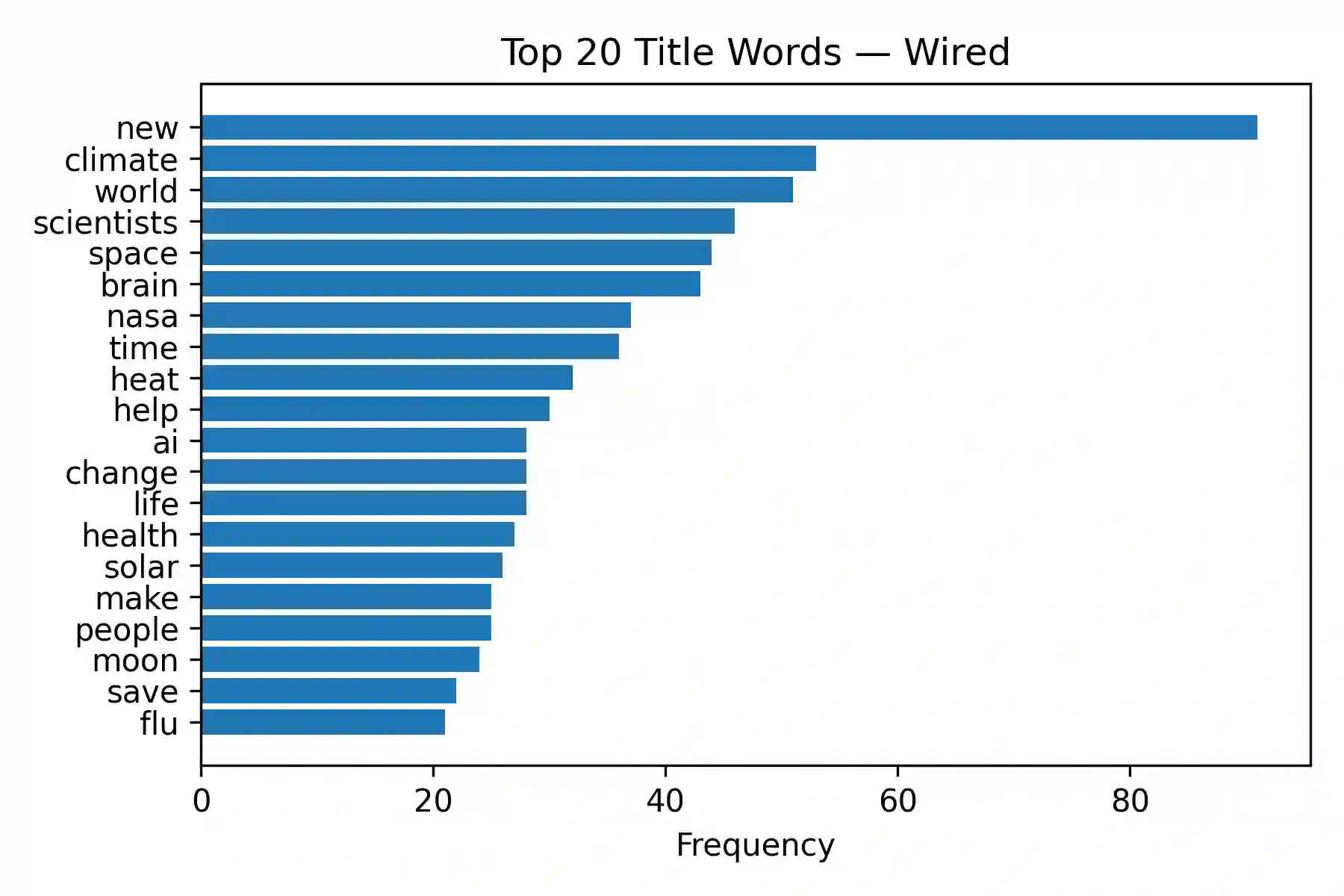
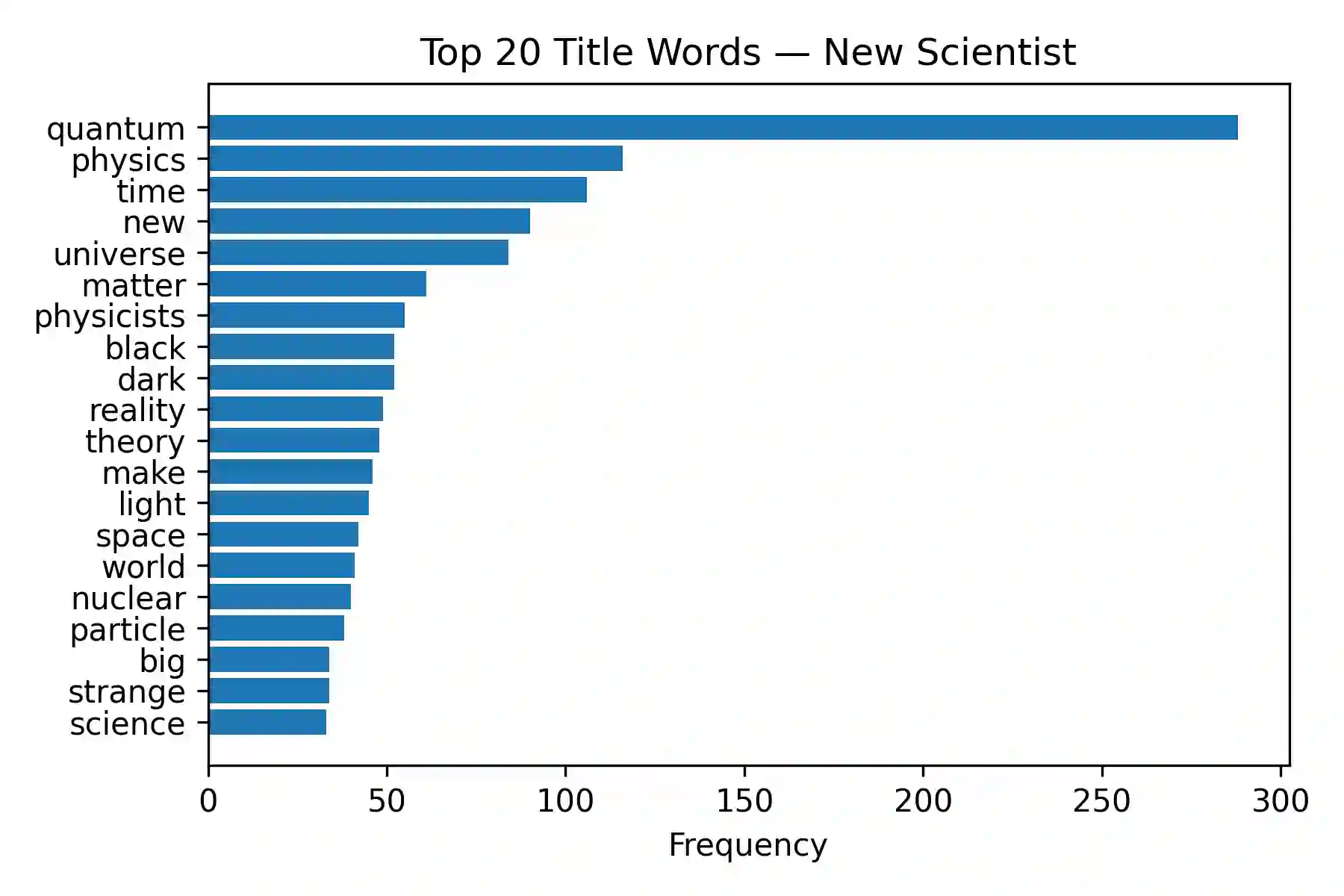
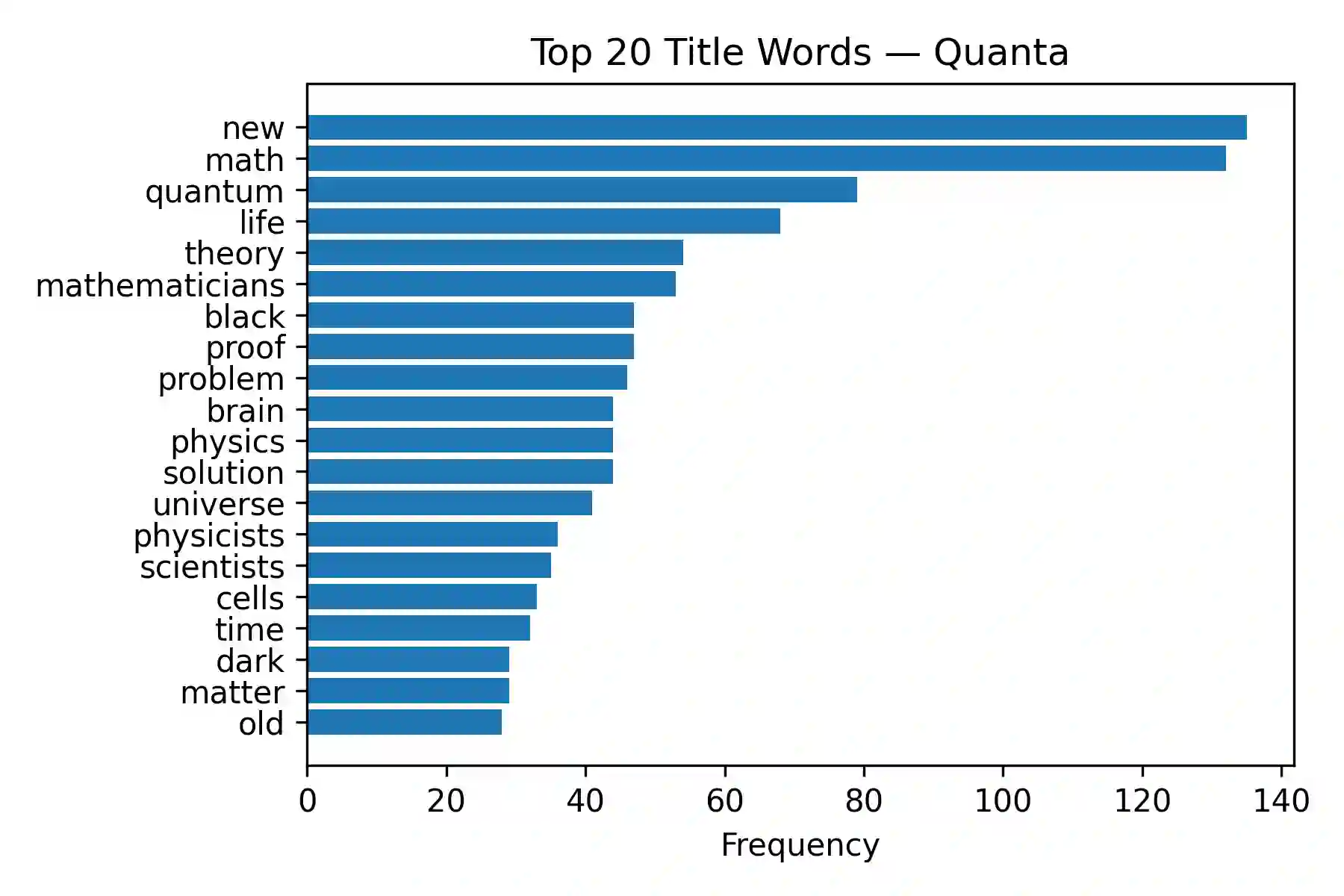
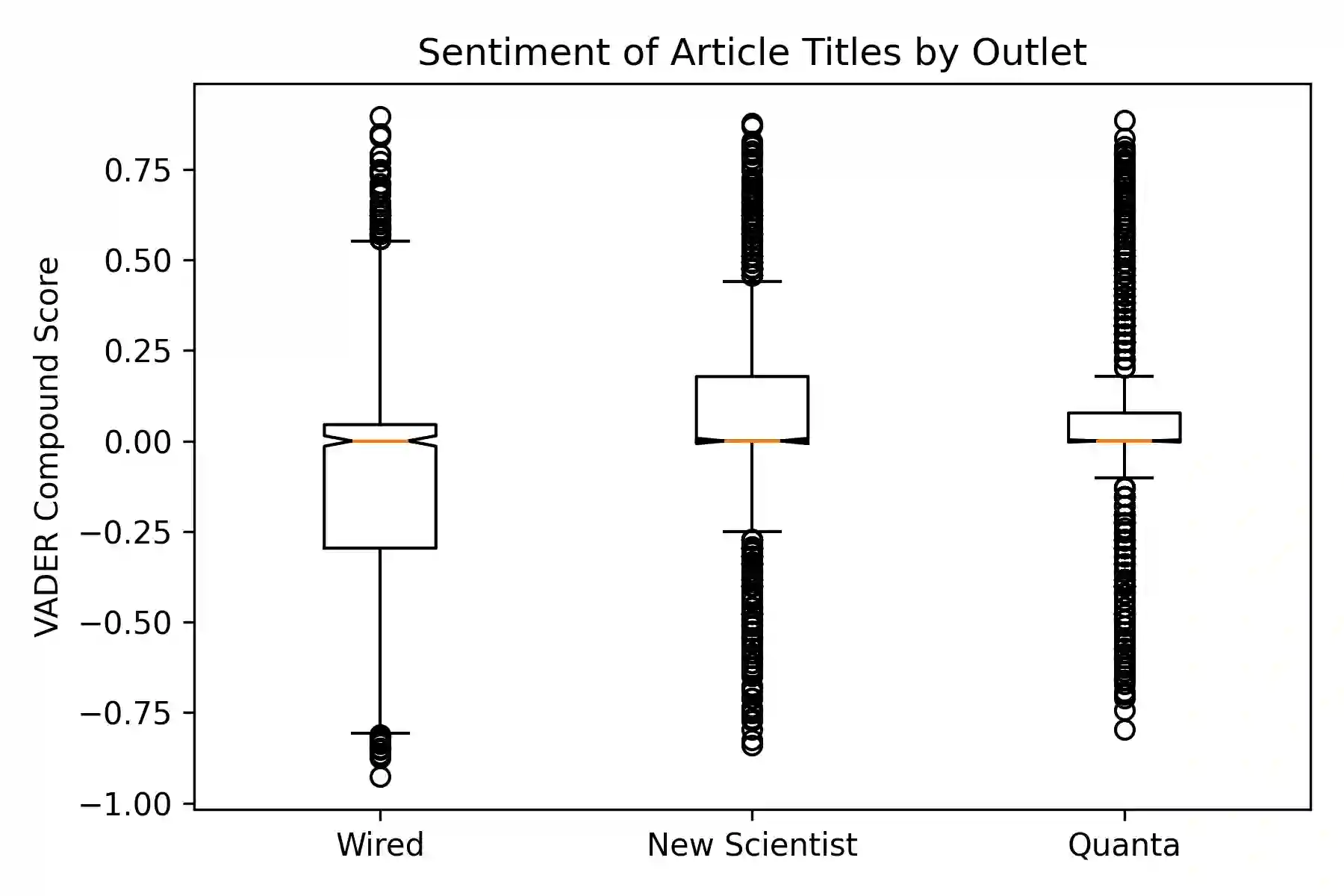
While traditionally not considered part of the scientific method, science communication is increasingly playing a pivotal role in shaping scientific practice. Researchers are now frequently compelled to publicise their findings in response to institutional impact metrics and competitive grant environments. This shift underscores the growing influence of media narratives on both scientific priorities and public perception. In a current trend of personality-driven reporting, we examine patterns in science communication that may indicate biases of different types, towards topics and researchers. We focused and applied our methodology to a corpus of media coverage from three of the most prominent scientific media outlets: Wired, Quanta, and The New Scientist -- spanning the past 5 to 10 years. By mapping linguistic patterns, citation flows, and topical convergence, our objective was to quantify the dimensions and degree of bias that influence the credibility of scientific journalism. In doing so, we seek to illuminate the systemic features that shape science communication today and to interrogate their broader implications for epistemic integrity and public accountability in science. We present our results with anonymised journalist names but conclude that personality-driven media coverage distorts science and the practice of science flattening rather than expanding scientific coverage perception. Keywords : selective sourcing, bias, scientific journalism, Quanta, Wired, New Scientist, fairness, balance, neutrality, standard practices, distortion, personal promotion, communication, media outlets.
翻译:尽管传统上不被视为科学方法的一部分,科学传播在塑造科学实践中的作用日益关键。研究人员如今常因机构影响力指标和竞争性资助环境的压力而被迫公开研究成果。这一转变凸显了媒体叙事对科学优先事项和公众认知日益增长的影响。在当前人格驱动报道的趋势下,我们考察了科学传播中可能存在的对不同主题和研究者的各类偏见模式。我们聚焦并应用方法论分析了三大权威科学媒体——《连线》(Wired)、《量子》(Quanta)和《新科学家》(New Scientist)——过去5至10年的媒体报道语料库。通过映射语言模式、引用流向和主题趋同性,我们的目标是量化影响科学新闻可信度的偏见维度与程度。借此,我们旨在揭示塑造当代科学传播的系统性特征,并审视其对科学认知完整性和公共问责制的广泛影响。我们在呈现结果时对记者姓名进行匿名处理,但结论表明:人格驱动的媒体报道扭曲了科学及其实践,使科学报道的认知趋于扁平化而非拓展。关键词:选择性信源、偏见、科学新闻、Quanta、Wired、New Scientist、公正性、平衡性、中立性、标准实践、失真、个人推广、传播、媒体机构。




相关内容


 微信扫码咨询专知VIP会员