

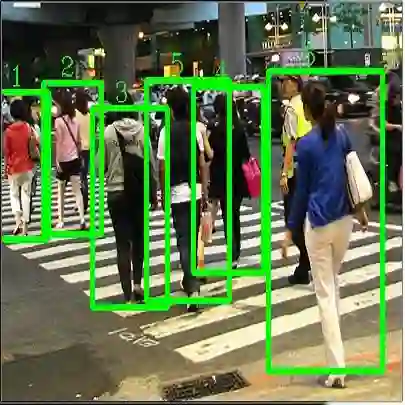
Deep learning has emerged as an effective solution for solving the task of object detection in images but at the cost of requiring large labeled datasets. To mitigate this cost, semi-supervised object detection methods, which consist in leveraging abundant unlabeled data, have been proposed and have already shown impressive results. However, most of these methods require linking a pseudo-label to a ground-truth object by thresholding. In previous works, this threshold value is usually determined empirically, which is time consuming, and only done for a single data distribution. When the domain, and thus the data distribution, changes, a new and costly parameter search is necessary. In this work, we introduce our method Adaptive Self-Training for Object Detection (ASTOD), which is a simple yet effective teacher-student method. ASTOD determines without cost a threshold value based directly on the ground value of the score histogram. To improve the quality of the teacher predictions, we also propose a novel pseudo-labeling procedure. We use different views of the unlabeled images during the pseudo-labeling step to reduce the number of missed predictions and thus obtain better candidate labels. Our teacher and our student are trained separately, and our method can be used in an iterative fashion by replacing the teacher by the student. On the MS-COCO dataset, our method consistently performs favorably against state-of-the-art methods that do not require a threshold parameter, and shows competitive results with methods that require a parameter sweep search. Additional experiments with respect to a supervised baseline on the DIOR dataset containing satellite images lead to similar conclusions, and prove that it is possible to adapt the score threshold automatically in self-training, regardless of the data distribution. The code is available at https:// github.com/rvandeghen/ASTOD
翻译:深度学习已成为解决图像目标检测任务的有效方法,但代价是需要大量标注数据集。为降低这一成本,半监督目标检测方法通过利用大量未标注数据展现出显著效果。然而,多数方法需通过阈值将伪标签与真实目标关联。先前研究中,该阈值通常通过耗时的人工经验确定,且仅适用于单一数据分布。当领域及数据分布变化时,需重新进行代价高昂的参数搜索。本文提出适应性自训练目标检测方法ASTOD——一种简洁高效的师生模型。ASTOD基于评分直方图实际值自动确定阈值,无需额外计算成本。为提升教师模型预测质量,我们进一步提出新型伪标签生成流程:在伪标签标注阶段利用未标注图像的多视角信息减少漏检,从而获得更优候选标签。教师模型与学生模型分别独立训练,且可通过将教师模型替换为学生模型实现迭代优化。在MS-COCO数据集上,本方法性能始终优于无需阈值参数的最先进方法,并与需要参数扫描搜索的方法相比具有竞争力。在包含卫星图像的DIOR数据集上进行的基线监督对比实验得出相似结论,证明自训练中可自动适配评分阈值,且不受数据分布影响。代码可见 https://github.com/rvandeghen/ASTOD




相关内容


 微信扫码咨询专知VIP会员