

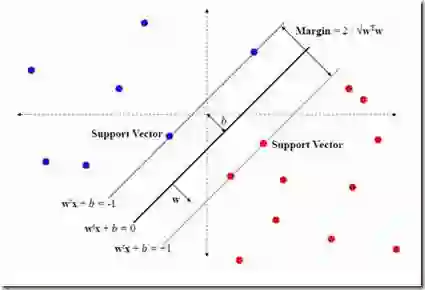
ADHD is a prevalent disorder among the younger population. Standard evaluation techniques currently use evaluation forms, interviews with the patient, and more. However, its symptoms are similar to those of many other disorders like depression, conduct disorder, and oppositional defiant disorder, and these current diagnosis techniques are not very effective. Thus, a sophisticated computing model holds the potential to provide a promising diagnosis solution to this problem. This work attempts to explore methods to diagnose ADHD using combinations of multiple established machine learning techniques like neural networks and SVM models on the ADHD200 dataset and explore the field of neuroscience. In this work, multiclass classification is performed on phenotypic data using an SVM model. The better results have been analyzed on the phenotypic data compared to other supervised learning techniques like Logistic regression, KNN, AdaBoost, etc. In addition, neural networks have been implemented on functional connectivity from the MRI data of a sample of 40 subjects provided to achieve high accuracy without prior knowledge of neuroscience. It is combined with the phenotypic classifier using the ensemble technique to get a binary classifier. It is further trained and tested on 400 out of 824 subjects from the ADHD200 data set and achieved an accuracy of 92.5% for binary classification The training and testing accuracy has been achieved upto 99% using ensemble classifier.
翻译:注意力缺陷/多动症(ADHD)是青少年群体中一种常见的疾病。当前的标准化评估方法主要依赖评估问卷、患者访谈等手段。然而,其症状与抑郁症、品行障碍、对立违抗性障碍等多种其他疾病相似,而现有的诊断技术效果有限。因此,一种精密的计算模型有望为这一问题提供有效的诊断解决方案。本研究尝试探索利用多种成熟的机器学习技术(如神经网络和支持向量机模型)在ADHD200数据集上诊断ADHD的方法,并深入神经科学领域展开研究。工作中,我们使用SVM模型对表型数据进行多分类分析。相较于逻辑回归、K近邻、AdaBoost等其他监督学习技术,该表型数据上的分析取得了更优的结果。此外,针对40名受试者的MRI数据中的功能连接,我们在无需神经科学先验知识的情况下实现了神经网络建模,并达到高精度。通过集成技术,该神经网络与表型分类器结合,形成二元分类器。进一步,我们使用ADHD200数据集中824名受试者中的400名进行训练与测试,二元分类准确率达到92.5%;而采用集成分类器后,训练与测试准确率最高可达99%。




相关内容



 微信扫码咨询专知VIP会员