

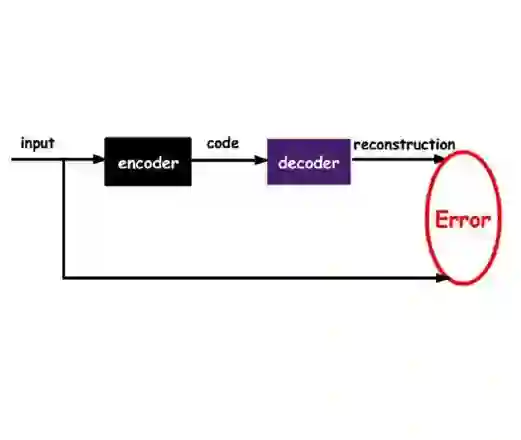
With the growing use of machine learning algorithms and ubiquitous sensors, many `perception-to-control' systems are being developed and deployed. To ensure their trustworthiness, improving their robustness through adversarial training is one potential approach. We propose a gradient-free adversarial training technique, named AutoJoin, to effectively and efficiently produce robust models for image-based maneuvering. Compared to other state-of-the-art methods with testing on over 5M images, AutoJoin achieves significant performance increases up to the 40% range against perturbations while improving on clean performance up to 300%. AutoJoin is also highly efficient, saving up to 86% time per training epoch and 90% training data over other state-of-the-art techniques. The core idea of AutoJoin is to use a decoder attachment to the original regression model creating a denoising autoencoder within the architecture. This architecture allows the tasks `maneuvering' and `denoising sensor input' to be jointly learnt and reinforce each other's performance.
翻译:随着机器学习算法与泛在传感器的广泛应用,众多“感知-控制”系统正被开发与部署。为确保其可信性,通过对抗训练提升系统鲁棒性是一种可行途径。本文提出一种名为AutoJoin的无梯度对抗训练技术,旨在高效生成适用于基于图像的操控任务的鲁棒模型。通过在超过500万张测试图像上与其他先进方法进行比较,AutoJoin在对抗扰动方面实现了高达40%的性能提升,同时在干净样本上的性能提升最高达300%。AutoJoin还具有极高的训练效率,相比其他先进技术,每个训练周期可节省86%的时间,并减少90%的训练数据需求。AutoJoin的核心思想是在原始回归模型上附加解码器,构建架构内的去噪自编码器。该架构使得“操控”与“传感器输入去噪”两项任务能够通过联合学习相互增强性能。




相关内容




 微信扫码咨询专知VIP会员