

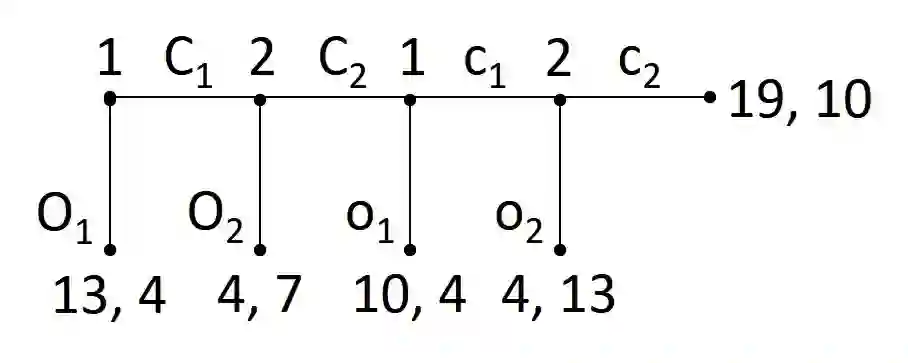
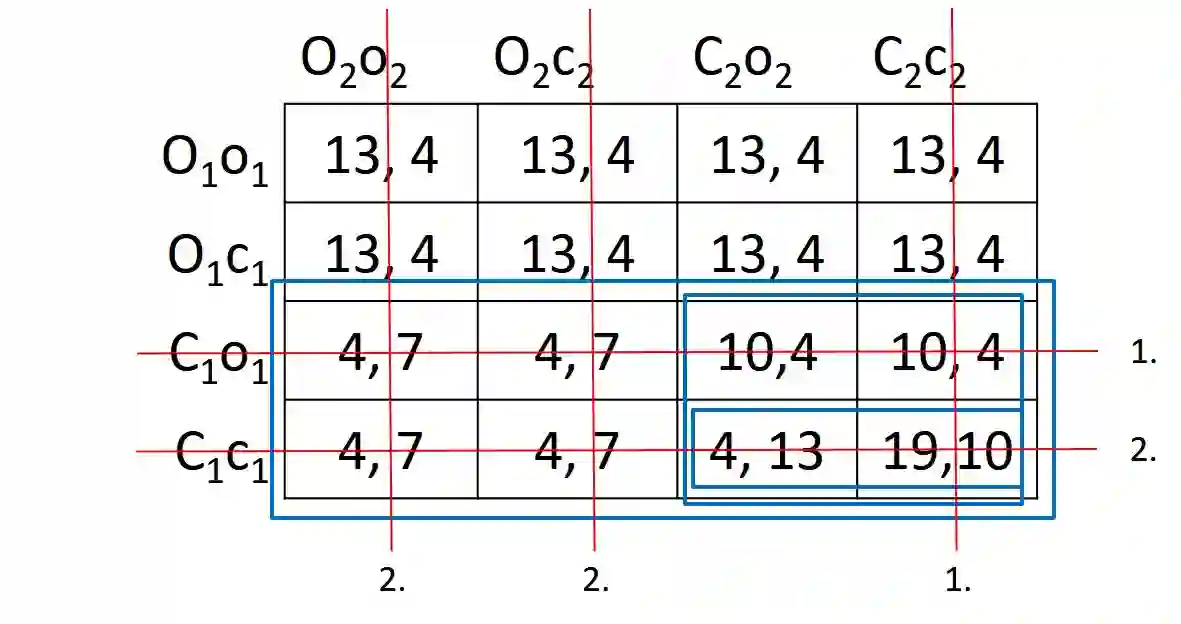
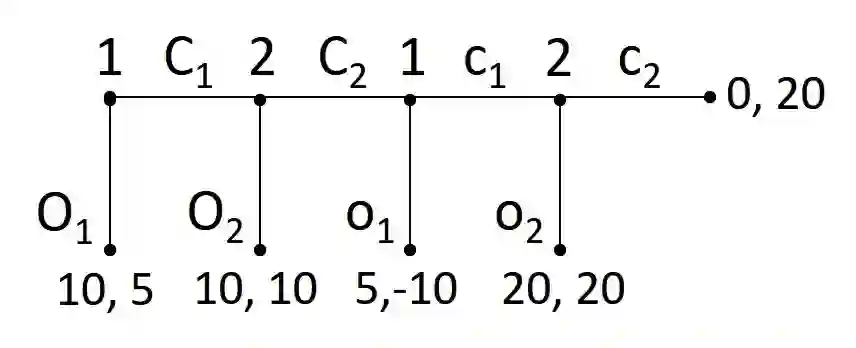
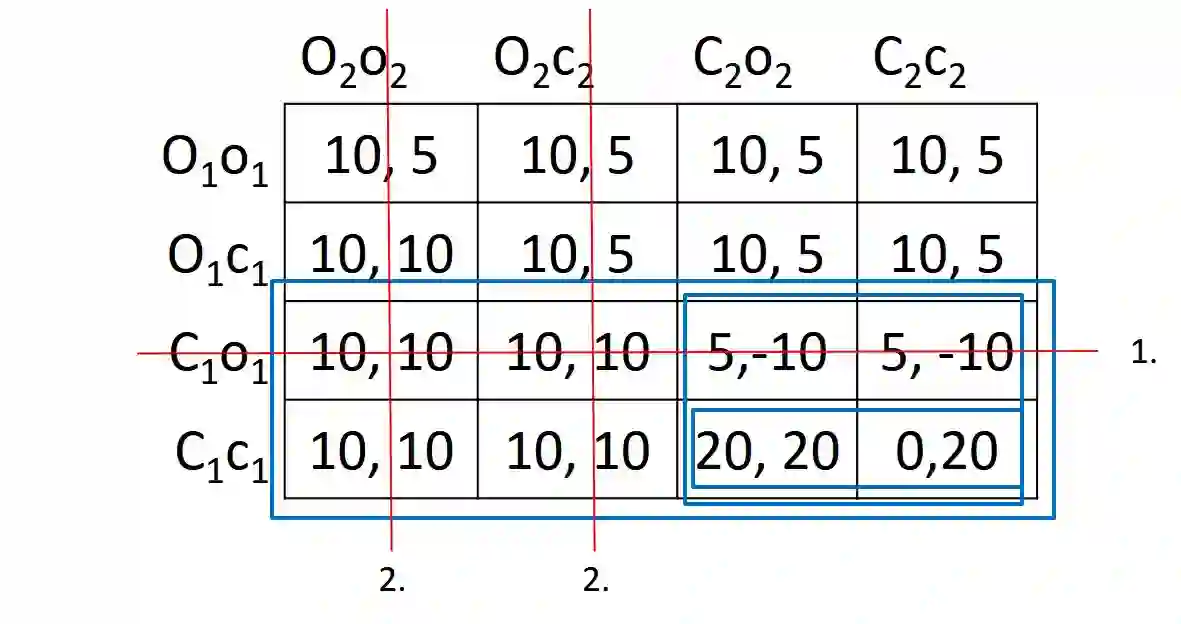
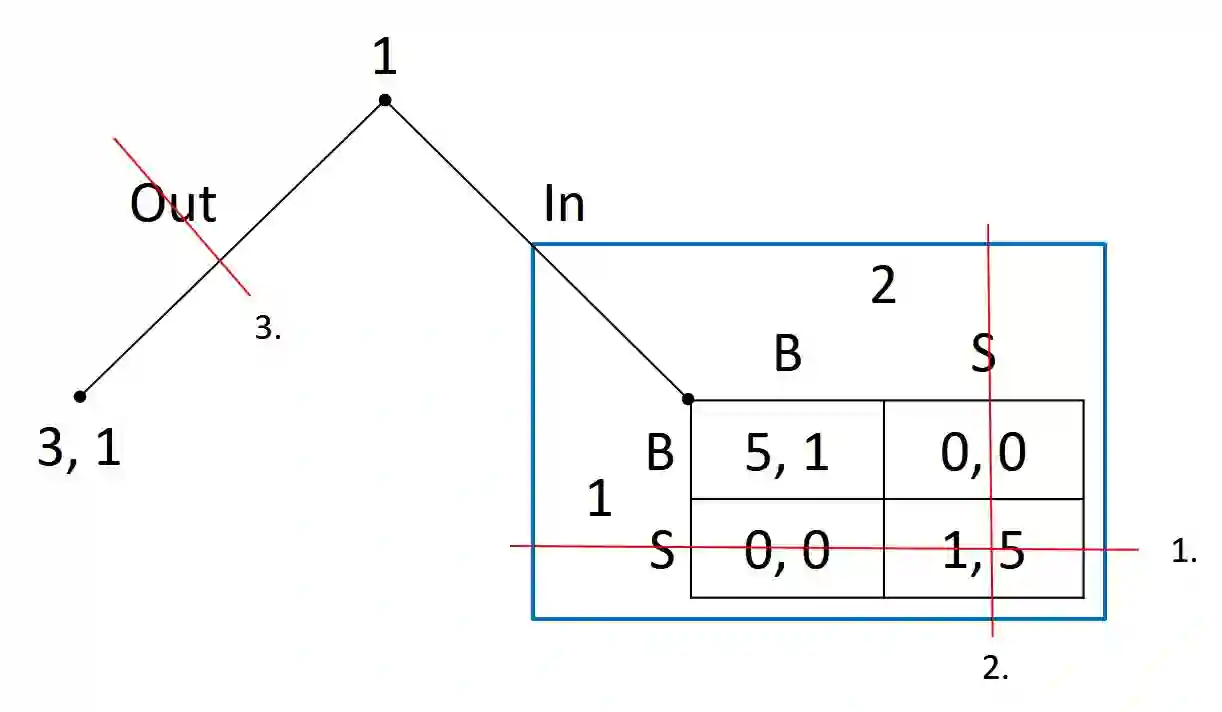
Level-k thinking has been widely applied as a solution concept for games in normal form in behavioral and experimental game theory. We consider level-k thinking in games in extensive form. Player's may learn about levels of opponents' thinking during the play of the game because some information sets may be inconsistent with certain levels. In particular, for any information set reached, a level-k player attaches the maximum level-l thinking for l < k to her opponents consistent with the information set. We compare our notion of strong level-k thinking with other solution concepts such as level-k thinking in the associated normal form, strong rationalizability, Delta-rationalizability, iterated admissibility, backward rationalizability, backward level-k thinking, and backward induction. We use strong level-k thinking to reanalyze data from some prior experiments in the literature.
翻译:层级k思维作为规范形式的博弈解概念,已被广泛应用于行为与实验博弈论中。本文探讨扩展形式博弈中的层级k思维。由于某些信息集可能与特定思维层级不一致,玩家可能在博弈过程中逐步了解对手的思维层级。具体而言,对于任意到达的信息集,层级k的玩家会基于该信息集,为其对手赋予与信息集一致的最大层级l(其中l<k)的思维。我们将强层级k思维的概念与其他解概念进行比较,例如关联规范形式中的层级k思维、强理性化、Δ-理性化、迭代可接受性、后向理性化、后向层级k思维以及后向归纳。我们应用强层级k思维重新分析了文献中先前实验的数据。




相关内容

- Today (iOS and OS X): widgets for the Today view of Notification Center
- Share (iOS and OS X): post content to web services or share content with others
- Actions (iOS and OS X): app extensions to view or manipulate inside another app
- Photo Editing (iOS): edit a photo or video in Apple's Photos app with extensions from a third-party apps
- Finder Sync (OS X): remote file storage in the Finder with support for Finder content annotation
- Storage Provider (iOS): an interface between files inside an app and other apps on a user's device
- Custom Keyboard (iOS): system-wide alternative keyboards
Source: iOS 8 Extensions: Apple’s Plan for a Powerful App Ecosystem



 微信扫码咨询专知VIP会员